
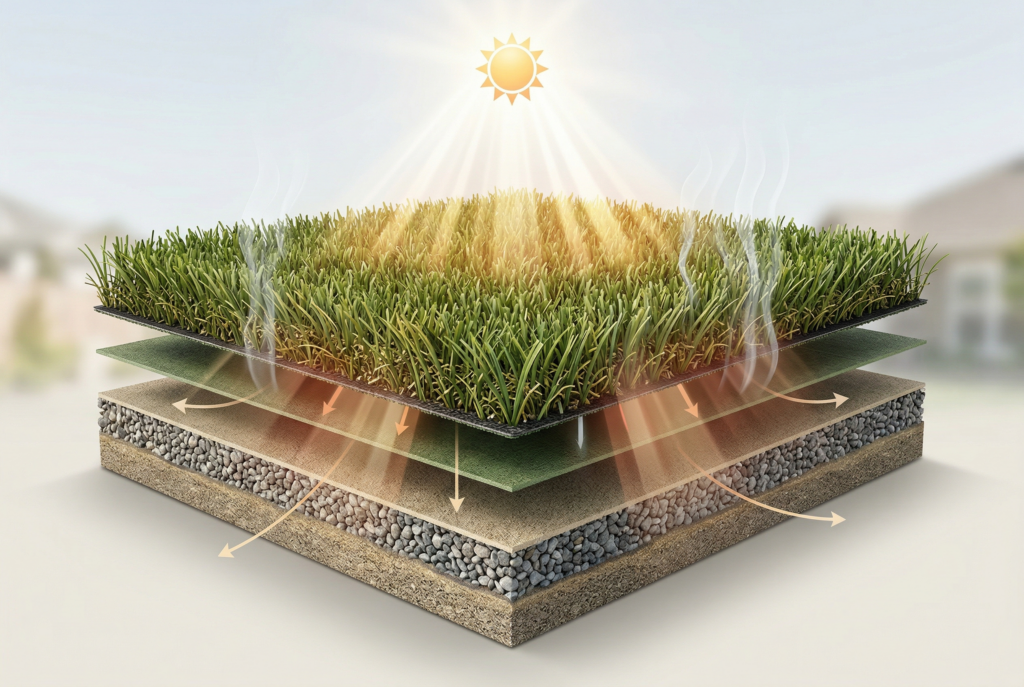
Odor is a common concern for pet turf owners, particularly in hot weather. Artificial turf does not produce odor; instead, smells result from organic waste, mainly pet urine, reacting with heat and environmental factors. Higher temperatures accelerate these reactions, making odors more noticeable. This is a predictable condition and not a defect in the turf system.
Why Heat Increases Odor on Pet Turf
Artificial turf is designed to drain liquids efficiently. However, pet urine leaves behind compounds like ammonia, and heat significantly affects how these compounds behave.
As temperatures increase:
- Ammonia turns into gas more quickly, making odors more noticeable.
- Bacteria become more active, accelerating the breakdown of organic matter.
- Moisture evaporates, leaving concentrated residues.
According to the U.S. Environmental Protection Agency (EPA), ammonia odors become significantly stronger at higher temperatures due to increased volatilization rates.
This is why turf may seem odor-free in cooler weather but develop noticeable smells during hot afternoons.
The Role of Infill and Drainage
Odor issues originate beneath the surface, not from the turf fibers. Infill choice and drainage design are the main factors influencing odor control.
Infill Type Matters
Standard silica sand does not neutralize odors and can retain moisture, allowing urine residues to build up. Specialty infills such as zeolite trap and neutralize ammonia molecules through cation exchange.
Research from turf and environmental studies shows that zeolite materials can significantly reduce ammonia-related odors in animal environments.
Drainage Is Critical
If the base layer does not drain properly, urine can stagnate below the turf. Heat intensifies the breakdown process, resulting in stronger, more persistent odors.
Organizations like the Synthetic Turf Council emphasize that proper base preparation and drainage are essential for performance and hygiene.
Real-World Observation from the Field
In high-use pet areas, especially dog runs exposed to direct sun, odor complaints typically result from one of three conditions:
- Delayed or insufficient rinsing
- Use of non-deodorizing infill
- Poor or compacted base drainage
In multiple installations, switching from silica sand to zeolite infill and adopting a regular rinse routine significantly reduced odor complaints, even in extreme heat.
How to Prevent Heat-Related Odor Issues
Odor control is straightforward but requires consistency and proper system design.
- Rinse Regularly
Water dilutes and flushes out urine residues before they concentrate. In hot climates, rinsing several times per week is usually sufficient.
- Use Odor-Neutralizing Infill
Zeolite infill is highly effective for controlling ammonia buildup at the source.
- Ensure Proper Drainage
A well-built base allows liquids to drain quickly, preventing stagnation.
- Apply Enzyme Cleaners When Needed
Enzyme-based cleaners break down organic matter at the molecular level and are especially useful in high-traffic pet areas.
The ASPCA and veterinary hygiene resources also recommend regularly cleaning pet areas to prevent bacterial buildup and odour.
Key Takeaway
Heat does not cause odor in artificial turf; it amplifies existing conditions. Odor during hot weather indicates organic buildup, infill choice, or drainage limitations, not a turf product failure.
With proper installation, appropriate infill, and consistent maintenance, pet turf can remain clean, odor-free, and safe for pets year-round, even in high temperatures.