
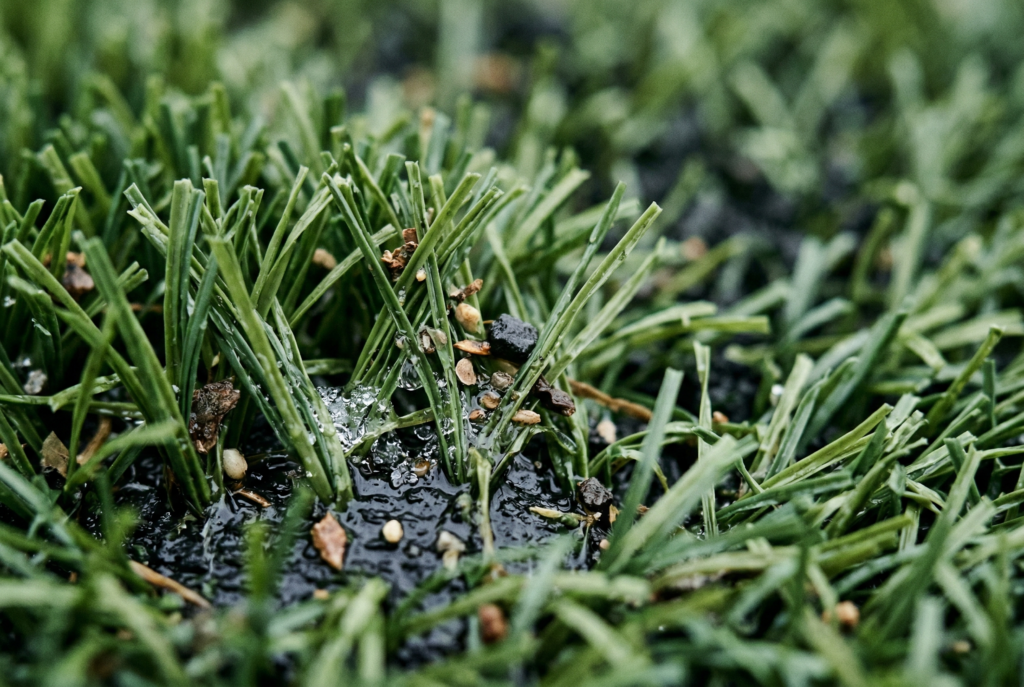
Can Artificial Turf Melt in Extreme Heat? Updated Research and Recommendations
Context: heat exposure, microclimate research and why installation protocol matters
Artificial turf is engineered to handle high temperatures, but extreme heat and poor planning can still cause softening, deformation or premature wear. Field experience and recent research show that heat‑related problems almost always result from environmental factors, not product defects. This article synthesises new studies and provides actionable guidance for homeowners and contractors while highlighting reputable sources for further reading.
Note: Many of the studies cited here focused on sports fields; however, the thermal principles (surface temperature, microclimate and heat‑reflection) apply equally to residential installations. For an in‑depth understanding of turf construction, see our internal guide on artificial turf components and infill options.
What recent research says about synthetic turf and heat stress
Microclimate study (2025)
A 2025 field study by researchers from the University of Kansas and University of South Dakota compared adjacent artificial‑turf and natural‑grass fields during hot weather. Researchers measured surface temperature, air temperature, humidity and wet bulb globe temperature (WBGT) at 1.2 m — the height used by international heat‑safety guidelines. Key findings:
- Higher surface temperatures: Artificial turf surfaces averaged 34.9 °C (94.8 °F) versus 24.0 °C (75.3 °F) for grass. Turf temperatures ranged from 22.9 – 57.9 °C (73.2 – 136.2 °F), showing greater variability than grass.
- Slightly warmer air above turf: Air temperature at 1.2 m above turf averaged 28.4 °C compared with 27.4 °C above grass.
- Lower humidity over turf: Relative humidity at 1.2 m was 65 % over turf versus 70 % over grass.
- Nearly identical heat stress (WBGT): Despite warmer surfaces, the WBGT — a comprehensive heat‑stress index — was 27.02 °C on turf vs 26.94 °C on grass. The higher air temperature was offset by lower humidity, resulting in no significant difference in overall heat stress.
These results challenge the assumption that artificial turf inherently increases heat‑illness risk. Researchers concluded that no documented cases of higher heat illness rates exist for athletes playing on turf. For homeowners, this means that a properly installed turf system, even in hot climates, will rarely pose a heat‑illness hazard by itself.
2024 systematic review
A 2024 systematic review of 23 studies compared the thermal environment of synthetic grass surfaces with natural grass. While surface temperatures on synthetic turf were consistently higher, the review highlighted important nuances:
- Surface temperature differences: Across multiple studies, synthetic turf was 20–37 °C hotter than natural grass under clear or partly cloudy conditions. Even when using cool‑climate fibres or HydroChill technology, synthetic surfaces remained significantly warmer than grass.
- Infill and shock‑pad effects: Fields with thermoplastic elastomer (TPE) infill were 3–5 °C cooler than those with styrene‑butadiene rubber (SBR) infill. Surfaces without shock pads stayed marginally cooler than those with pads. Choice of infill therefore has a measurable impact on thermal performance.
- Air temperature differences are minor: Air temperatures above synthetic turf were only 0.5–1.2 °C higher than over natural grass. Because heat‑stress risk categories used by sport governing bodies span ~6 °C, the review considered this difference too small to substantially alter risk.
- Conduction is negligible: The review noted that heat transfer through foot conduction is minimal unless skin is in direct contact for prolonged periods. Radiation (e.g., reflected sunlight) is more relevant for heat stress.
Overall, the systematic review suggests that surface temperature alone doesn’t determine heat stress. Other environmental parameters (air temperature, humidity, mean radiant temperature and wind velocity) must also be considered.
Field reports and industry data
Practical observations align with academic research. Turf can reach 175–200 °F (79–93 °C) under intense sun, while nearby natural grass often stays 75–95 °F (24–35 °C). However, synthetic fibres used in modern turf don’t begin to soften until 180–300 °F (82–149 °C), so melting is extremely rare. Reports of melted turf almost always involve concentrated heat from reflective surfaces such as Low‑E windows or metal siding.
For homeowners looking to reduce temperature, many manufacturers offer light‑coloured fibres, cooling infills (such as HydroChill or T°Cool) and airflow‑oriented yarns that can lower surface readings by 10–20 % or 35–50 °F. Internal links: our cooling infill comparison guide provides detailed pros and cons for each product.
What causes artificial turf to overheat?
1. Heat reflection from windows and hard surfaces
Energy‑efficient Low‑E glass and large modern windows can concentrate sunlight onto turf, raising temperatures far beyond ambient levels. A 2025 homeowner case described by ForeverLawn Texas reported that Low‑E window reflections warped turf blades and caused localized melting. Low‑E coatings are designed to reflect infrared energy; when the sun hits at the right angle, the reflection acts like a magnifying glass. Signs of reflection damage include shiny, curled or discoloured patches.
Prevention:
- During planning, identify reflective surfaces such as windows, metal fences or stainless railings. If they face the turf at a low angle, consider applying anti‑reflective window films or installing shade structures. You can link internally to our guide on preventing turf melt from window reflections.
- Choose heat‑resistant nylon turf in areas directly adjacent to reflective windows; nylon fibres withstand higher temperatures than polyethylene.
2. Incorrect or absent infill
Infill has two critical functions: supporting turf blades and regulating temperature. Standard SBR rubber infill absorbs and retains heat, whereas cooling infills (e.g., zeolite, TPE, HydroChill, T°Cool) disperse heat and reduce surface temperatures. Without proper infill, the backing is exposed, allowing more heat build‑up and increasing fibre fatigue.
Guidelines:
- Use zeolite infill or cooling sand in hot climates — these materials absorb water and slowly evaporate it, lowering surface temperature.
- Install infill immediately after turf placement; leaving turf exposed on a hot day without infill can stress fibres and increase expansion.
- Link internally to our comprehensive infill selection guide.
3. Delayed or improper installation
Delaying infill or leaving turf rolled out in the sun can cause the backing to soften and the fibres to expand. In hot climates, installation should be planned for cooler periods of the day, and infill should be brushed in right away. Use site‑specific installation protocols for enclosed courtyards or balconies that may trap heat. See our installation checklist for step‑by‑step instructions.
4. Heavy foot traffic on hot turf
When turf is extremely hot, fibres become more pliable. Repeated foot traffic along a single path (e.g., from patio to gate) can cause premature wear or blade fatigue. This is mechanical stress, not melting. Plan walkways using pavers, stepping pads or artificial grass pavers to distribute load and keep pedestrians off the hottest surfaces.
5. Heat‑pocket environments
Some yards naturally amplify heat because of enclosed walls, dark surfaces, south‑ or west‑facing exposures or reflective architectural features. In such settings:
- Install misting or sprinkler systems for periodic cooling.
- Use lighter‑coloured turf and infill to reflect more sunlight.
- Consider partial shading (pergolas, sail shades) and improved airflow.
- Assess whether modifications (e.g., reflective window film, venting) are needed before committing to turf.
Real‑world case study
During a residential project in 2025, a bank of reflective windows focused sunlight onto a four‑foot strip of turf. The localized area reached unusually high temperatures, causing the fibres to warp. The solution involved applying anti‑reflective window film to the windows, adding zeolite cooling infill and installing stepping stones along the primary traffic route. After these adjustments, the turf performed normally. This example reinforces the importance of site evaluation and targeted mitigation.
How to prevent heat‑related turf damage
- Conduct a heat reflection audit: Before installation, inspect for reflective surfaces and oriented windows. Use a heat gun on sunny days to identify hot spots.
- Select appropriate infill: Choose cooling infill materials and avoid dark SBR rubber in hot regions.
- Install infill immediately: Do not leave turf unfilled on hot days — infill stabilizes fibres and moderates temperature.
- Design for traffic flow: Incorporate walkways and pavers in high‑traffic areas to reduce mechanical stress.
- Evaluate microclimate: Consider local climate, shading and airflow; in heat‑pocket yards, use additional cooling solutions.
- Work with experienced professionals: A knowledgeable installer will assess environmental risks, advise on materials, and ensure that installation protocols (e.g., seam adhesives, infill depth) are followed.
Conclusion
Artificial turf does not randomly melt. When heat‑related damage occurs, it is almost always due to environmental heat concentration, improper infill selection, delayed installation or traffic patterns. Recent studies show that while surface temperatures on turf can be much higher than on natural grass, the overall heat‑stress risk (WBGT) is comparable. By understanding the science and following proper planning, homeowners can enjoy durable, cool and safe artificial lawns.
For more detailed guidance, explore our internal resources on artificial turf infill options, cooling infill technologies and preventing turf melt from window reflections. These related articles will help you design a long‑lasting and comfortable synthetic lawn.