
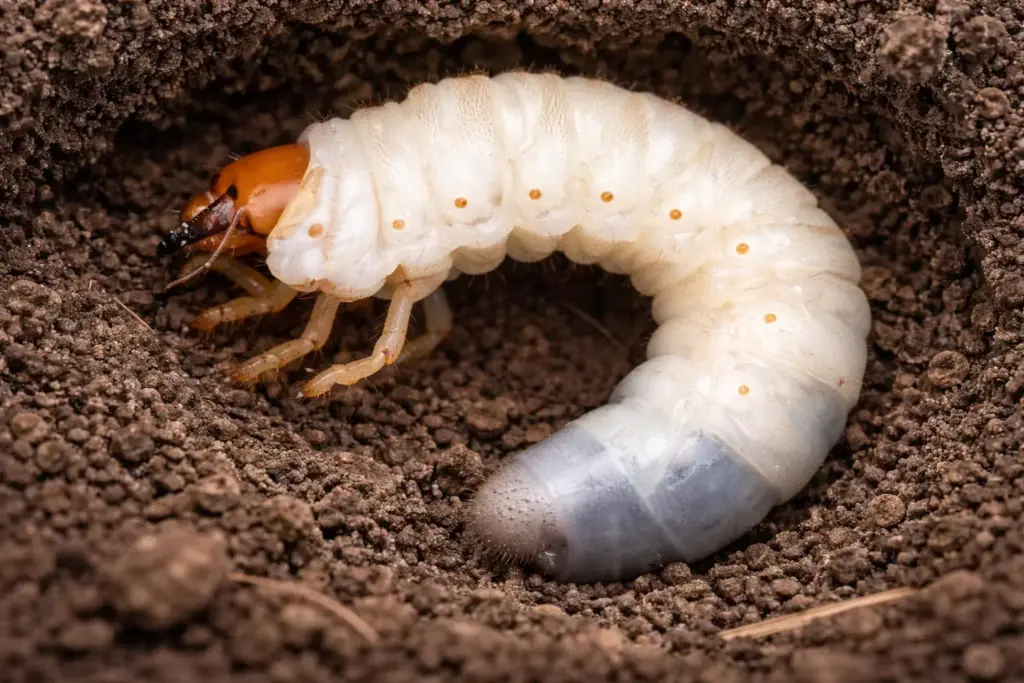
What Happens Beneath the Surface After White Grub Root Destruction
European chafer soil damage is one of the most overlooked causes of long-term lawn instability in North America. While homeowners typically notice brown patches in late summer, the most serious impact of European chafer soil damage occurs below the surface where turf roots anchor soil and regulate moisture.
European chafer (Rhizotrogus majalis) larvae feed directly on grassroots from mid-summer through early fall. According to the Michigan State University Extension – European Chafer,
this pest is well established in northern regions and can reach damaging populations quickly.
Field research consistently shows that European chafer soil damage is rarely just a cosmetic issue. It disrupts root systems, weakens soil structure, and increases long term recovery costs.
Root System Destruction: The First Stage of European Chafer Soil Damage
White grub root feeding reduces the turf’s ability to absorb water and nutrients. The University of Kentucky ENT-10: Controlling White Grubs in Turfgrass publication explains that heavily infested turf can be lifted from soil like carpet because roots have been severed.
When European chafer soil damage reduces root mass:
- Water uptake declines
- Heat tolerance drops
- Carbohydrate reserves decrease
- Turf becomes prone to drought stress
The Penn State Extension publication White Grubs: Underground Marauders in Turf confirms that grub feeding thresholds can severely weaken turf under heat and drought conditions.
https://extension.psu.edu/white-grubs-underground-marauders-in-turf
This stage of European chafer soil damage often goes unnoticed until visible turf collapse occurs.
Carbohydrate Depletion and Long Term Lawn Weakness
Healthy turf stores carbohydrates in roots and crowns. These reserves are essential for recovery and winter survival.
When European chafer soil damage destroys roots during peak growing season, turf must redirect energy toward rebuilding lost tissue. That delays fall thickening and can reduce spring density.
Research from Dr. Daniel A. Potter, University of Kentucky, internationally recognized for turfgrass entomology research, highlights the ecological impact of scarab grub feeding in urban landscapes.
Repeated infestations compound European chafer soil damage year after year, creating progressive root shallowing.
Soil Structure Breakdown After Root Loss
Roots stabilize soil aggregates and support microbial activity. When European chafer soil damage removes living roots:
- Soil particles loosen
- Surface stability declines
- Compaction risk increases
- Organic matter cycling slows
The USDA Natural Resources Conservation Service – Soil Health Principles emphasizes that living roots are fundamental to soil structure and microbial balance.
https://www.nrcs.usda.gov/conservation-basics/soil-health
Without active roots, soil becomes more vulnerable to erosion, heavy rainfall impact, and compaction.
European chafer soil damage therefore affects both plant health and soil ecology.
Wildlife Digging Compounds Soil Compaction

Raccoons and skunks frequently tear into lawns searching for grubs. The Iowa State University Yard and Garden – Managing Skunk and Raccoon Damage to Lawns resource explains how wildlife flips sod and disrupts soil while feeding on white grubs. Wildlife disturbance following European chafer soil damage often results in:
- Uneven soil grading
- Compacted areas after re-settling
- Irrigation exposure
- Increased erosion
Compacted soil limits oxygen exchange and restricts root penetration, further intensifying long term turf decline.
Microbial Imbalance After European Chafer Soil Damage
Healthy lawns rely on active soil biology. When root tissue dies:
- Decomposition temporarily accelerates
- Microbial populations shift
- Nutrient cycling becomes inconsistent
Repeated chemical intervention without cultural correction can further stress soil biology.
The comprehensive reference Turfgrass Insects of the United States and Canada by Patricia J. Vittum et al. details the ecological impact of scarab grub feeding in turf systems.
This reinforces that European chafer soil damage is not isolated to root feeding. It alters the entire turf ecosystem.
Increased Weed Encroachment
Thinning turf created by European chafer soil damage allows opportunistic weeds to colonize exposed areas.
Weakened root systems reduce turf competitiveness, leading to:
- Crabgrass invasion
- Broadleaf weed establishment
- Patch expansion
Once weeds gain foothold, recovery costs increase and soil disturbance continues.
Climate Influence on European Chafer Survival
Climate conditions influence grub survival and feeding duration.
According to NOAA Climate Data, northern regions have experienced warming trends that may extend soil warmth and larval activity periods.
Extended feeding windows can intensify European chafer soil damage in affected states and provinces.
Signs of Lingering European Chafer Soil Damage
Even after visible brown patches fade, lingering soil instability may include:
- Turf lifting easily months later
- Shallow root depth
- Chronic thinning
- Uneven soil firmness
- Persistent weed pressure
These indicate incomplete soil recovery following European chafer soil damage.
Restoring Soil Health After European Chafer Soil Damage
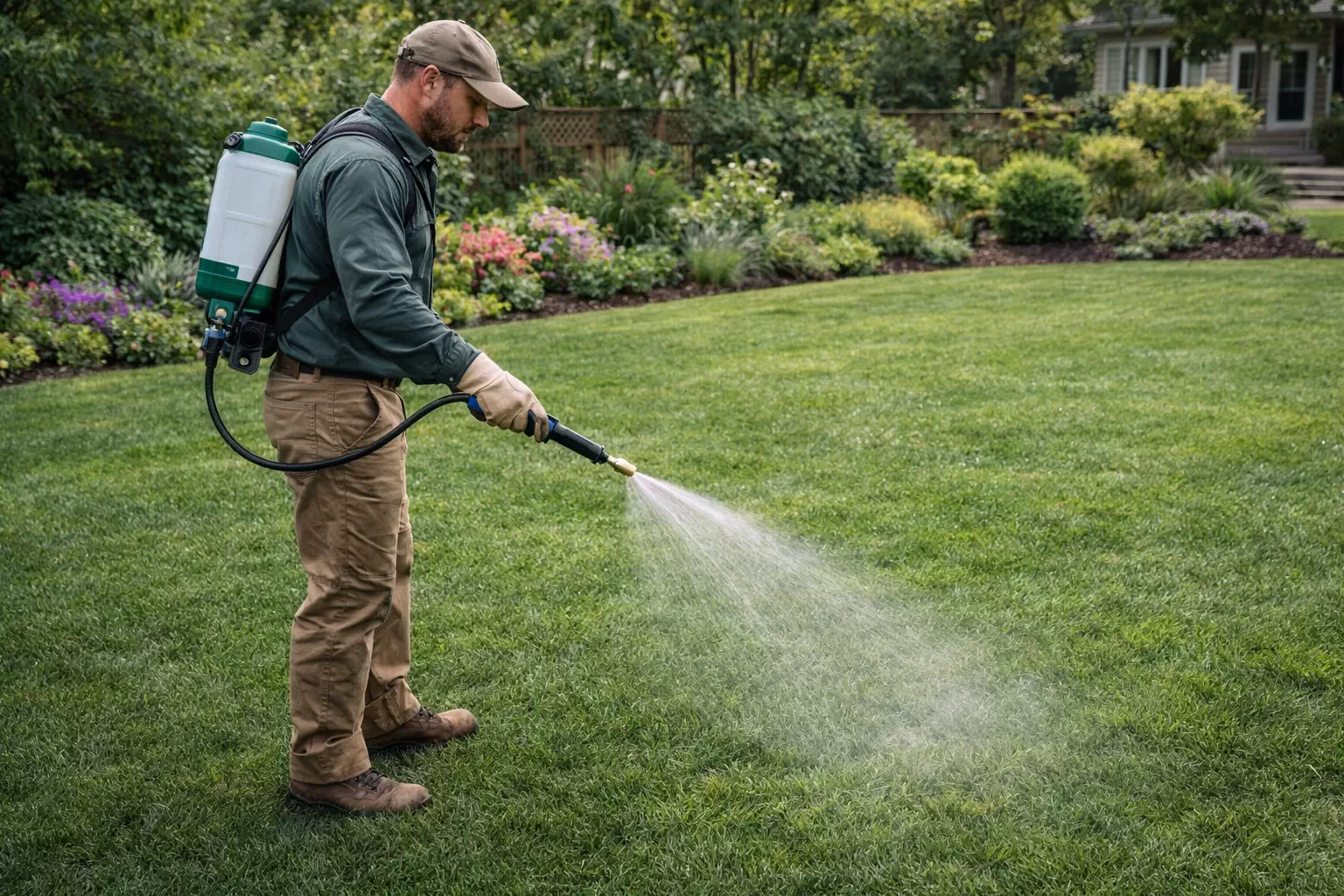
Long term recovery requires rebuilding soil structure, not just reseeding grass.
Recommended practices include:
Core Aeration
Relieves compaction and improves oxygen exchange.
Organic Matter Integration
Topdressing compost supports microbial balance.
Balanced Fertility
Avoid excessive nitrogen which promotes shallow rooting.
Deep, Infrequent Irrigation
The EPA WaterSense Program encourages efficient irrigation practices to protect water resources and promote healthier root systems.
Threshold Based Monitoring
Cornell University’s Turfgrass Program outlines sampling and treatment thresholds for white grubs.
https://turf.cals.cornell.edu/pests-and-weeds/insect-management/#white-grubs
Monitoring prevents unnecessary chemical use and supports long term soil stability.
Final Perspective
European chafer soil damage is not simply a late-summer discoloration issue. It is a root system and soil health disruption that can destabilize lawns for multiple seasons.
By weakening root anchorage, altering microbial balance, attracting wildlife, and increasing compaction, European chafer soil damage creates long term turf instability.
Addressing soil health, strengthening root systems, and using research-based monitoring practices are essential to reducing repeated infestations and preventing chronic lawn decline.
Understanding European chafer soil damage beneath the surface allows homeowners to shift from reactive repair to preventative management.