
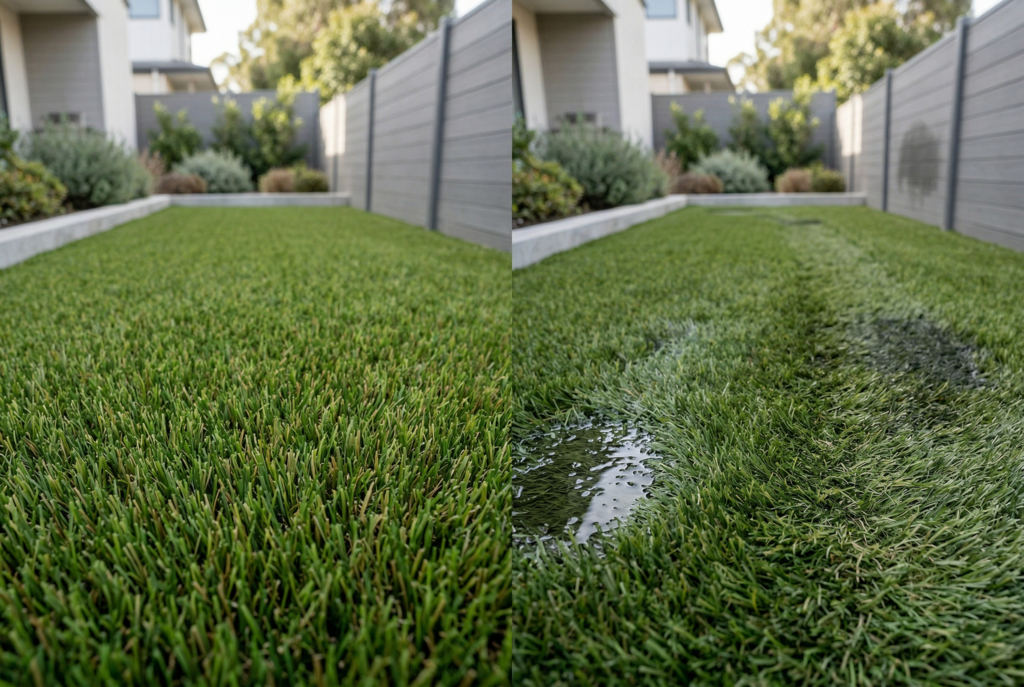
One of the most overlooked aspects of artificial turf maintenance is debris removal. When homeowners notice odors, poor drainage, or flattening of the turf, the product itself is often blamed. In reality, these issues are typically caused by organic and inorganic debris accumulating within the turf system. Artificial turf is designed to serve as a permeable, low-maintenance surface, but only when kept clear of materials that disrupt airflow and drainage.
This article explains why debris removal is essential, what causes performance issues, and how to properly maintain turf to avoid unnecessary problems.
Why Debris Removal Is Critical to Turf Performance
Artificial turf systems rely on open spaces between fibers and within the infill layer to function properly. These spaces allow for:
- Water to pass through the backing and into the base
• Air circulation to help dry moisture and reduce bacteria growth
• Even distribution of infill to support the blades
When debris accumulates, these pathways become blocked. The turf is not failing; the system is simply being restricted by external materials.
According to the Synthetic Turf Council, proper maintenance, including debris removal, is essential to preserving drainage and extending the life of synthetic turf systems.
Common Causes of Debris Build-Up
Debris accumulation happens gradually and is often not noticed until problems appear.
Organic Material
- Leaves, grass clippings, and pollen
• Pet waste residue
• Soil and dust from surrounding areas
Organic debris is particularly problematic because it breaks down over time, creating a fine layer that can clog the turf backing and infill.
Environmental Factors
- Nearby trees shedding leaves or needles
• Wind carrying dust and dirt onto the surface
• Rain washing sediment into the turf system
Usage Patterns
- High foot traffic pushes debris deeper into the infill
• Lack of regular cleaning or rinsing
• Delayed maintenance after storms or yard work
What Happens When Debris Is Not Removed
When debris is allowed to build up, several predictable issues occur. These are commonly misdiagnosed as turf defects but are actually maintenance-related.
Reduced Drainage Performance
Blocked infill and backing prevent water from flowing through properly, leading to pooling or slow drainage.
The U.S. Environmental Protection Agency (EPA) highlights how organic material buildup can restrict permeable surfaces and reduce infiltration rates.
Reference: https://www.epa.gov/soakuptherain
Odor Development
Organic debris traps moisture and creates an environment for bacterial growth, especially in pet areas. This leads to persistent odors that are often mistaken for turf failure.
Matting and Surface Compaction
Debris adds weight and reduces fiber movement, causing blades to flatten and lose their natural appearance.
Increased Wear Over Time
When debris holds moisture and heat, it accelerates the breakdown of fibers and infill performance, shortening the lifespan of the installation.
How to Properly Remove Debris
Consistent, simple maintenance prevents nearly all of these issues.
Routine Surface Cleaning
- Use a leaf blower or plastic rake to remove loose debris weekly
• Focus on corners, edges, and low spots where debris collects
Periodic Deep Cleaning
- Rinse the turf to flush out fine particles
• Lightly brush the surface to redistribute infill and lift fibers
Pet Area Maintenance
- Remove solid waste immediately
• Rinse frequently to prevent organic buildup
The University of California Agriculture & Natural Resources recommends regular surface cleaning and rinsing to maintain synthetic landscape systems and prevent organic accumulation.
Reference: https://ucanr.edu
How to Prevent Debris-Related Issues
Prevention is far easier than correction. A few proactive steps can protect the turf system in the long term.
- Trim nearby trees and landscaping to reduce shedding
• Install edging or barriers to limit soil migration
• Increase cleaning frequency during high-debris seasons
• Avoid allowing debris to sit for extended periods, especially when wet
Real-World Insight
In many service calls over the years, drainage complaints and odor issues were traced back to heavy debris accumulation rather than any defect in the turf itself. Once the surface was properly cleaned and flushed, performance returned to normal without any replacement or repair required.
This reinforces a key point: artificial turf systems are highly reliable when maintained correctly. Most issues are environmental and maintenance-related, not product failures.
Final Takeaway
Debris removal is not just a cosmetic task; it is a fundamental part of maintaining the performance of artificial turf. When debris accumulates, it disrupts drainage, traps moisture, and accelerates wear.
Artificial turf is engineered to work efficiently, but like any system, it depends on proper care. Keeping the surface clean ensures the turf performs as intended and prevents avoidable issues often mistaken for defects.