Weed Killer for Artificial Turf: What to Know About OXYTURF X
Artificial turf removes mowing from the garden routine, but it does not place the whole surface beyond the reach of plants. Given a little dust, moisture and a wandering seed, a weed can sometimes appear in the most unlikely spot.
If you are considering a weed killer for artificial turf, it helps first to understand where that growth has come from. It also matters which product you use and, more importantly, what its current label allows.
OXYTURF X is made for synthetic turf applications and is described by the manufacturer as glyphosate-free. But weed control is one of those garden jobs where restraint is useful. Read the label, follow its directions and precautions, and pay attention to the small habits that can make weeds less welcome in the first place.
Why Weeds Can Appear in Artificial Turf
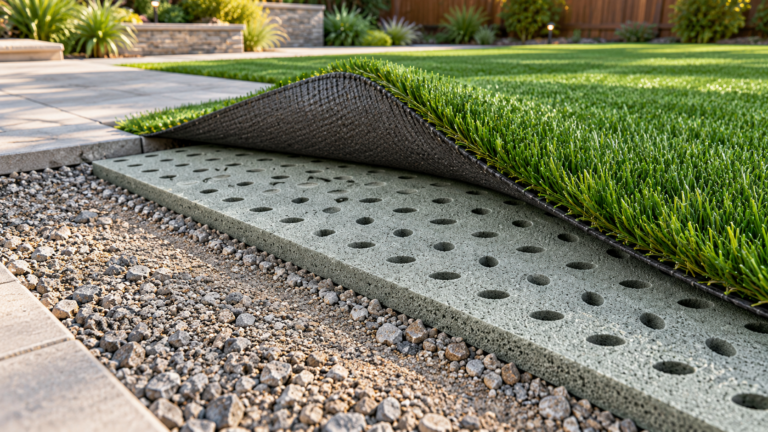
A weed growing through artificial grass can look rather determined, as though it has pushed its way through the whole turf system from the earth beneath. Sometimes growth can occur around vulnerable boundaries, but weeds may also begin much closer to the surface.
Edges are obvious places to watch. Turf meets garden beds, paving, fences and other materials there, leaving small spaces where seeds can settle.
Seams can provide another opportunity. Windblown seeds are remarkably good at finding narrow gaps.
Then there is the surface itself. Seeds from nearby gardens, trees and roadside plants can simply land among the turf fibres. If fine organic debris has collected around the infill, a seed may find enough material and moisture to germinate.
This is why an occasional weed does not automatically tell you that something has gone wrong beneath the turf. Sometimes the plant arrived from above.
Autumn makes this especially easy to see in British Columbia. Leaves soften with rain, bits of plant matter settle between the blades, and the tidy summer surface slowly gathers the small remains of the season.
Choosing a Weed Killer for Artificial Turf
A weed killer used around synthetic turf should not be chosen simply because it happens to be in the garden shed.
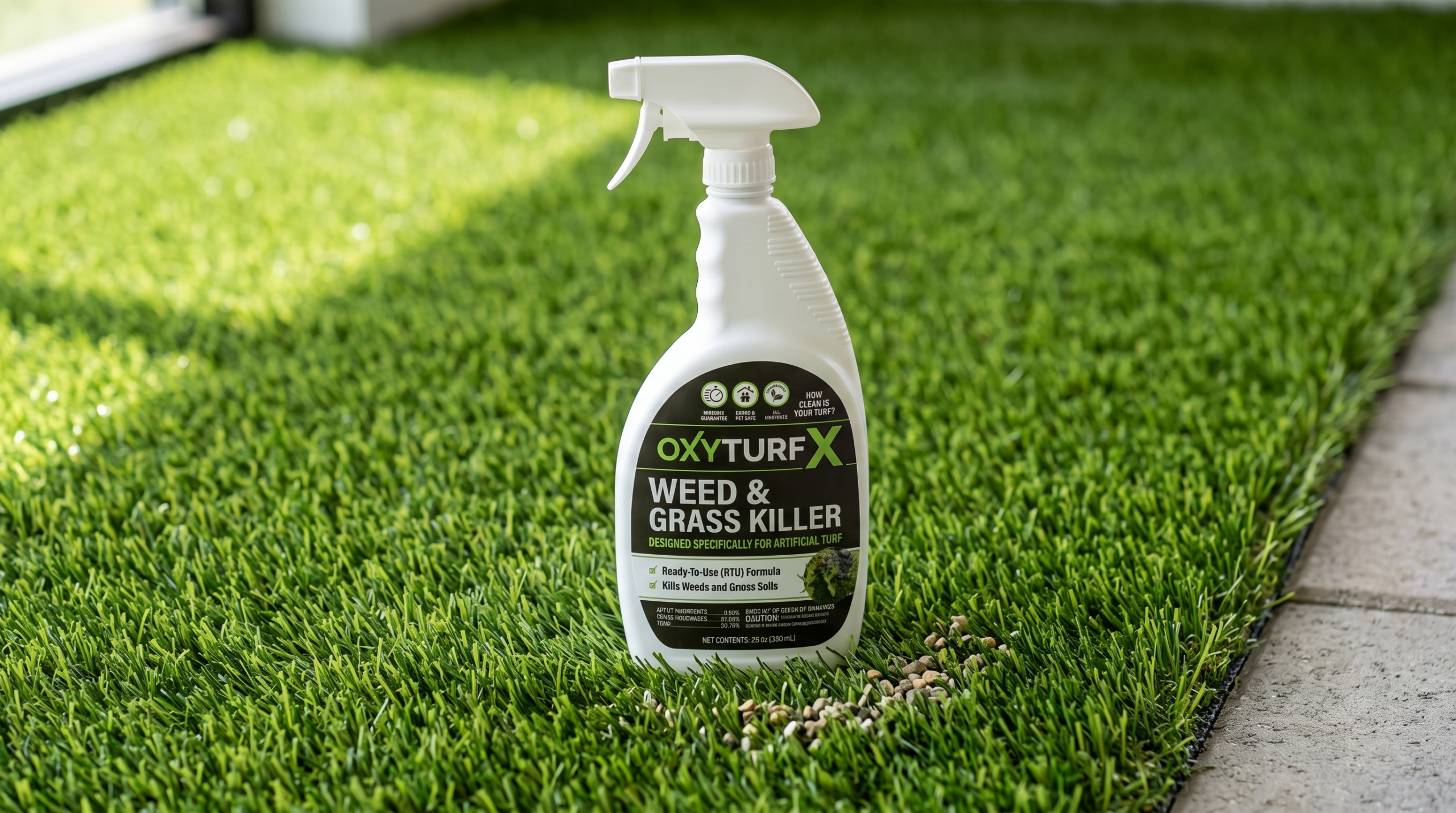
OXYTURF X is a weed and grass killer developed for synthetic turf applications. The manufacturer identifies it as glyphosate-free and specifically designed for synthetic turf.
That describes the product. It does not replace the label.
Before applying any weed-control product, read the current Canadian label and make certain your intended use is included. Follow its directions, precautions and restrictions exactly. Do not increase the amount, change the application method or assume that instructions for another surface also apply to artificial turf.
There is something pleasantly simple about gardening when we resist the urge to improvise. The label has already done the deciding for us.
Use the Label, Not a Garden Habit
Many familiar garden jobs are forgiving. You can prune a little more cautiously or brush the lawn again next weekend.
Pesticide products deserve a more exact approach.
Read the complete label before starting. Use the product only where and how the label directs. Follow any stated precautions, application requirements and instructions concerning nearby vegetation.
It is also sensible to check the label again when opening a new container, rather than relying on what you remember from a previous season. Product directions and regulatory information can change.
OXYTURF X should be treated in precisely this way. PGB does not suggest inventing a stronger mixture, adding another product or creating a homemade application method. The current product label is the instruction.
Prevention Begins with Brushing and Debris Removal
Weed control on artificial turf is partly about what you remove before a seed has much chance to settle in.
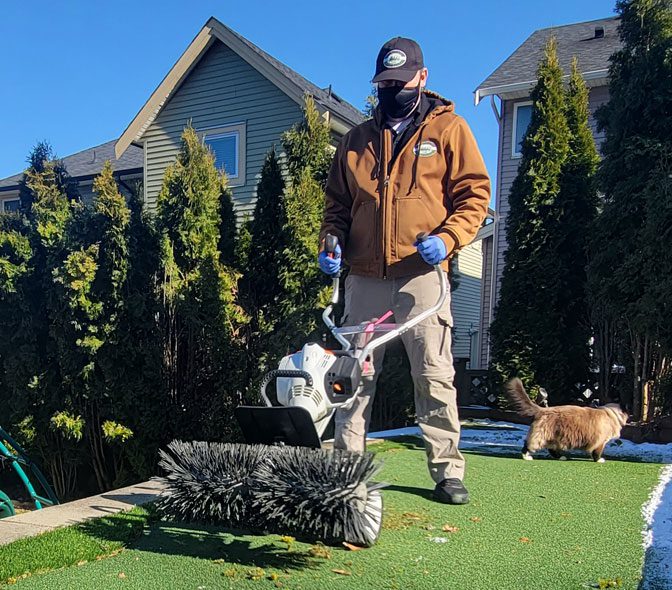
A turf broom or rake can help lift fibres and move loose material towards an edge where it can be collected. PGB’s maintenance guidance includes occasional brushing and debris removal as part of normal turf care.
Leaves are particularly worth keeping on top of during the wetter months. So are fallen blossoms, seed heads and other garden debris. Left to break down, this material can collect among the fibres and infill.
Give seams and perimeter edges a quiet inspection as you work. These are easy places for small weeds to go unnoticed until they are well established.
If a young weed can be removed manually without disturbing the turf, doing so early can be simpler than waiting for it to grow and scatter more seed.
None of this requires turning turf maintenance into a weekly ceremony. A few minutes while clearing leaves or tidying the patio is often enough to notice what is changing.
PCP Registration Numbers and Local Rules
In Canada, registered pesticide products carry a Pest Control Product registration number, commonly called a PCP registration number, on their label. Health Canada advises consumers to use that number and the product label to confirm registration and directions for use.
The number matters because the Canadian label is the reference for how that particular registered product may be used.
Local requirements matter too. Provinces and municipalities can have additional rules concerning pesticide use. Health Canada specifically notes that local restrictions may apply.
Before using OXYTURF X, check the rules that apply where you live. If the turf is part of a strata property, check with the strata council as well. Do not assume that a product being available for sale settles every local use question.
Artificial Turf Weed Control FAQ
Do weeds mean my artificial turf has failed?
Not necessarily. Seeds can arrive from above and germinate in debris that has collected around fibres and infill. Weeds can also appear around edges or seams. Look at where the growth begins before drawing conclusions about the turf or base.
Can I use any weed killer on artificial turf?
Do not assume that a general garden product is suitable for your intended use. Check the product label and use only a product whose current label permits the application you have in mind. Follow all label directions and precautions.
Does brushing artificial turf stop every weed?
No. Brushing and debris removal are maintenance steps that can make the surface less inviting for seeds by removing accumulated plant material. They cannot guarantee that a windblown seed will never germinate.
Should I treat the whole turf whenever I find one weed?
Follow the product label rather than creating your own treatment routine. The label determines how and where a registered weed-control product should be applied.
Artificial turf still sits within a living garden. Seeds travel, leaves fall and plants make use of tiny opportunities. Keeping the surface brushed and relatively clear gives those wandering seeds fewer places to settle. When weed control is needed, use the current label as your guide rather than relying on habit or guesswork.
For questions about caring for your artificial turf, call Premium Grass Blades at 604-757-2899.