How to Choose Artificial Turf for Your BC Yard
Learning how to choose artificial turf gets much easier once you stop looking for one turf that is “best” for every yard.
A family lawn has different demands than a dog run. A quiet front yard is different from the route everyone takes from the patio to the back gate. A putting area is another category again.
So before comparing samples, start with your yard. Think about who uses it, how often they use it and what happens there on an ordinary Tuesday. Then you can look at the details that actually matter.
How to Choose Artificial Turf Based on How You Live
Start with use, not appearance.
Do you have a dog that follows the same path every morning? Kids who turn one corner of the yard into home base? Patio furniture that moves around through summer? A front lawn that gets relatively little foot traffic?
Those details help narrow the choices.
A turf that feels soft under bare feet may appeal to a family planning a backyard lounging area. A busy side yard may put more emphasis on density and fibre recovery. Pet areas bring drainage, cleaning and infill into the conversation.
There is also the simple matter of taste. Some people prefer a shorter, closely trimmed appearance. Others want longer fibres and a fuller lawn look.
The useful question is not, “Which sample looks nicest?”
It is, “Which sample makes sense here?”
Look Closely at Blade Shape and Density
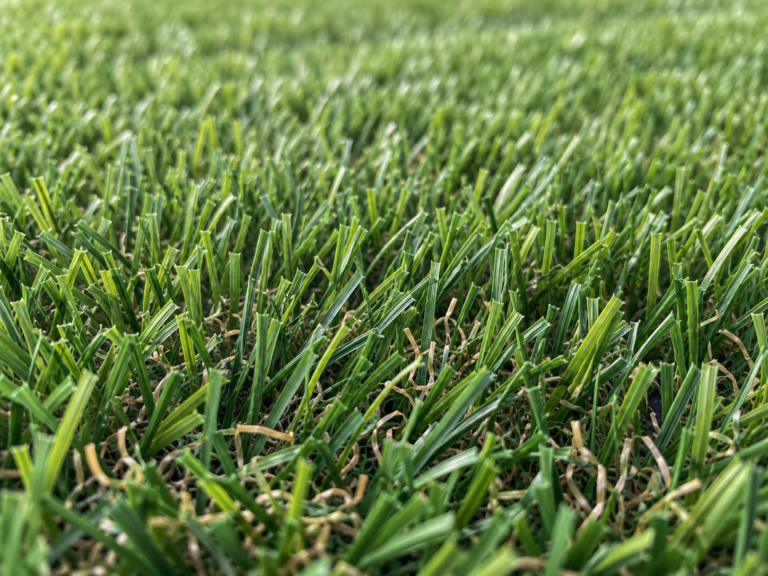
Artificial turf fibres are made in different shapes. That shape affects how the individual blades look and how they behave under use.
You do not need to become a turf engineer to shop intelligently. Pick up the sample. Run your hand across it. Press the fibres down. Look at it from several angles rather than judging it from one carefully arranged photo.
Then look at density.
Density describes how closely the fibres are packed together. It contributes to the feel and appearance of the surface, but more is not automatically the right answer for every project.
This is where specifications become useful rather than decorative numbers on a product sheet. Compare them alongside the intended use of the turf.
If you want more background before shopping, PGB’s guide to understanding artificial turf specifications explains blade height, face weight and density in more detail.
A sample in your hand can tell you quite a bit. A specification sheet tells you what you are actually holding.
Use both.
Check the Backing, Not Just the Green Side
Most of us naturally inspect turf from the top. That is the part we will see every day.
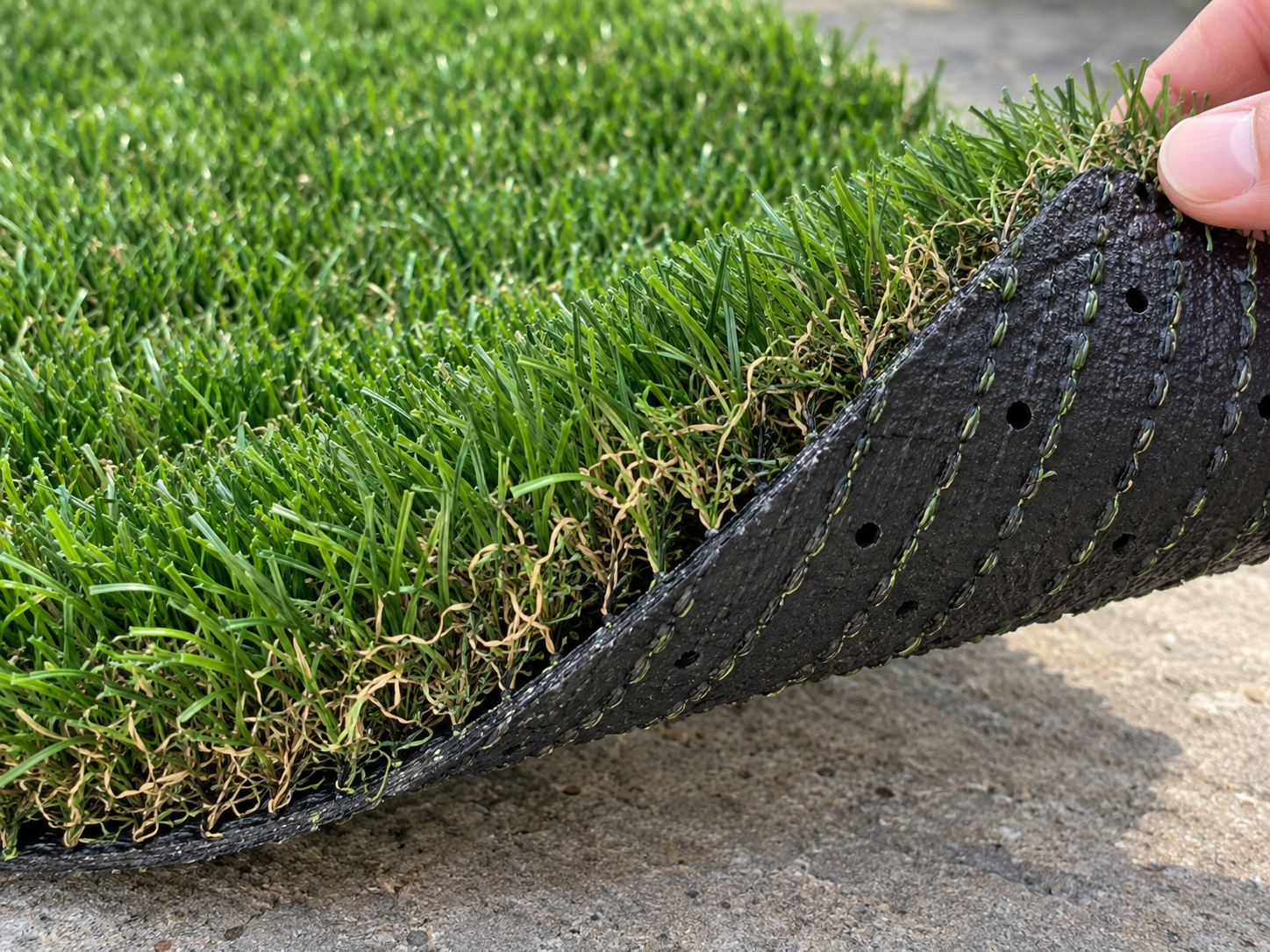
Turn the sample over.
The backing is part of the turf system, and it deserves attention when you are comparing products. Ask what the backing is designed to do and how the product works with the drainage plan for your site.
That last part matters in BC.
Turf itself is only one piece of a finished yard. Water still needs somewhere to go. The base, grading and drainage plan all affect how the area performs after heavy rain.
If you are working with an independent installer, discuss the site conditions before choosing materials. If you are doing the project yourself, follow PGB installation guidelines and product instructions, contact BC 1 Call before digging, and wear appropriate protective gear.
A beautiful turf sample cannot correct a poorly prepared base.
Understand What Infill Does
Infill sits among the turf fibres and is part of a properly planned artificial turf system.
The right choice depends on the project. PGB carries silica sand for basic infill applications and zeolite infill for pet areas. Zeolite infill and regular rinsing can help manage pet odours.
Ask two questions before buying: which infill is recommended for this turf, and how much does the product require?
That second question is easy to overlook.
Following the advised infill amount is important for the turf system and for warranty coverage. An independent installer should follow PGB guidelines, and DIY customers should do the same.
If pets are part of the household, mention them before selecting your turf and infill. It is much easier to plan a pet area properly from the beginning than to treat it as an afterthought.
Read the Warranty Before You Choose
A warranty should be something you can actually read.
Look for clear terms. Ask what is covered, what is excluded, whether coverage changes over time and what responsibilities fall to the owner.
PGB’s landscape turf is backed by the PGB Limited 15-Year Product Warranty, which is pro-rated. Putting green turf has an 8-year warranty. The warranty contains specific coverage, conditions and exclusions, so read the current terms before purchasing.
That kind of transparency helps you compare products on more than appearance.
It is also useful to understand what a product warranty is not. It is not a promise about workmanship performed by someone else. PGB supplies turf and related products. PGB does not perform turf installation.
The independent installer contracts with the customer directly.
This distinction keeps the roles clear before work begins.
Ask Who Supplies the People Who Work With Turf
Homeowners are not the only people buying artificial turf.
PGB supplies contractors and landscapers as well as homeowners. For a homeowner comparing products, that can be useful context because the same supplier works with people purchasing turf for professional projects.
You can also visit the Maple Ridge showroom to compare full-size samples rather than making the entire decision from a screen.
Touch the fibres. Compare shorter and longer styles. Look at the backing. Ask about infill. Explain that you have a dog, a shaded yard, a busy walkway or whatever else makes your project yours.
Specific information leads to a more useful recommendation.
If you want professional help with the project, PGB can refer you to an independent installer. That installer works directly with you and is responsible for their own workmanship.
PGB supplies the materials. The installer handles their part of the project. Clear roles make for clearer conversations.
Think Beyond the First Five Minutes With a Sample
Choosing turf is partly about what looks good today. It is also about what you will be willing to care for later.
Artificial turf is low maintenance, not maintenance-free. Expect occasional brushing, rinsing and debris removal.
Pet areas need regular attention. Leaves still land on artificial turf, because apparently nobody has explained artificial lawns to the trees. High-use areas may need brushing to help fibres stand back up.
Also consider heat before deciding where turf will go. Artificial turf warms in direct sun. On hot days, provide shade where practical, rinse the surface and check its temperature before children or pets use it.
Reflected sunlight from windows deserves particular attention. Direct or reflected heat over 65°C is excluded from the PGB Limited 15-Year Product Warranty.
These are not glamorous sample-board questions. They are the questions that help you choose a surface for the yard you actually have.
A Simple Way to Compare Your Options
Bring the decision back to a few practical points.
First, define how the space will be used. Then compare blade shape, density and other product specifications. Turn each sample over and look at the backing. Discuss drainage and base preparation. Choose the appropriate infill and follow the advised amount.
Finally, read the warranty terms before buying.
If two products still seem equally suitable, seeing larger samples can help. Colour, fibre length and overall appearance are easier to judge at a useful scale than from a small photo online.
There does not need to be one artificial turf for every BC backyard.
There needs to be one that fits yours.
FAQ
Should I choose artificial turf based on face weight alone?
No. Face weight is one specification to compare alongside blade shape, density, backing, intended use, infill requirements and warranty terms.
Do I need infill with artificial turf?
Follow the requirements for the turf product and PGB’s installation guidelines. The type and advised amount can depend on the application. Not infilling to the advised amount may affect warranty coverage.
Does PGB install artificial turf?
No. PGB supplies artificial turf and related products to homeowners, contractors and landscapers. PGB can refer customers to an independent installer, who contracts directly with the customer.
How much maintenance does artificial turf need?
Artificial turf is low maintenance. Routine care can include debris removal, occasional rinsing and brushing. Pet areas may require more frequent cleaning.
Want to compare the options with the samples in front of you? See and feel turf samples at the PGB Maple Ridge showroom.