Artificial Turf for Driveways and Walkways: Practical Design Ideas
Artificial turf for driveways and walkways works well as part of a mixed hardscape plan. Think narrow green strips between pavers, defined garden paths, or turf ribbons that break up a wide area of concrete or stone.
The key is deciding what each material is supposed to do. Hard paving should handle driving and parking loads. Turf can fill the spaces around it, create visual separation, and connect the driveway to patios, planting beds and paths.
Good results start below the surface. Base preparation, drainage, edges and traffic patterns should all be worked out before the turf is cut.
Planning Artificial Turf for Driveways and Walkways
Start with a simple drawing of the area.
Mark the driveway, front steps, gates, patios, planting beds and any existing paths. Then draw the route people actually use between them. A path that looks tidy on paper will not help much if everyone takes a shortcut across the corner.
For a driveway, decide exactly where vehicle tires will travel. Concrete, pavers or another suitable hard surface should carry that load. Turf strips can then be used between or beside those sections as a design feature rather than as the primary driving or parking surface.
For walkways, think about width and frequency of use. A path to a garden shed may see occasional traffic. The route from the driveway to the front door may be used several times every day. These areas may need different combinations of turf and hardscape.
If the property is part of a strata or has other site requirements, check with the strata council or municipality before work starts.
Use Turf Strips Between Pavers and Driveway Ribbons
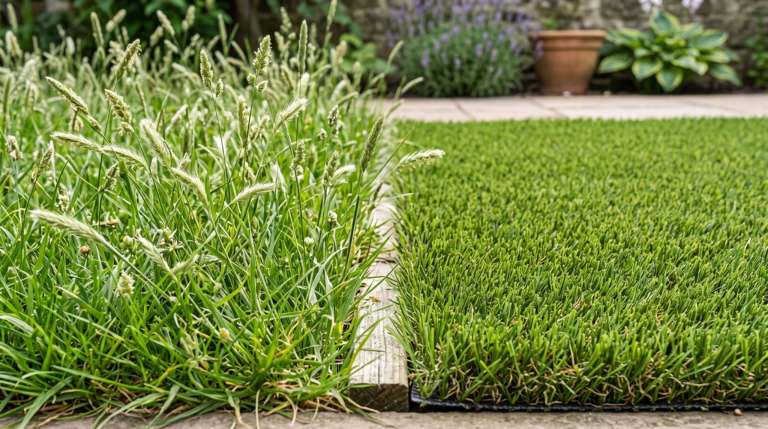
One of the cleanest ways to bring turf into a driveway design is to use narrow strips between sections of hard paving.
Large pavers with turf joints can give a front yard a softer appearance without asking the turf to do the job of the driveway itself. The same idea can be used with driveway ribbons, where hard surfaces follow the expected wheel paths and turf fills planned spaces between or around them.
Consistency matters here.
Keep the gaps deliberate rather than allowing them to change width from one end to the other. Plan the turf grain in the same direction across adjoining sections. An independent installer can also work out how the edges will be secured so each narrow strip stays neatly contained beside the hardscape.
Small strips can require just as much planning as a larger lawn because there are more edges to cut and finish. Measure carefully before ordering material, especially around curves, borders and irregular pavers.
Build Walkways and Garden Paths Around Real Traffic
Turf can also be used along side yards, through planting areas or between a patio and another part of the yard.
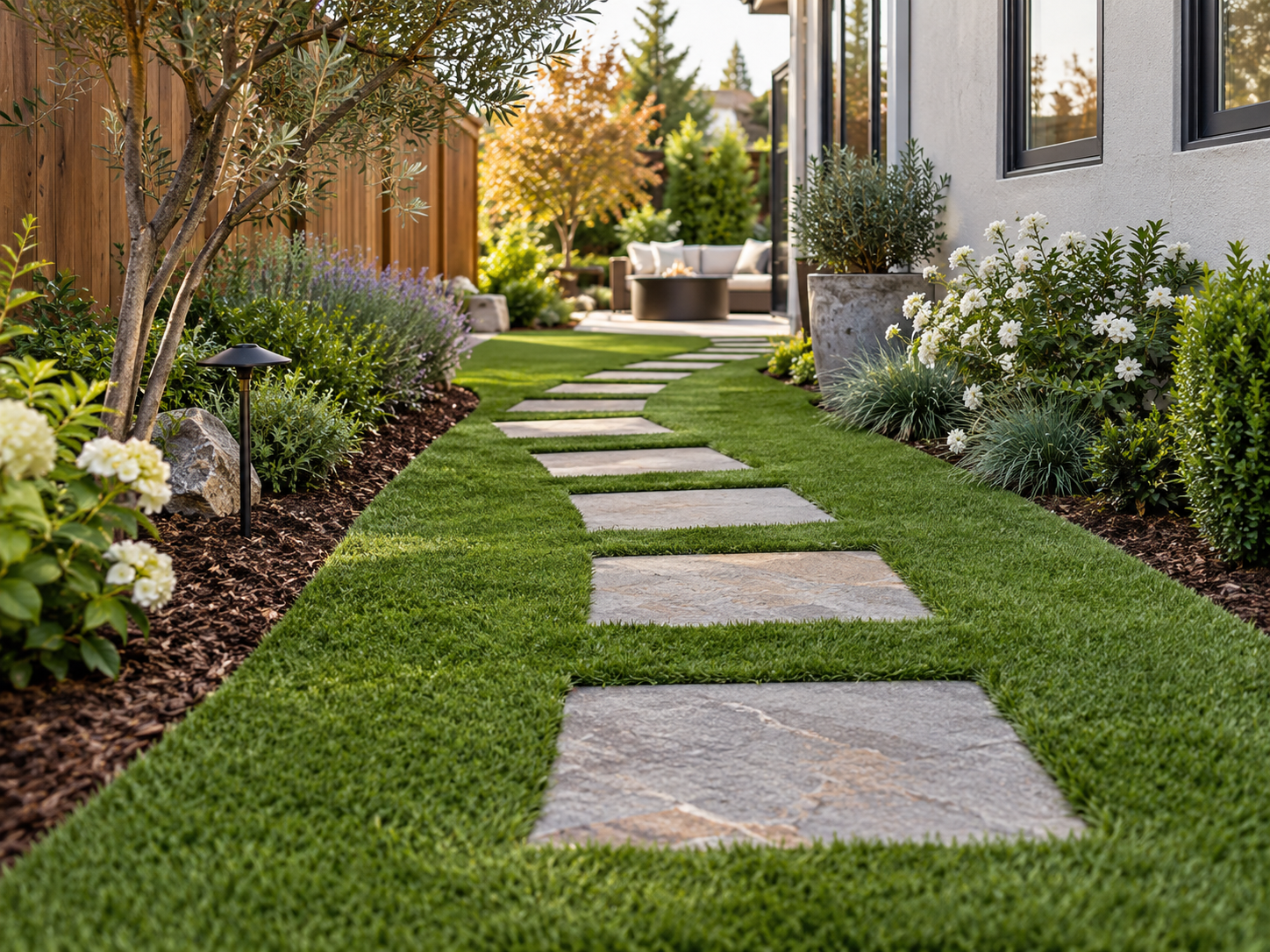
A simple path may be mostly turf with defined edging. Another option is to place stepping stones or pavers through the route and use turf around them. The second approach can be useful where people tend to follow the exact same line every day.
Pay attention to transitions at gates, stairs and patios. A noticeable height change at the edge can look unfinished and can make the area awkward to use. Base depth and final surface height should be planned together so the materials meet cleanly.
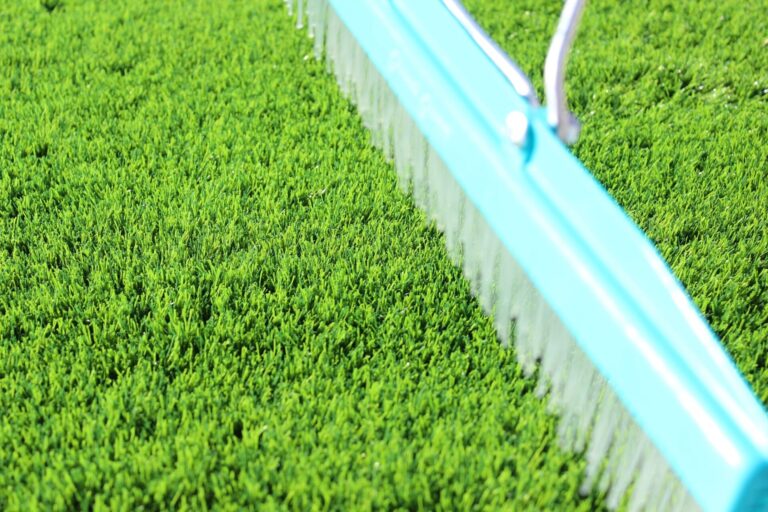
Leaves, soil and other debris tend to collect along path edges, especially beside garden beds. Occasional brushing and debris removal are still part of turf care. Artificial turf does not need mowing, but it is not maintenance-free.
Give Rainwater Somewhere to Go
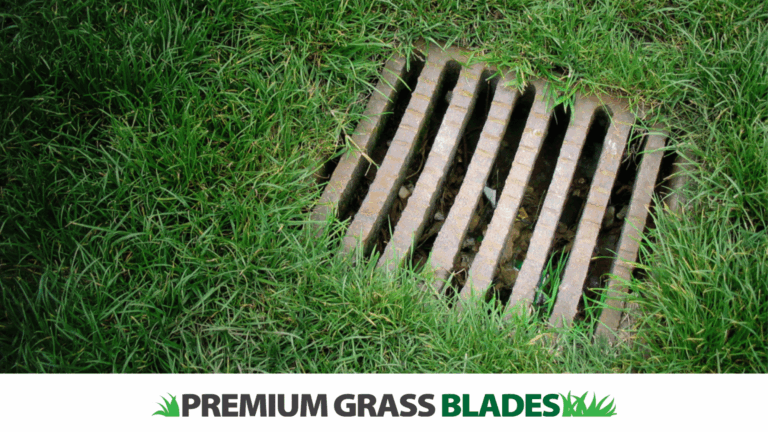
Artificial turf is not a substitute for proper drainage.
A permeable base beneath the turf can allow rainwater to move down through the turf and base rather than immediately running off a continuous area of hard paving. For that to work properly, the material below the turf, surrounding grades and final drainage route all need to be considered.
This is particularly important where turf strips meet concrete or pavers. Water should not simply be directed into a narrow strip with nowhere else to travel.
Before changing grades or covering an existing drainage feature, work out where rainfall currently goes and where it will go after the project is finished. PGB has more information on drainage design for artificial turf.
Base preparation also affects how well the finished surface holds its shape. PGB can refer you to an independent installer who can assess base preparation, drainage and transitions for the site.
Plan Path Lighting Before the Base Is Finished
Path lighting is easier to plan before the walkway is complete.
Low-voltage fixtures can be positioned beside a turf walkway to define the route after dark. Keep the lighting beside the path rather than building lights into the turf itself.
A qualified electrician should handle the electrical work. Planning the fixture positions early also gives the electrician a chance to determine where wiring and other components need to go without disturbing finished turf later.
Think about maintenance access too. Fixtures eventually need cleaning, adjustment or replacement, so avoid placing them where access would require pulling apart a finished turf edge.
Any project involving digging deserves the same basic preparation. Contact BC 1 Call before digging, wear appropriate protective gear, and follow PGB installation guidelines and the instructions supplied with the products being used.
Get the Base and Edges Right Before Cutting Turf
The green surface is the part everyone sees. The work underneath is what keeps the layout looking intentional.
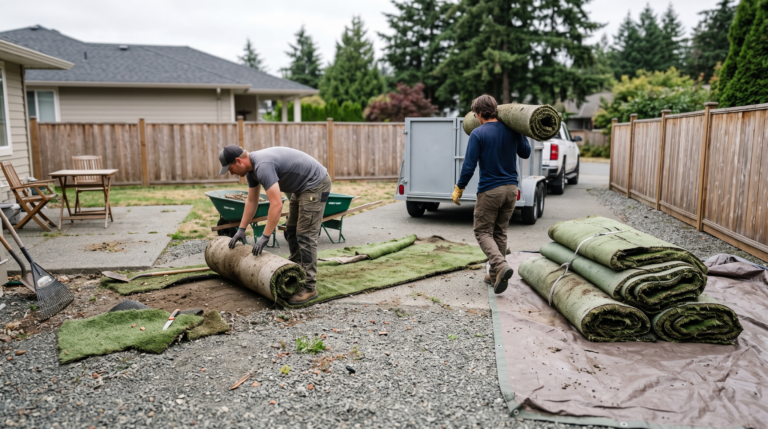
Before turf goes down, check the finished elevations beside concrete, pavers, curbs and garden borders. Confirm the drainage plan. Make sure the base is prepared for the intended use of that section of the yard.
This is also the stage to decide how narrow turf strips will be cut and how many separate pieces the design requires. Complicated paver patterns can create plenty of trimming, so a detailed measurement is useful before material is ordered.
PGB supplies artificial turf and related products. PGB does not perform turf installation, but the team can refer customers to an independent installer for projects that need professional base preparation or more complicated transitions.
FAQ
Can artificial turf be used as the main driving or parking surface?
For this type of residential design, plan the hardscape to carry driving and parking loads. Use turf as a planned strip, ribbon or surrounding feature rather than relying on it as the primary vehicle surface.
Does turf between pavers improve drainage?
A permeable base under turf can allow rainfall to pass through that portion of the surface instead of running directly off hard paving. The overall result still depends on grading, base preparation and where the water is directed.
Can path lights be placed within the turf?
A cleaner approach is to position low-voltage path lights beside the walkway. Have a qualified electrician complete the electrical work and plan fixture locations before the turf and surrounding edges are finished.
A driveway or walkway does not need a large artificial lawn to make turf part of the design. A few carefully planned strips between pavers, a defined garden path, or a green ribbon beside hard paving can add contrast without asking the turf to do a job better suited to concrete or stone.
For help planning turf quantities, base questions or an independent installer referral, call PGB at 604-757-2899.