Artificial Turf Drainage and Rain: How Water Moves Through Your Yard
For homeowners comparing options, artificial turf drainage in rain is really a two-part story. Water first has to get through the turf. Then it has to go somewhere useful.
That second part matters in British Columbia, where a yard can spend long stretches getting steadily soaked.
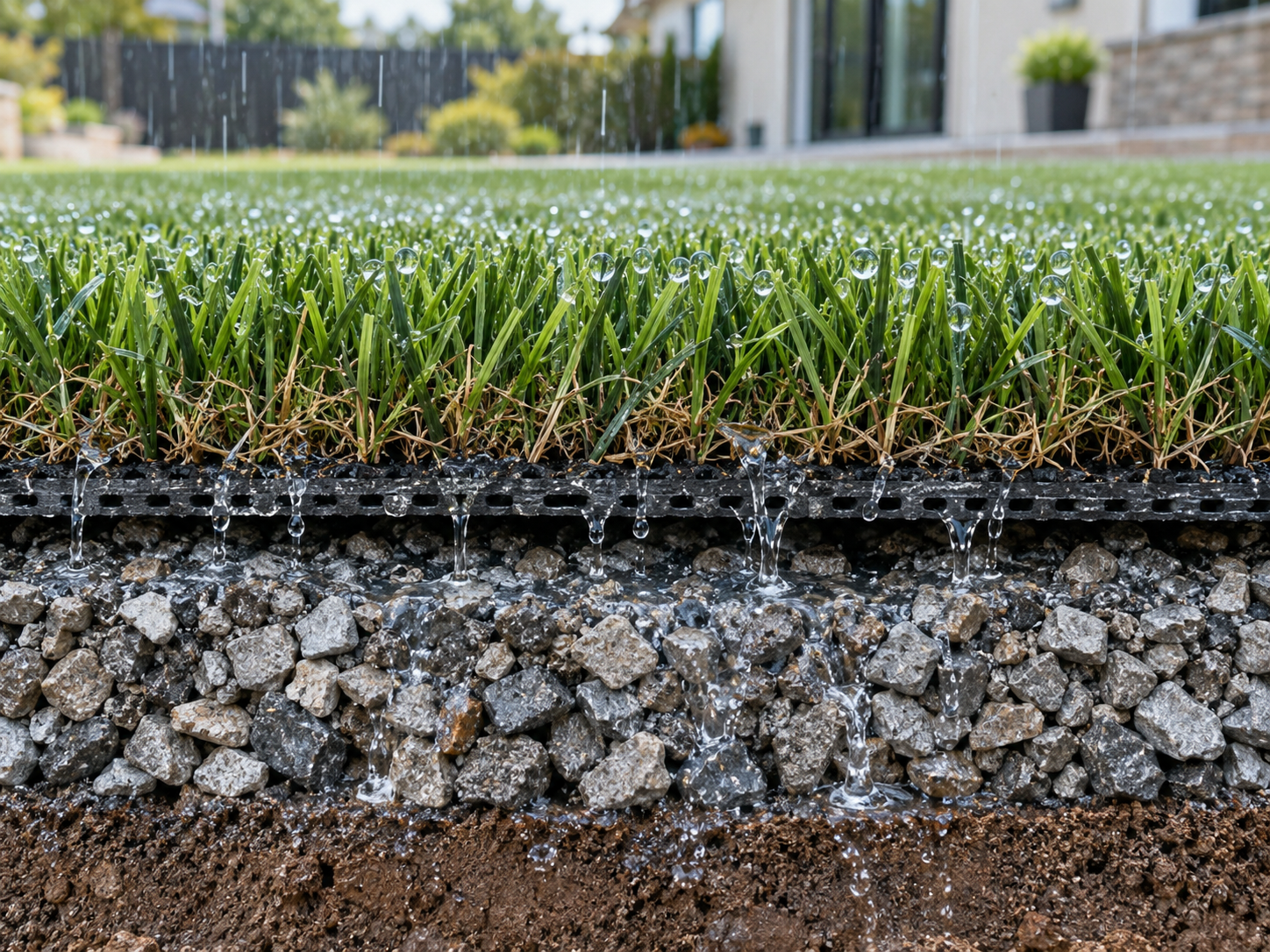
Many turf systems use backing with perforations that let water pass downward. But those openings are only the front door. The prepared base below the turf receives that water, moves it away and helps keep the surface usable.
Think of the turf as the strainer. The base is the plumbing.
Artificial Turf Drainage in Rain Starts at the Backing
Turn over a piece of artificial turf and you will see that the backing is doing more than holding the fibres in place. In many turf products, perforations allow rainwater to move through the surface instead of sitting on top.
Simple enough.
Except rain does not disappear once it passes through a hole. It arrives at the layer below, and that is where drainage becomes a site-design question.
The soil under one Lower Mainland yard may behave very differently from the soil two blocks away. A low spot beside a retaining wall may collect water. Roof runoff can also send extra water toward one part of a yard.
So the backing matters, but it cannot rescue a base that gives water nowhere to go.
For more detail, PGB has a guide on why drainage design is essential for artificial turf performance.
The Compacted Base Does the Heavy Work
A properly prepared base gives artificial turf a stable surface while also forming part of the drainage system.
One word matters here: prepared.
The base needs to be built to the conditions of the site and compacted correctly. Too much movement below the turf can lead to dips. Dips collect water. Water is remarkably good at finding the one place you hoped it would not.
A good base is also shaped, not merely dumped into place.
That means the person planning the project should be looking at existing grades, where water already travels and where it can continue without collecting. Drainage should be considered before the turf is rolled out, not after the first serious rain produces a small inland sea beside the barbecue.
The blades are what you see. The work underneath is what keeps the surface behaving properly.
Slope Gives Rainwater a Direction
Water follows gravity with admirable consistency.
A slight, intentional slope helps direct water toward an appropriate drainage area rather than allowing it to collect in low spots. The correct approach depends on the property, existing drainage and surrounding structures.
This is site-specific work. It is also a good reason to ask an independent installer how the grade will be handled before work begins. If you plan to do any of the digging or base work yourself, contact BC 1 Call before digging, wear protective gear and follow PGB installation guidelines and product instructions.
A yard that looks flat is not necessarily graded to move water. “Looks level” and “moves water properly” are not always the same thing.
The goal is not to make water vanish. The goal is to give it a sensible path.
Homeowners should also check with their municipality or strata council before starting a project if local requirements may apply.
What a Puddle Usually Means
Suppose the turf lets water through, but a puddle keeps appearing in the same place after rain.
That is a clue.
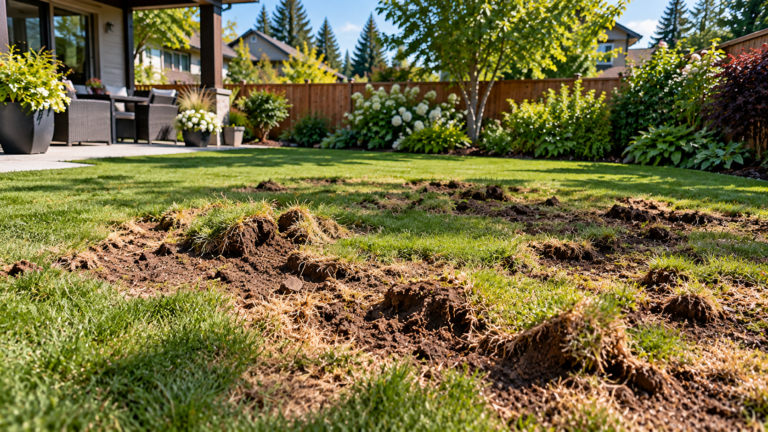
Persistent ponding often points to what is happening below the turf or along the site’s drainage path, rather than to the grass fibres themselves. A low area may have formed. The base may not be moving water as intended. Existing drainage may be restricted.
The surface is simply where the evidence appears.
Brushing the fibres may improve appearance, but it will not regrade a low base.
If puddling continues, have the area assessed by an independent installer. PGB supplies artificial turf and related products, but does not perform turf installation. PGB can refer customers to an independent installer where appropriate.
What to Ask an Installer Before the First Rain
Drainage questions are useful before the turf arrives, not once you are standing outside in rubber boots looking at a puddle.
Ask your installer:
- How will you assess the existing grade and drainage path?
- What base system is appropriate for this site?
- How will the base be compacted and shaped?
- Where is rainwater expected to move after it passes through the turf?
- Are there low spots, hardscape edges or downspouts that need special attention?
- Which turf backing is being proposed, and can you show me the product specification sheet?
That last question matters. Drainage-rate claims should come from the actual turf specification sheet. A single number on its own is not a substitute for understanding the base, slope and site conditions.
If a drainage rate is important to your project, ask to see the current spec sheet for the exact turf product being considered.
Turf Pad and Weed Barrier Belong in the Conversation
Some projects include additional layers or accessories.
PGB’s foam turf pad is an underlay used when a softer feel is wanted. If turf pad is part of your plan, ask how it fits into the full base and drainage assembly for your site. The answer should come from the project design and PGB product guidance, not guesswork.
PGB also carries weed barrier as an installation accessory. Whether it is appropriate for a particular project, and where it should be placed in the assembly, should be confirmed with your installer and the applicable PGB installation guidelines.
These materials are not substitutes for good grading or a properly prepared base.
Rain is very democratic that way. It tests every layer.
FAQ
Does artificial turf let rain through?
Many artificial turf products use perforations in the backing that allow water to pass downward. The full drainage performance of a yard also depends on the prepared base, grading and site drainage below the turf.
Why would artificial turf have puddles after rain?
A recurring puddle can indicate a low spot, a base issue or a problem with the site’s drainage path. The exact cause should be assessed on site rather than guessed from the surface alone.
Should I choose turf based on a drainage-rate number?
Use drainage-rate figures only when they come from the current specification sheet for the exact product. Then consider that information together with the base design, slope and site conditions.
Can PGB help with the installation?
PGB does not install artificial turf. PGB supplies turf and related products and can refer customers to independent installers, who contract with customers directly.
Good drainage is mostly invisible, which is exactly how you want it. The backing lets rain through. The base and grade take it from there. If you are planning a turf project for a wet BC yard, see and feel turf samples at the PGB Maple Ridge showroom and talk through the products that may fit your site.