How to Clean Leaves Off Artificial Turf Before Debris Builds Up
Fall leaves are not difficult to manage on artificial turf when you stay ahead of them. The trick is to remove them before rain presses them into the fibres and turns a light cleanup into a damp layer of debris.
If you are wondering how to clean leaves off artificial turf, you usually need only a leaf blower, a turf broom rake and a few minutes to check the places where debris collects. A simple fall routine helps keep the surface tidy and keeps leaves from piling up around drains and edges.
How Often Should You Clear Fall Leaves?
There is no fixed schedule for leaf cleanup. A yard under large deciduous trees may need attention more often than a space with only a few nearby trees.
The practical approach is to clear leaves while they are still loose and dry. After a windy day, take a quick look. If a layer is starting to build, remove it before the next stretch of wet weather.
You do not need to chase every single leaf. Focus on preventing thick piles from sitting for long periods, especially along fences, steps, garden borders and other sheltered spots.
For a broader year-round routine, see PGB’s artificial turf maintenance practices guide.
How to Clean Leaves Off Artificial Turf, Step by Step
Start with a leaf blower on a low setting
Begin when the surface is dry if conditions allow. Set the leaf blower low and use only enough air to move loose leaves and light debris. Wear eye and hearing protection while you work, and follow the blower’s operating instructions.
Work toward an open edge or one collection point instead of blowing leaves back and forth across the yard. Keep the nozzle moving and avoid forcing debris deeper into the turf fibres.
A low setting also gives you better control near furniture, planters and corners.
Follow with a turf broom rake
A blower takes care of loose material. A turf broom rake helps with the debris left behind.
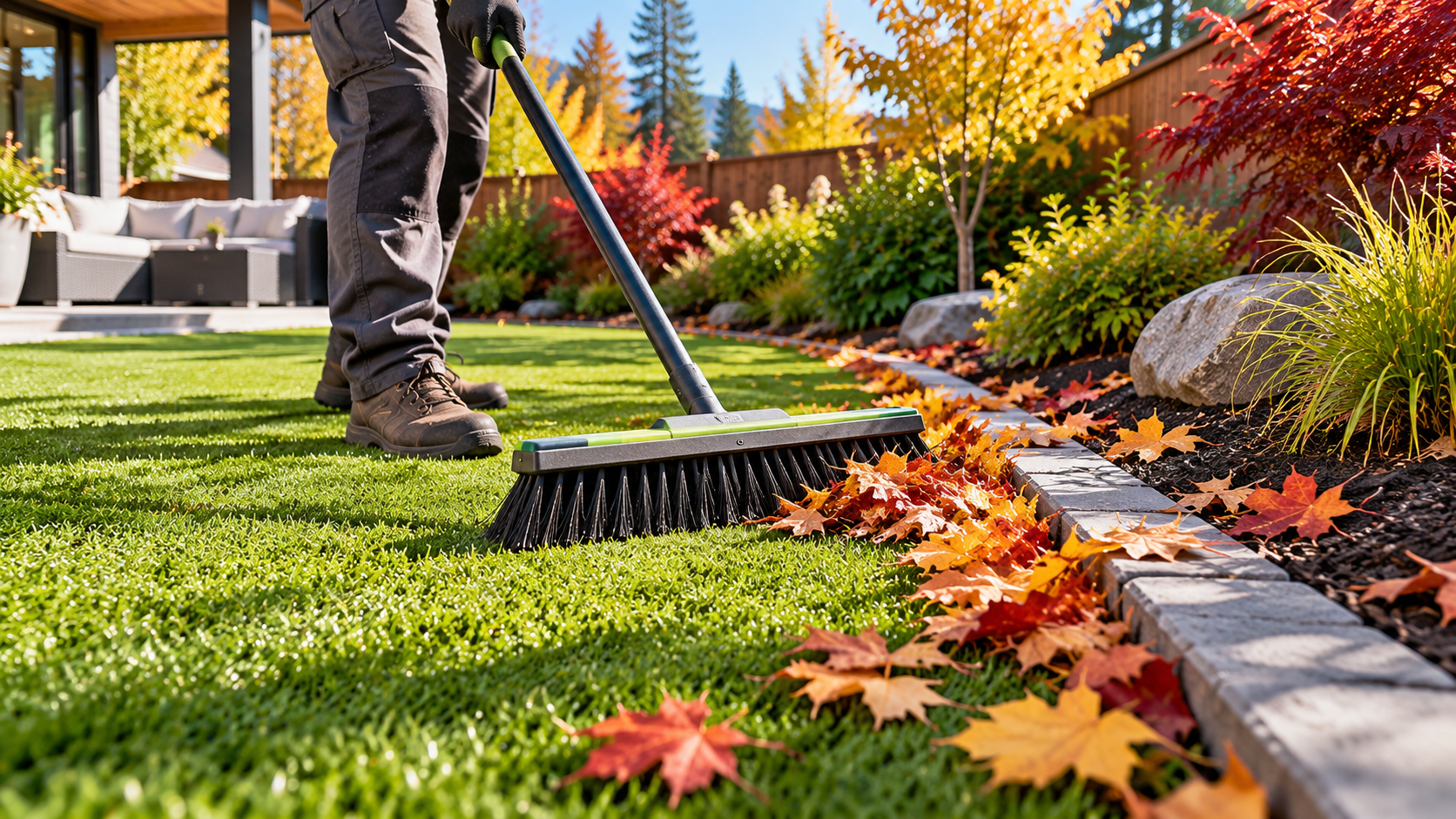
Use the PGB turf broom rake with light, steady passes to gather leaves from the surface and work through areas where debris has settled between the fibres.
Spend a little extra time around edges. These areas are easy to miss with a blower and can collect damp leaf material against fences, curbs and garden borders.
Why Wet Leaves Should Not Sit for Weeks
A few wet leaves after a rainy afternoon are normal. The concern is a layer of leaves that stays compressed against the turf for an extended period.
As wet plant material breaks down, it can leave organic residue and discolouration on the surface. Damp leaf buildup can also hold moisture around shaded borders and edges, creating conditions where moss may develop.
The simplest fix is timing. Remove leaf piles before they flatten and begin breaking down.
Check Drains, Edges and Low Spots
Leaf cleanup is also a good opportunity to inspect the parts of your turf that do not get much attention during the summer.
If the area has visible drains or drain covers, remove leaves collecting around them. You do not want a mat of wet debris sitting over an opening.
Walk the perimeter as well. Check fence lines, curbs, steps and borders where the wind tends to push leaves. Pull out debris that has gathered between the turf and adjoining surfaces.
If water repeatedly sits in one spot after the debris has been cleared, it may be worth having the drainage or base looked at by an independent installer. PGB can refer you to one.
What to Do With Stubborn Leaf Marks
Start simple. Remove the debris, brush the area and rinse it with water.
If a mark remains, use a cleaner intended for artificial turf, such as OxyTurf turf cleaner, and follow the label. Avoid experimenting with household chemicals that are not intended for turf.
Catching marks early also makes fall care easier. A small patch of wet leaves takes only a few minutes to clear. Several weeks of compacted debris usually means more brushing and cleanup later.
Keep Fall Turf Care Simple
Artificial turf is low maintenance, but it still benefits from occasional brushing, rinsing and debris removal.
Use the blower for loose leaves. Bring out the turf broom rake for material caught around edges or between fibres. Check drains and borders while you are already outside. If leaf residue remains after routine cleaning, use OxyTurf turf cleaner according to the label.
Regular, small cleanups are easier than tackling a season’s worth of wet leaves all at once.
FAQ
Can I use a leaf blower on artificial turf?
Yes. Use a low setting and only as much air as needed to move loose leaves. Keep the nozzle moving so you can control the debris.
Do I need to rake artificial turf in fall?
A turf broom rake can help gather leaves the blower misses and remove debris that has settled between the fibres. Use light, controlled passes rather than digging into the surface.
What should I do if leaves have already left marks?
Clear away the debris first, then brush and rinse the area. If a mark remains, clean it with OxyTurf turf cleaner and follow the label.
Should I clear leaves from the edges if the middle looks clean?
Yes. Fences, steps, borders and other sheltered areas can collect wet debris even when the main turf surface looks clear.
A little regular attention through fall can keep leaf buildup manageable through BC’s wetter months. If your turf needs more than routine debris removal, call Premium Grass Blades at 604-757-2899 to talk through the next step.