Artificial Turf Regulations Langford Homeowners Should Check
Planning an artificial turf project in Langford starts before anyone removes sod or brings in base material.
For homeowners researching artificial turf regulations Langford, the practical approach is simple: check the rules that apply to your property, confirm any strata requirements, and think through drainage and disposal before work begins.
There is no substitute for checking directly with the City of Langford when a rule could affect your property. Municipal requirements can depend on the site and the type of project, and strata properties may have another layer of approval to consider.
A few calls and emails at the beginning can prevent expensive changes later.
Artificial Turf Regulations Langford: Start With Your Property
Start with the address.
Do not assume that a landscaping project is automatically exempt from municipal review simply because no building is being constructed.
The City of Langford specifically directs property owners to contact its Planning Department for land-use regulations related to their individual property. The department also administers planning matters including development permits, rezoning and bylaw variance applications.
That makes Planning a sensible first stop if there is anything unusual about the project.
Before ordering turf, describe what you plan to do and where you plan to do it. Be ready to provide the property address and a basic description of the proposed area.
For a typical yard, useful questions include:
- Are there property-specific planning requirements I should know about?
- Does the proposed work require any municipal review or approval?
- Are there restrictions affecting the particular area of the lot?
- Is there another City department I should speak with about drainage or site work?
The goal is not to memorize the municipal rule book. It is to find out which parts of that rule book apply to your address.
Check Strata Rules Before Ordering Turf
A townhouse or condominium yard may look private while still being subject to strata bylaws, rules or approval procedures.
Read the current strata documents before purchasing materials.
Pay particular attention to rules covering exterior alterations, landscaping, common property and limited common property. If your strata requires approval for the proposed work, get that approval before materials are cut or site work begins.
A sketch can help. Mark the turf area, edges, existing drains, fences and other fixed features. If there is a gate or narrow access point, show that too.
Keep written approvals with your project records. It is far easier to settle a question later when everyone can see what was approved.
City approval and strata approval are separate matters. Checking one does not automatically answer the other.
Plan Drainage Before the Base Goes Down
Artificial turf is only the visible surface. What happens underneath matters just as much.
Before removing the existing lawn, figure out where rainwater goes now. Look for drains, low areas and slopes. Watch the yard during a good Vancouver Island rain if you have the chance.
The finished project should manage water on the site without deliberately directing runoff toward neighbouring property.
That requires more than choosing turf with drainage holes. The grade, base material and existing drainage conditions all affect where water moves.
If a yard already holds water, covering the problem does not fix it. The source should be understood first.
PGB’s guide to artificial turf drainage design explains why the layers below the turf are a key part of the finished system.
For challenging sites, ask the appropriate City department or a qualified professional what should be addressed before work starts. Sloped lots, retaining walls and existing drainage problems deserve extra attention.
For DIY work that involves excavation, contact BC 1 Call before digging, wear appropriate protective gear, and follow PGB installation guidelines and the instructions supplied with the products.
Have a Plan for Old Turf and Excavated Material
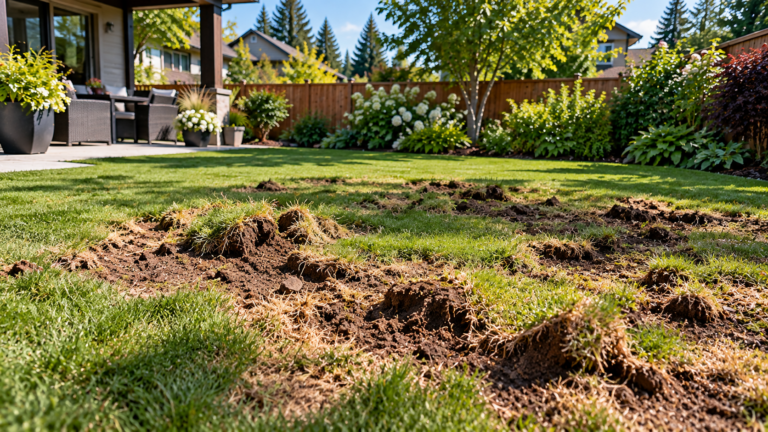
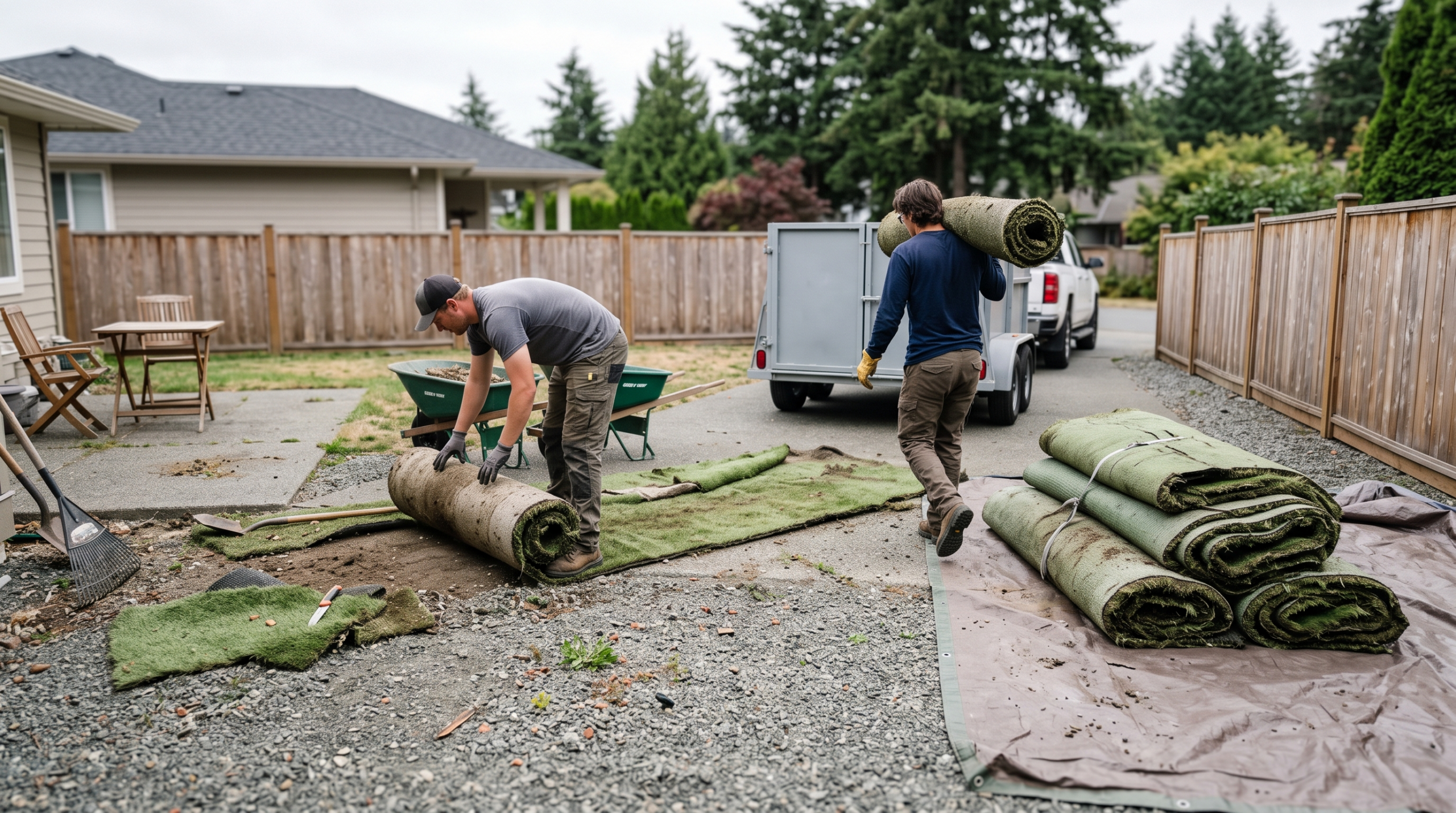
Removal creates material, often more than homeowners expect.
There may be natural sod, soil, old synthetic turf, infill, edging or base material to deal with. Before filling a trailer, find out where each type of material can currently go.
Do not assume that old artificial turf belongs in curbside recycling. Do not assume that a recycling option for synthetic turf is available locally either.
Contact the City of Langford or the Capital Regional District and ask for the current disposal instructions for the material you have.
Describe it accurately. “Old artificial turf with infill attached” is more useful than simply asking where to take “yard waste.”
If an independent installer is handling removal, ask how disposal will be managed and where the removed material is going. That conversation belongs in the planning stage, not after a pile of old turf is sitting beside the driveway.
Treat Commercial and Public Projects Differently
A small residential backyard and a commercial property are not the same planning job.
For a business property, multi-unit development or public project, contact the City of Langford Planning Department early.
Langford’s Planning Department manages development permits, zoning matters and related land-use applications, so staff can direct applicants toward the requirements relevant to a particular property and proposal.
Avoid relying on a rule quoted from an old blog post, contractor forum or neighbouring project. Another site’s zoning, development permit conditions or design requirements may have little to do with yours.
Bring a site plan if one is available. Show the proposed turf area and surrounding surfaces. Include drainage information and other work that forms part of the project.
For larger projects, the City may direct you to other departments or professionals based on the scope. Follow the current direction provided for that specific site.
Make the Project Plan Before Buying Material
Once the approval questions are answered, move on to the physical plan.
Measure the area and note the direction you want the turf fibres to face. Mark obstacles such as trees, posts, drains and garden beds. Think about access for removing soil and bringing in base material.
Drainage belongs on the same drawing.
If you are working with an independent installer, review the drawing together before material is ordered. If you plan to do the work yourself, follow PGB’s installation guidelines and product instructions.
PGB supplies artificial turf, infill and installation accessories. PGB does not perform turf installation, but can refer customers to independent installers who contract directly with the customer.
Taking care of the paperwork and site questions first makes the material-selection stage much simpler.
FAQ
Does Langford have one rule covering every residential artificial turf project?
Property requirements can vary. Rather than relying on a general answer, check with the City of Langford for information that applies to your address. The City’s planning information specifically advises property owners to contact Planning about land-use regulations related to their property.
Do I need strata approval for artificial turf?
Check your strata’s current bylaws, rules and approval process. Requirements can differ between properties. If approval is required, obtain it before ordering materials or beginning site work.
Can artificial turf send rainwater toward my neighbour?
The turf surface is only one part of drainage. Grade, base construction and existing site conditions affect water movement. Plan the finished area so runoff is properly managed rather than directed toward neighbouring property.
Can old artificial turf be recycled in Langford?
Do not assume that a local recycling option is available. Ask the City of Langford or Capital Regional District for current disposal guidance before removing the material.
Good artificial turf projects start with the parts you cannot see in the finished yard: approvals, drainage, measurements and a workable base plan. Once those pieces are sorted out, choosing the turf is much easier. Call PGB at 604-757-2899 to talk through the materials for your project.