Artificial Turf Materials and Backing: What to Look For
Pick up two pieces of artificial turf and they may look fairly similar from across the yard. Turn them over, separate the fibres with your fingers and check the specifications, and the differences become easier to see.
At Premium Grass Blades, we think understanding artificial turf materials and backing is a useful part of choosing turf. The fibres affect how the surface looks and feels. The construction influences how the turf handles regular use. The backing holds the system together and plays a role in drainage.
You do not need to become a turf engineer to make sense of it. You just need to know what to check.
Start With the Turf Fibres
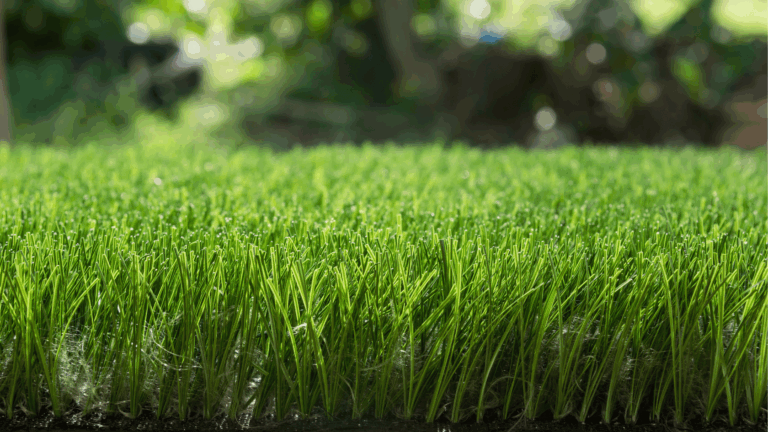
The fibres, sometimes called blades or yarn, are the part of the turf you see and touch.
Their material is one part of the equation. Blade shape, pile height, face weight, density and colour also influence how a particular turf feels and performs.
That is why we do not recommend choosing turf based on one specification alone.
A taller pile can create a fuller appearance, for example, but height does not tell you everything about density or how the fibres will respond to regular foot traffic. A shorter, denser turf may make more sense in another setting.
The practical approach is to start with the intended use.
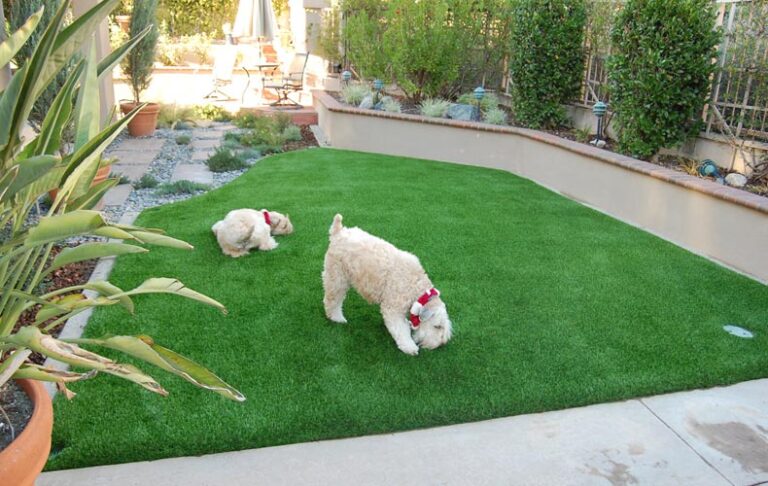
A quiet front lawn has different demands from a dog run. A family backyard has different requirements from a putting surface. Once you know where the turf is going, you can compare fibre construction and the rest of the specifications with that use in mind.
Product composition can also vary between turf lines. We recommend checking the individual product specification rather than assuming every roll is made the same way.
Why UV-Stabilized Fibres Matter
Outdoor turf spends its working life exposed to sunlight.
UV-stabilized fibres are designed to resist degradation and fading associated with UV exposure. That does not mean colour can never change or that turf is immune to every source of heat damage. It means UV performance is something worth checking when comparing products intended for outdoor use.
There is an important distinction here.
Ordinary sunlight and concentrated reflected heat are not the same thing. Sunlight reflected from certain windows can create concentrated heat capable of damaging synthetic turf. Direct or reflected heat over 65°C is excluded from the PGB Limited 15-Year Product Warranty.
If turf will sit near highly reflective windows, that should be considered during project planning.
Artificial Turf Materials and Backing Work Together
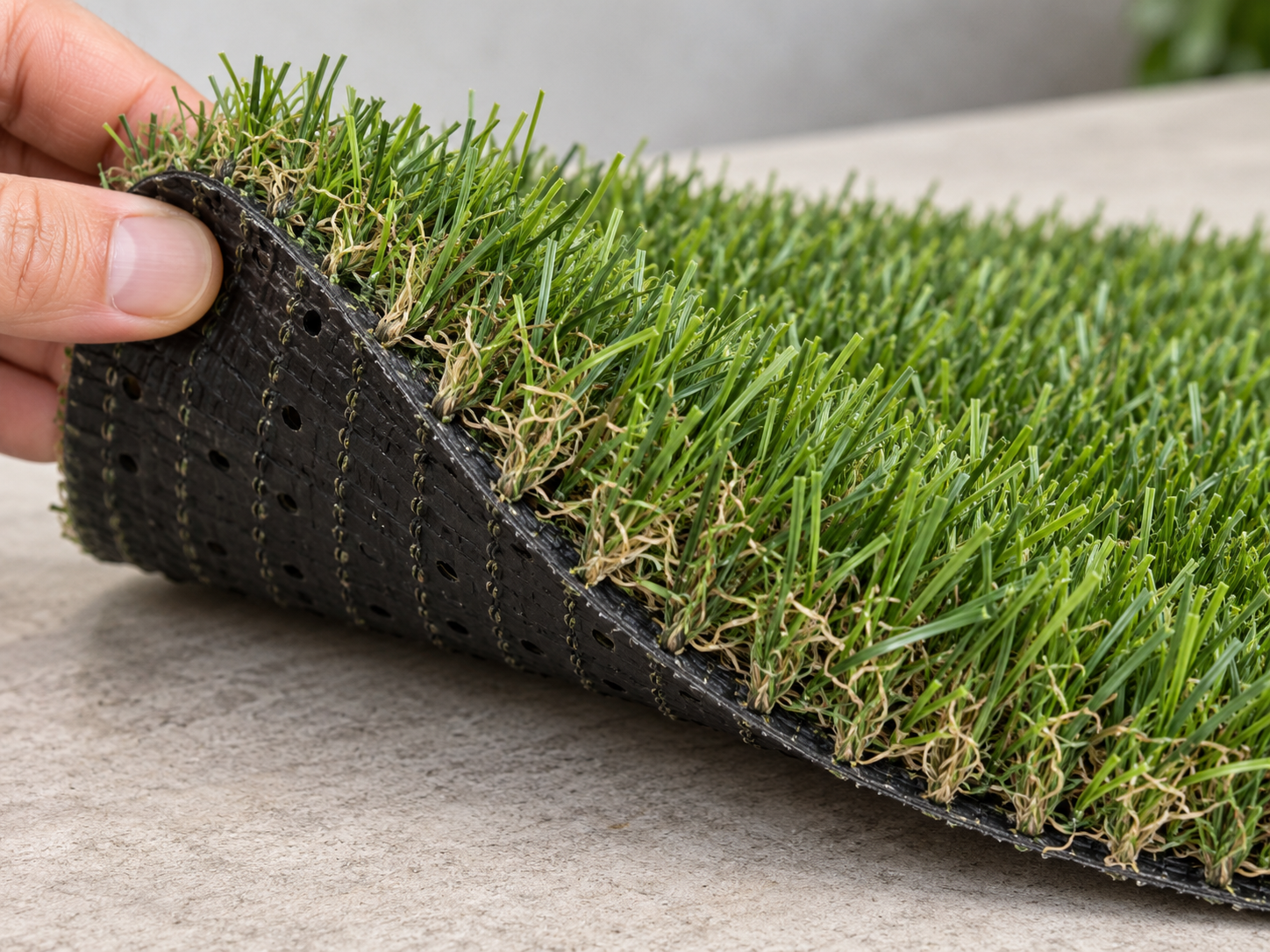
Now flip the sample over.
The backing may not get much attention in a showroom, but it has an important job. It gives the turf structure and provides the foundation that holds the fibres in place.
Backing construction can differ by product, so this is another area where the actual specification sheet matters more than a general statement about artificial turf.
Drainage is part of the discussion too.
Depending on the product, the backing may have drainage features that allow water to move through the turf. But a turf sample with drainage capability does not guarantee that an entire finished area will drain properly.
Water still needs somewhere to go.
The base, grading, site conditions and drainage design all matter. A poorly prepared area can create drainage trouble even when the turf itself is designed to let water pass through.
For an in-ground project, your independent installer should plan the base and drainage for the conditions on the property. For DIY work, follow PGB installation guidelines and product instructions, contact BC 1 Call before digging and use appropriate protective gear.
How to Read an Artificial Turf Spec Sheet
A specification sheet can look like a wall of numbers at first. Break it down into a few basic items and it becomes much more useful.
Pile height tells you the approximate height of the turf fibres. Do not automatically treat taller as better. The right height depends on the application and the overall construction of the turf.
Face weight describes the weight of the turf yarn over a given area, excluding the backing. It can help you compare products, but it should be considered alongside pile height, density and intended use.
Fibre or yarn information tells you what the visible turf fibres are made from and may include details about blade construction. Check the individual product sheet because composition can vary.
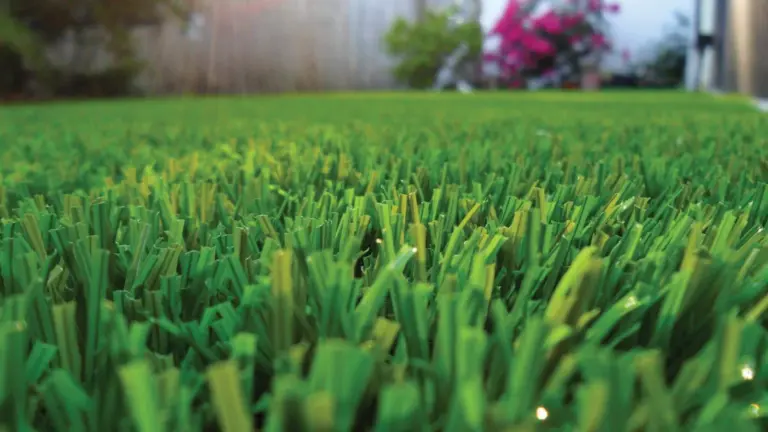
Colour and thatch help explain the visual character of a turf. Different greens and supporting thatch tones can change how a sample looks once it is laid across a larger area.
Backing and drainage information tells you about the underside of the product and how water can move through it. Again, check the exact product rather than assuming the backing construction is identical across a manufacturer’s range.
If you want a fuller explanation of the numbers, our guide to understanding artificial turf specifications covers blade height, face weight and density in more detail.
Do Not Choose Turf From One Number
This is where spec sheets can get people into trouble.
It is tempting to find the largest number on the page and declare a winner. Turf does not work that way.
Face weight alone does not tell you how a product will feel underfoot. Pile height alone does not tell you how dense it will look. Fibre material alone does not tell you whether it suits your yard.
We prefer to look at the whole product and the job it needs to do.
For a homeowner, that means thinking about foot traffic, pets, children, shade, drainage and the look you want. For a contractor, it also means matching product characteristics to the site and expected use.
Then handle a sample.
Brush the fibres in different directions. Look into the pile instead of only across the top. Turn the sample over and inspect the backing. Compare specifications side by side.
Those simple checks tell you considerably more than a product photo.
Where the Warranty Fits
Materials matter, but warranty terms deserve a place in the comparison too.
Our landscape turf is backed by the PGB Limited 15-Year Product Warranty, which is pro-rated and applies according to its terms and conditions. Putting green turf has an 8-year warranty.
For eligible turf, the warranty covers UV degradation, loss of more than 50% of blade weight and backing delamination.
Coverage also has exclusions and requirements. For example, turf that is not installed according to PGB guidelines, turf that is not infilled to the advised amount, and damage from direct or reflected heat over 65°C may not be covered. Remnants, roll ends and products sold as-is are also excluded.
Read the PGB Limited 15-Year Product Warranty before purchasing so you know what is covered and what the project needs to meet.
Look at the Sample, Then Look at the Specifications
Choosing artificial turf is easier when you stop treating the sample as just a patch of green.
Look at the fibres. Check the pile. Read the face weight. Turn it over. Look at the backing and drainage information. Then consider how all those pieces fit the actual job.
That is also why we keep different turf options available rather than treating one construction as right for every property.
If you want to compare materials, backing, pile and feel in person, visit our Maple Ridge showroom and see and feel the turf samples before you choose.
FAQ
Does heavier artificial turf automatically mean better turf?
No. Face weight is useful, but it is only one specification. Pile height, density, fibre construction, backing and intended use should be considered together.
Does artificial turf backing affect drainage?
The backing is part of the drainage system, but it is not the whole system. Drainage also depends on the base, grading and site design beneath the turf.
Are all PGB turf products made from the same materials?
Do not assume they are. Fibre composition, backing and other specifications can vary by product. Check the current specification for the exact turf you are considering.
Does UV stabilization mean artificial turf cannot fade?
No. UV-stabilized fibres are designed to resist UV degradation and fading, but that should not be read as a promise that fading can never occur. Concentrated reflected heat is a separate concern and can damage synthetic turf.