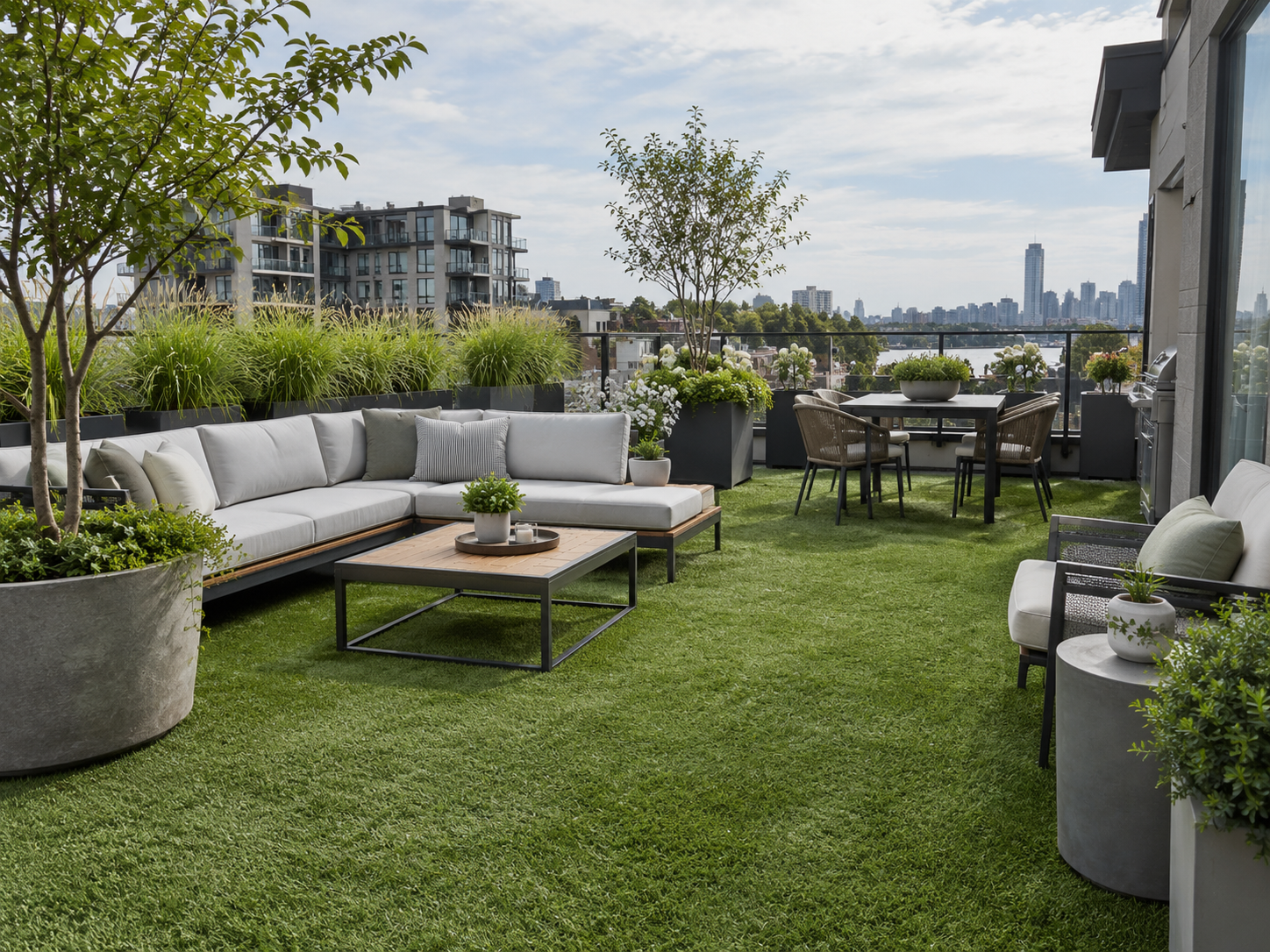
Artificial Turf in Modern Architecture: Where It Fits
Artificial turf in modern architecture makes the most sense when it is treated as a building material, not as a pretend lawn. A rooftop terrace, enclosed courtyard or narrow outdoor room asks different things of a surface than a suburban yard does. There may be no soil below it. Water may need to reach a drain rather than disappear into the ground.
Its role is less about copying nature and more about deciding where a planted lawn is practical, where it is not, and how a green surface can fit into the way people actually use a space.
Artificial Turf in Modern Architecture Beyond the Backyard
Modern buildings often create outdoor areas in places where a conventional lawn would be awkward. Rooftops, terraces and courtyards may sit over concrete, waterproofing systems or occupied rooms. Each condition changes the questions that should be asked before a turf product is chosen.
On a rooftop, the building comes first. The project team should consider structural loading, existing drainage, waterproofing, wind exposure and how the surface will be secured without creating problems for the roof assembly. A building professional should review the relevant conditions, and owners should check with their strata council or building manager where required.
Courtyards bring different constraints. They may receive limited sun, collect leaves or funnel rain toward a small number of drains. Artificial turf can provide a consistent green surface in these spaces, but it still needs access for cleaning and a drainage plan that suits the site.
Terraces may be smaller, yet the same principle applies. Turf should be considered alongside planters, seating, hard surfaces and drainage rather than added as an isolated decorative layer.
Water Use Is Part of the Design Conversation
A lawn is never only a patch of green. It is also a system of soil, irrigation, mowing and seasonal care.
Artificial turf changes that system because the turf itself does not need watering, mowing or fertilizer. In a project where irrigation demand is a concern, replacing an irrigated grass area with turf can reduce the portion of the site that needs regular watering. Nearby trees, shrubs and container plants may still need irrigation, and turf may need occasional rinsing for cleaning or pet use.
That distinction matters. Designers can make room for living plants where they have enough soil, water and light, then use artificial turf where a conventional lawn would be difficult to maintain.
Designing for Pacific Northwest Rain, Snow and Heat
In coastal BC and the wider Pacific Northwest, drainage deserves careful attention. Artificial turf does not correct poor drainage beneath it. On rooftops and terraces, existing drains must remain able to do their job. On ground-level projects, base preparation and drainage design matter just as much as the turf selected for the surface.
Snow is another seasonal condition to plan for. Avoid aggressive scraping or tools that may catch the fibres. Once snow and ice have cleared, the surface can be checked, debris removed and fibres brushed as needed.
Heat needs a more specific caution. Sunlight reflected from windows can concentrate heat onto a small area and damage synthetic turf. This is different from ordinary summer sunshine and should be considered anywhere turf sits near large areas of glass.
Direct or reflected heat over 65°C is excluded from the PGB Limited 15-Year Product Warranty, which is pro-rated. Window reflections should be assessed before the project is finished, especially on terraces and courtyards surrounded by glazing.
Play Areas Need More Than a Green Surface
A play area is a design problem of its own. Colour and softness matter, but they are not substitutes for checking the requirements that apply to the equipment and surfacing.
PGB offers a foam turf pad that can be used beneath turf for a softer feel. For playground projects, the project team should check the current CSA Z614 requirements for playground equipment and surfacing, along with the instructions supplied by the play equipment manufacturer.
Turf, foam underlay and play equipment should be considered as parts of one system. The presence of a pad should not be treated as automatic compliance with a playground standard.
For smaller residential play areas, also think about shade, supervision on hot days, access for cleaning and how the space will change as children grow.
Specifications Matter More Than Broad Claims
Architecture depends on details. Materials are chosen because their properties match a use, not because a slogan says they can do everything.
For artificial turf, that means reviewing the product specification, backing, intended use, infill requirements, drainage conditions and warranty terms. PGB supplies artificial turf and related products, and can refer customers to an independent installer. The installer contracts with the customer directly.
For a project that asks for this test information, keep the claim exactly as approved: tested to EN 13501-1.
If a project has a requirement for a rooftop assembly, playground, strata property or another specialized setting, the responsible project professionals should verify what applies before materials are ordered.
A Green Surface Should Still Belong to the Building
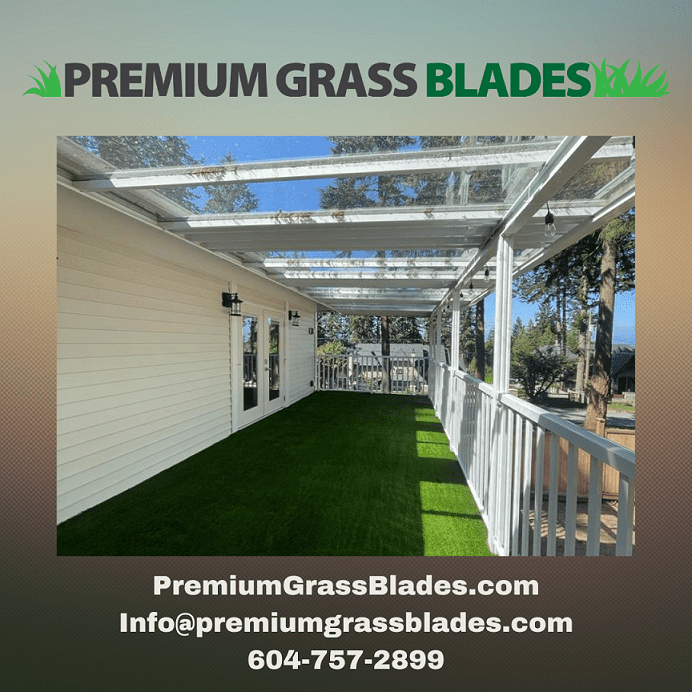
The strongest use of artificial turf in a modern project is often a quiet one. It gives a rooftop a green surface without requiring a conventional lawn. It can soften the visual break between concrete and planting beds or make a small courtyard feel more usable.
Good design puts each material where its strengths are useful and its limits are understood. Artificial turf can have a place in that conversation, especially where water, access, drainage and maintenance make a conventional lawn difficult.
FAQ
Can artificial turf be used on a rooftop or terrace?
It can be considered, but the building conditions come first. Structural loading, drainage, waterproofing, wind exposure and the securing method should be reviewed by the appropriate building professional. PGB supplies turf and can refer customers to an independent installer.
Does artificial turf remove the need for watering?
The turf itself does not need watering. Living plants in the same design may still need irrigation, and occasional rinsing may be useful for cleaning or pet areas.
Is a foam pad enough for a playground project?
A foam pad can provide a softer feel beneath turf, but it should not be treated as proof that a playground meets a standard. Check the current CSA Z614 requirements and the equipment manufacturer’s surfacing instructions for the specific project.
What should architects and designers ask for before specifying turf?
Ask for current product specifications, warranty terms, samples and any test documentation relevant to the project. Site conditions should be reviewed separately so the selected product and assembly suit the actual space.
To compare turf textures beside concrete, planters and other building materials, see and feel turf samples at our Maple Ridge showroom.