Artificial Turf Maintenance Through Every Season
A garden changes its habits with the seasons. Spring brings rain and new growth around the edges. Summer adds dust, bare feet and long evenings outside. Autumn arrives with armfuls of leaves, while winter settles everything down beneath rain, frost and sometimes snow.
Artificial turf maintenance has a seasonal rhythm too. It does not need mowing or fertilizer, but it does benefit from regular debris removal, rinsing, brushing and attention to infill.
The work is modest when it is done as part of the year rather than saved for one large cleanup. A few thoughtful checks through each season can keep the surface looking cared for and help you notice small issues before they become harder to deal with.
Artificial Turf Maintenance Through the Seasons
Most routine care comes back to a few simple jobs.
Remove leaves, twigs and other loose material before they collect deeply between the fibres. Brush areas where repeated footsteps have pressed the blades down. Rinse the turf when dust, spills or pet use call for it.
It is also worth watching the infill.
Infill sits down between the turf fibres, helping support them and contributing to the feel and stability of the surface. High-traffic paths, gates and places where people regularly step off a patio deserve extra attention because these areas can show changes sooner than quieter corners of the yard.
If infill has shifted or become low, top it up to the amount advised for your turf. More is not automatically better. Follow the product requirements rather than adding material by guesswork.
This basic rhythm gives you a useful starting point in every season.
Spring: Clear Away Winter and Lift the Fibres
Spring in BC tends to reveal what winter left behind.
Leaves that escaped notice in December may be tucked along a fence. Small branches collect beneath shrubs. Wet debris can settle into corners where it is easy to overlook.
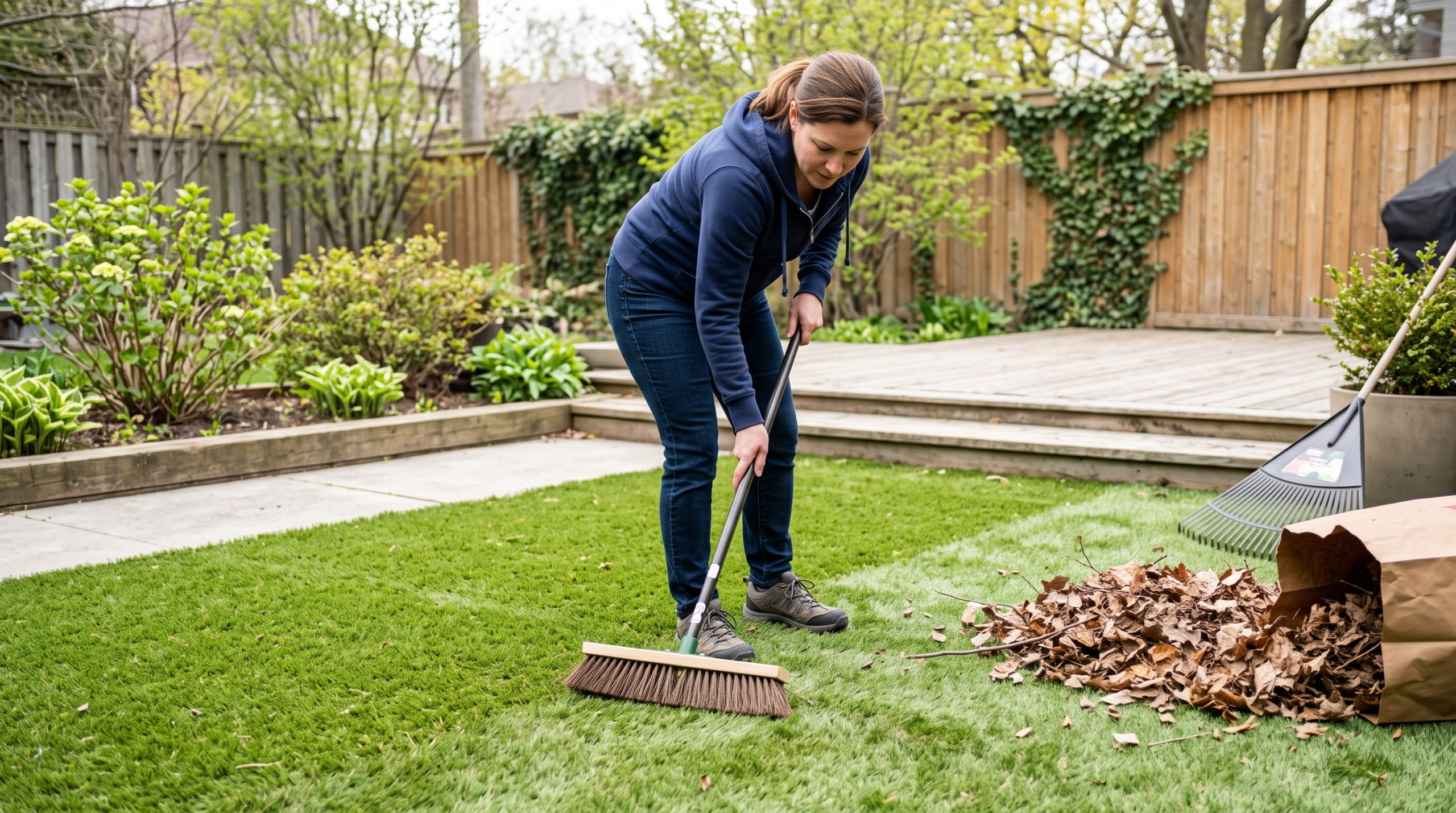
Begin with a gentle clearing of the surface. Pick up larger pieces by hand, then use a turf broom or rake designed for synthetic turf to remove smaller debris and lift fibres that have been pressed down.
Walk the lawn slowly while you work. Look at busy paths, seams and edges. Check areas around outdoor furniture and the route between the house and gate.
Spring is also a good time to inspect infill levels. Where material has shifted, add the appropriate infill to the advised amount and brush it down into the fibres.
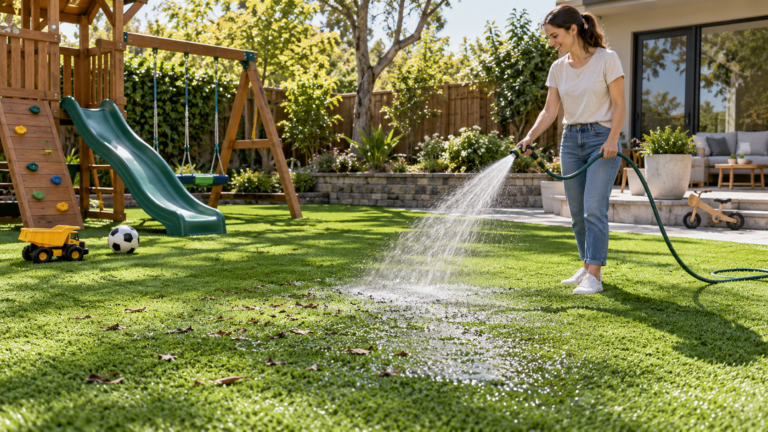
If the surface has collected winter grime, rinse it. For areas that need more than water, use a cleaner intended for artificial turf or a suitable enzyme cleaner according to the product label.
PGB offers OxyTurf Cleaner as an option for turf cleaning. Follow the label whenever you use it.
Summer: Brush Busy Areas and Pay Attention to Heat
Summer tends to bring more feet onto the lawn.
Chairs move. Children cross the same path to the sprinkler. Dogs choose a favourite route along the fence. A section near the patio may see far more use in July than it did in February.
Brush these high-use areas as needed to help lift fibres that are leaning or compressed. Remove food, fallen plant material and other debris before it works down into the pile.
Rinse dusty turf when needed. Pet areas usually benefit from more regular attention, especially during dry stretches.
Heat deserves its own check.
Artificial turf warms in direct sunlight, so check the surface temperature before use on hot days and supervise children and pets. Reflected sunlight from windows can also concentrate heat and damage synthetic turf.
If you notice an unusually intense patch of reflected light moving across the lawn, deal with the source rather than waiting for damaged fibres to appear. Direct or reflected heat over 65°C is excluded from the PGB Limited 15-Year Product Warranty.
Summer maintenance is mostly observation. The lawn often tells you where it needs attention simply by showing you where everyone spends their time.
Fall and Winter: Stay Ahead of Leaves and Snow
Autumn maintenance begins overhead.
Leaves rarely land evenly. They gather against fences, curl beneath chairs and form little drifts around planters. Clear them regularly rather than allowing a thick layer to sit on the turf through wet weather.
A turf broom, suitable rake or leaf blower can make the job easier. Once the loose material is gone, look beneath it for smaller debris that may have settled into the fibres.
Fall is also a useful time to check how water is moving through and around the area. If you notice persistent pooling or a change in the surface, investigate the cause rather than assuming the turf itself is responsible.
Winter asks for a lighter touch.
If snow needs to be removed, use a plastic shovel rather than a sharp metal edge that could catch the turf. Work carefully around seams and edges.
There is no need to fight every trace of frost. Allow frozen turf and ice to thaw rather than aggressively scraping the surface.
After winter weather passes, a gentle brushing can help fibres that have been compressed by snow begin standing more naturally again.
Infill, Pet Areas and Deeper Cleaning
Infill is easy to forget because most of it sits out of sight.
Yet it is an important part of routine turf care. Check levels in frequently used areas and replenish them to the advised amount when needed.
For ordinary landscape turf, silica sand can be used as basic infill. In yards used by dogs, zeolite infill can help manage pet odours when it is paired with proper drainage, regular rinsing and routine cleaning.
Zeolite does not replace cleaning.
Pick up solid pet waste promptly and rinse the area as needed. If a turf or enzyme cleaner is part of your routine, use it according to its label. Avoid treating one strong cleaning session as a substitute for consistent care throughout the year.
Sometimes a lawn needs more attention than an ordinary homeowner routine can reasonably provide.
Older turf, heavily used pet areas and surfaces with flattened fibres or debris worked deeply into the infill may benefit from a deeper refresh. PGB performs turf cleaning and renewal services, including work for turf that needs more than the usual brush and rinse.
A professional refresh does not replace seasonal care. It is another option when the surface has reached the point where routine maintenance is no longer doing enough.
Artificial Turf Maintenance FAQ
How often should artificial turf be brushed?
There is no single schedule for every yard. Brush according to use. Areas around gates, patios, play zones and regular walking routes may need attention sooner than quieter parts of the lawn.
Can I rinse artificial turf with a garden hose?
Yes. Rinsing is part of routine care for dust, minor spills and pet areas. If you use a turf cleaner or enzyme cleaner, follow the product label.
What should I do if the infill looks low?
Check the requirements for your turf and top up the infill to the advised amount. Pay particular attention to high-traffic areas where material may shift over time.
Does artificial turf need maintenance in winter?
Yes, although winter care is generally simple. Keep debris under control, let frozen areas thaw rather than scraping them aggressively, and use a plastic shovel if snow needs to be moved.
There is something satisfying about caring for a garden a little at a time. The leaves are gathered before they become a soggy layer, the fibres are brushed where everyone walks, and pet areas are rinsed before they demand attention. Artificial turf responds well to the same quiet habit of noticing what the season has brought.
If your turf needs more than its regular seasonal routine, request a PGB turf cleaning and renewal visit.