Benefits of Using Turf Foam for Your Grass Landscaping
Artificial turf is more than the green material you see on top.
Underneath is a carefully prepared system. The base supports the surface, the turf creates the finished lawn, and, on some projects, a turf foam pad can be added between those layers to change how the finished area feels underfoot.
That last part is important. Foam pad is an option, not something every artificial turf project requires. For the right space, though, it can give the surface a softer, more cushioned feel.
Here is what to know before adding it to your project.
What Is a Turf Foam Pad?
A turf foam pad is an underlay designed to sit beneath artificial grass.
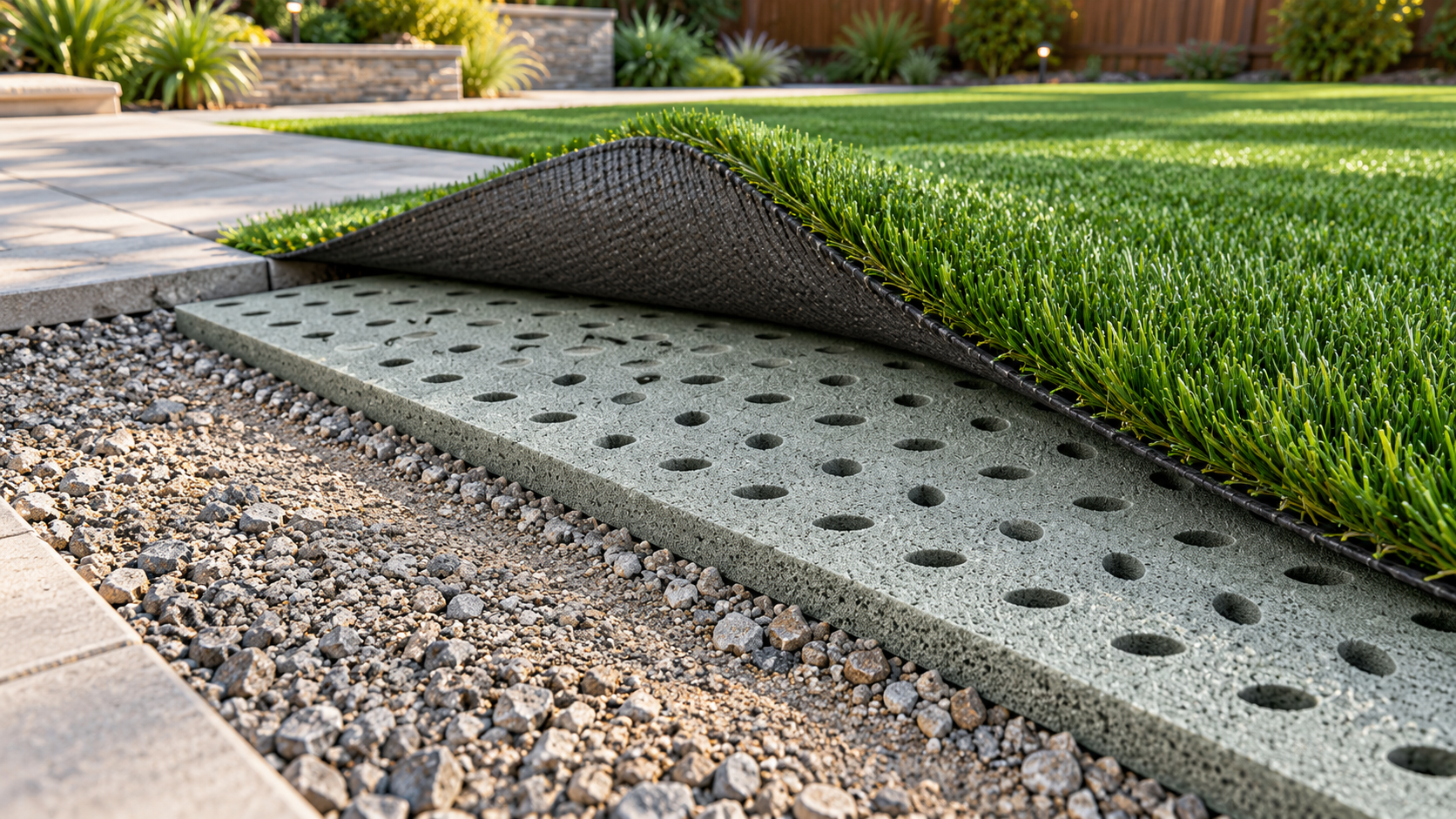
Think about the layers of the project from the ground up. The site is prepared with an appropriate base and drainage plan. Foam pad can then be placed over the prepared surface, followed by the artificial turf.
Once the project is finished, you generally see the turf, not the pad. Its job is underneath.
The main reason to consider foam is straightforward: it creates a softer feel beneath the turf.
Without foam pad, artificial turf gets much of its underfoot feel from the turf construction and the prepared base beneath it. Adding a foam layer changes that feel by putting a little more cushioning between your feet and the firm supporting surface.
That can make sense in areas where people spend plenty of time walking, sitting or playing on the turf.
Where Does Turf Foam Pad Go?
Getting the order of materials right matters.
Artificial turf needs a properly planned foundation. Drainage, grading and base preparation should be addressed before the finished surface goes down. Foam pad does not replace that groundwork.
Instead, it becomes another layer in the system.
A simplified build-up looks like this:
Prepared surface or base → foam turf pad → artificial turf
The exact preparation depends on the site. A backyard lawn, patio area and other applications can present different drainage and construction questions.
Foam should not be treated as a shortcut for an uneven or poorly prepared base. If the ground underneath has dips, movement or drainage trouble, covering it with another material does not address the underlying cause.
Start with the site. Then decide whether adding foam makes sense for how you plan to use the finished area.
Why Add a Turf Foam Pad?
The easiest way to decide is to think about what you want the surface to feel like.
Some homeowners prefer a firm artificial lawn. Others want a little more give beneath their feet, particularly in areas where family members spend a lot of time at ground level.
A foam underlay provides that additional cushioning.
You may notice the difference while walking across the lawn, kneeling to work on something or sitting outside with the family. It can make a turf area feel less firm than turf placed directly over its prepared supporting surface.
That does not mean every backyard needs it.
If you are planning a decorative side yard that receives little foot traffic, foam might not be high on your list. If you are planning an area where people will regularly play, sit or spend time outside, it becomes more relevant.
Use the space to make the decision rather than assuming more layers are automatically better.
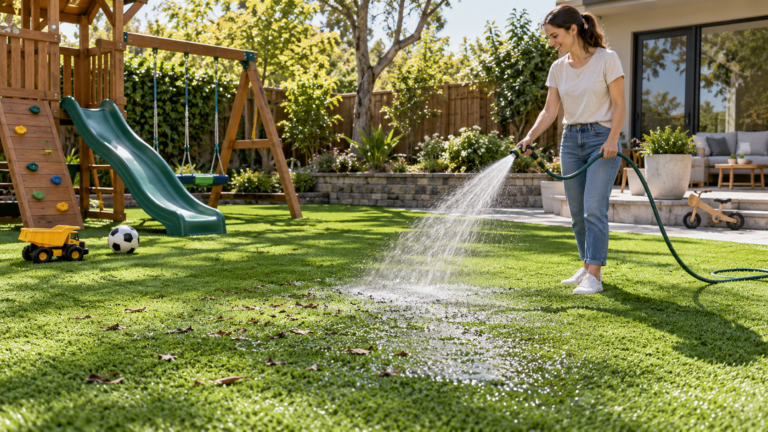
Turf Foam Pad for Play Areas
A backyard play space is one of the common places to consider foam.
Children tend to use a lawn differently from adults. Adults walk across it. Kids sit on it, crawl around, build things on it and somehow end up spending an impressive amount of time at ground level.
A softer surface can simply feel nicer for that kind of everyday use.
There is an important distinction here. Foam pad should not be presented as a substitute for the surfacing requirements of play equipment or as a guarantee against injuries. If you are adding swings, climbing equipment or other play structures, follow the equipment manufacturer’s instructions for the required surfacing and setup.
For a family yard, the practical question is simpler: would you prefer the turf itself to have more cushioning underfoot? If so, foam pad is one material worth discussing during the planning stage.
Turf Foam Pad for Pet Areas
Pet spaces are another application where homeowners may consider foam.
Dogs spend plenty of time directly on the surface. They walk, lie down, chase toys and occasionally conduct serious investigations into a leaf that has apparently become extremely suspicious.
A cushioned underlay can make the area feel softer.
But pet areas have another major requirement: drainage.
If you are planning artificial turf for dogs, think about the entire system rather than choosing materials individually. The base, drainage, turf and infill all need to suit the intended use. Regular cleaning and rinsing are also part of caring for pet turf.
Foam pad is there to affect the feel of the surface. It should not be expected to correct a drainage problem or replace proper pet-turf maintenance.
Plan the Whole Turf System Before Buying
A good artificial turf project starts below the blades.
Before ordering materials, look at the site and work through the basics. Where does water go now? What is underneath the proposed turf? How will the area be used? Will there be pets? Will people regularly sit or play there?
Those answers help determine which materials belong in the project.
If foam is part of the plan, include it from the beginning rather than treating it as a last-minute extra. Your independent installer needs to account for the complete build-up of the area, including the base, foam and turf.
DIY homeowners should do the same. Before digging, contact BC 1 Call, use appropriate protective gear, follow PGB installation guidelines and follow the instructions supplied with the products you are using.
PGB supplies artificial turf, installation accessories and foam turf pad. PGB does not perform turf installation, but can refer customers to an independent installer who contracts directly with the customer.
Is Turf Foam Pad Right for Your Yard?
Start with one practical question: what do you want from the finished surface?
If the main goal is a softer, more cushioned feel underfoot, foam pad may be worth adding to the material list. It is particularly useful to consider for spaces where people or pets spend plenty of time directly on the turf.
If cushioning is not a priority, your project may not need it.
Either way, foam is only one part of the turf build-up. Base preparation, drainage, turf selection and the intended use of the area all deserve attention before materials are ordered.
That is why it helps to look at the complete project rather than picking the visible turf first and figuring out everything underneath it later.
Visit the Premium Grass Blades showroom in Maple Ridge to see and feel turf samples and talk through whether foam pad makes sense for your project.
FAQ
Does every artificial turf project need a foam pad?
No. Foam pad is an optional underlay used when a softer feel is wanted. The right material setup depends on the site and how the finished turf will be used.
Does foam pad replace the turf base?
No. Foam pad is an additional layer in the turf build-up. Proper site preparation, base work and drainage still need to be addressed.
Can foam pad be used under turf in a play area?
It can be considered when a softer surface is desired. For areas with play equipment, always follow the equipment manufacturer’s instructions regarding surfacing and setup.
Can PGB supply the foam and install the turf?
PGB supplies foam turf pad, artificial turf and related products. PGB does not install artificial turf. PGB can refer you to an independent installer in your area.