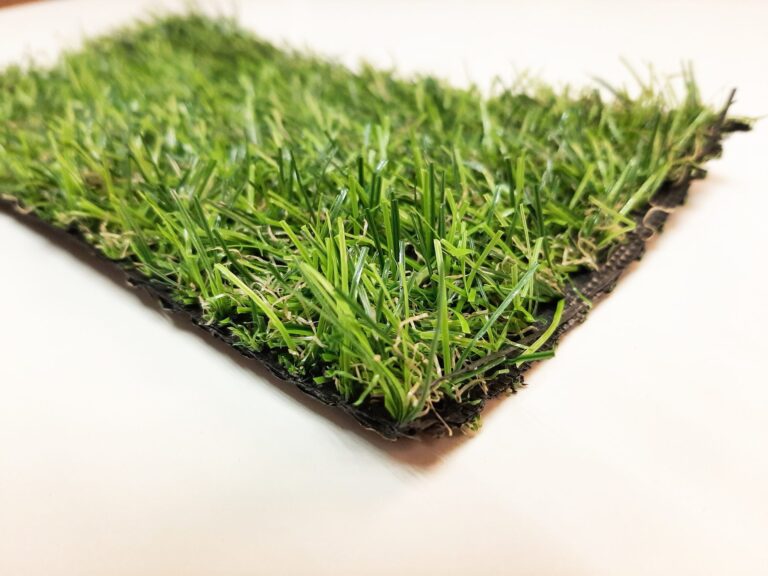
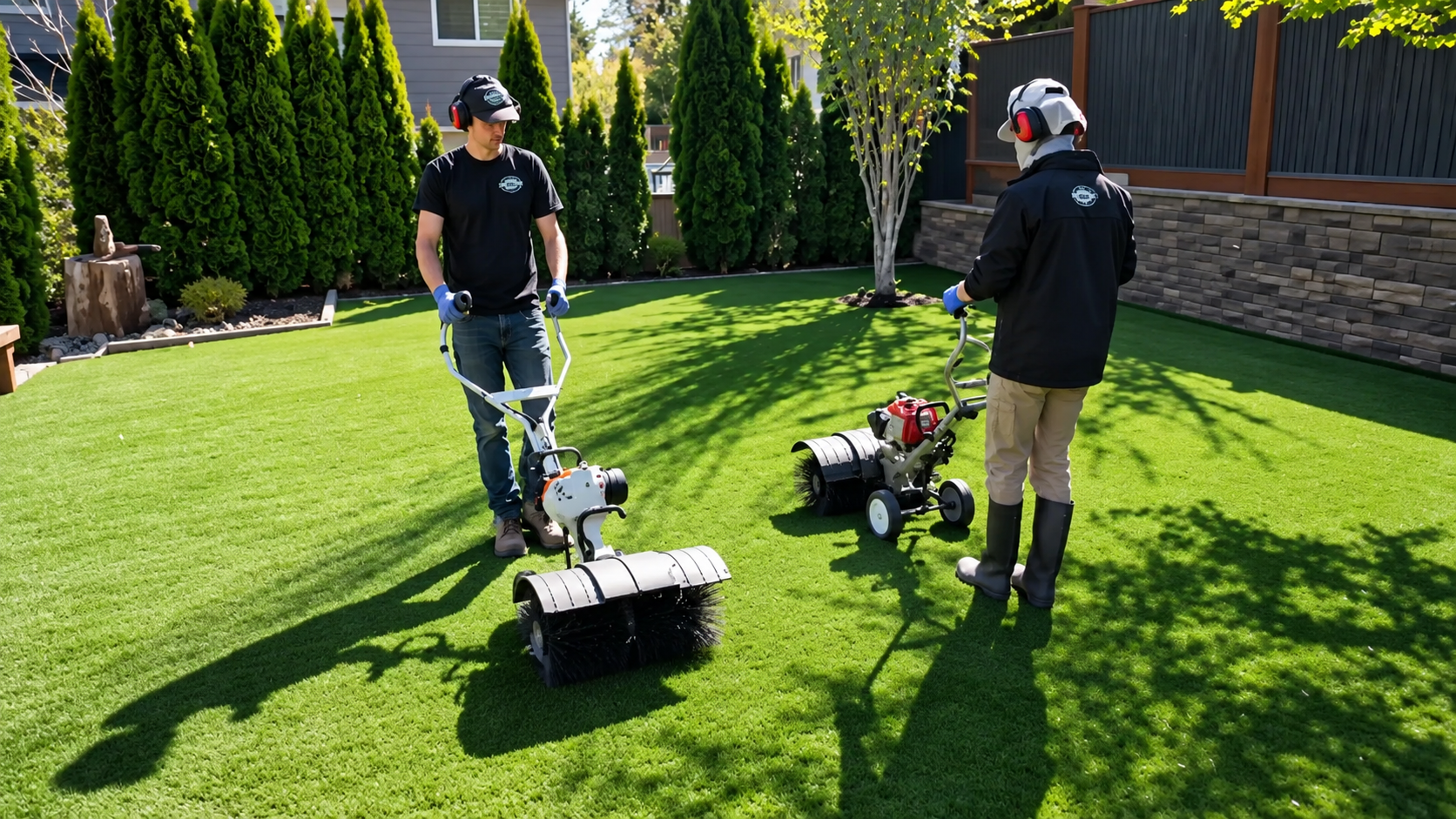
Artificial Turf Cleaning: What Regular Care Really Involves
Artificial turf cleaning does not have to be complicated. Most of the time, a hose, a turf broom or rake, and a few minutes of attention are enough to handle routine upkeep.
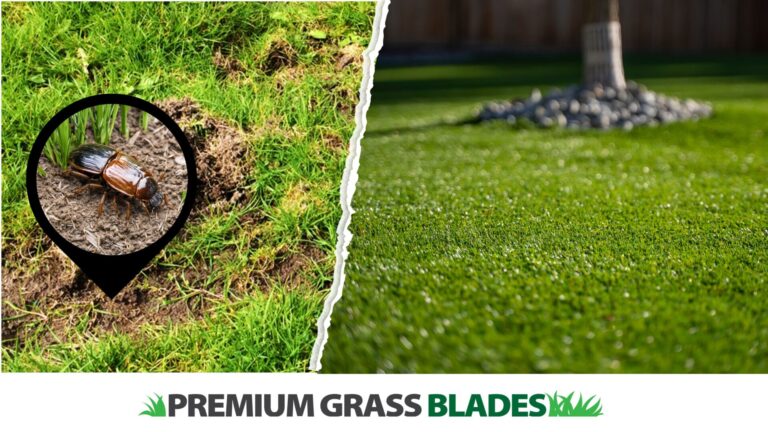
But outdoor turf collects things. Leaves settle between the fibres. Dust works its way down. Busy walkways can flatten. Dogs tend to choose the same few square metres of lawn with remarkable consistency.
That is where a simple maintenance routine, backed up by an occasional deeper cleaning and renewal, can help keep the surface looking and performing as intended.
Premium Grass Blades offers professional turf cleaning and renewal for turf that needs more than its regular rinse and brush.
Why Artificial Turf Cleaning Still Matters
Artificial turf is low maintenance, not maintenance-free.
You do not have to mow it, but debris still lands on it. Foot traffic can push fibres down. Pet areas need attention. Leaves and organic material can collect on the surface and around the fibres.
The basic job is straightforward: keep loose material from accumulating, rinse when needed, and brush the fibres periodically.
Pay particular attention to the places that get the most use. A narrow path between the patio and gate, the area around outdoor furniture, and your dog’s favourite corner may need attention before the rest of the lawn does.
Regular care also gives you a chance to notice changes early. If water starts collecting where it did not before, an edge comes loose, or a section develops a low spot, cleaning alone may not solve the problem. Those are reasons to look more closely at drainage, edges or the base beneath the turf.
A Simple Cleaning Routine You Can Do at Home
Start by removing loose debris.
Pick up larger branches and objects by hand, then use a turf broom or rake suited to artificial turf for leaves and smaller material. Work carefully around seams and edges rather than digging aggressively into the surface.
Next, rinse the turf as needed. A garden hose is usually the simplest tool for routine rinsing. In pet areas, rinsing should be more frequent because those sections receive concentrated use.
Brushing is the final basic step. Work against the direction in which flattened fibres are leaning to help lift them. Focus on walkways, play areas and other spots that see regular foot traffic.
For turf cleaners such as OxyTurf turf cleaner or PGB pet turf renewal treatment, follow the product label.
A good routine is less about doing one enormous cleaning job and more about dealing with small jobs before they become large ones.
Artificial Turf Cleaning for Homes With Dogs
Pet turf deserves its own maintenance plan.
Remove solid waste promptly and rinse the affected areas regularly. If one section of the yard is used repeatedly, give that area more attention rather than assuming rainfall will take care of everything.
Zeolite infill and regular rinsing can help manage pet odours. A pet turf renewal treatment can also be used as directed on its label.
The frequency depends on how the yard is used. One small dog using a large lawn presents a different cleaning job from several dogs using a compact run.
Watch the turf rather than relying entirely on the calendar. Persistent odour, debris caught down among the fibres, flattened high-use areas or a surface that simply does not freshen up with normal rinsing and brushing can indicate that a deeper cleaning is due.
As a general service schedule, PGB suggests considering professional cleaning and renewal about once a year for typical residential turf and about twice a year where pets regularly use the turf. [VERIFY: confirm PGB’s current recommended annual and pet-area cleaning schedule before publishing.]
What Professional Turf Cleaning and Renewal Adds
There comes a point when a garden hose and turf rake have done what they can.
PGB offers a professional turf cleaning and renewal service for existing artificial turf. The goal is to give a tired surface a more thorough refresh than routine homeowner maintenance can provide.
This can make sense when fibres are noticeably matted, pet areas need deeper attention, debris has worked into the turf, or the lawn has gone a long time without a thorough cleaning.
The exact service should depend on the condition of the turf. [VERIFY: confirm the current steps included in a standard PGB turf cleaning and renewal visit before publishing.]
Professional cleaning is not a substitute for fixing an underlying construction problem. If a section is sinking, holding water or moving at the edges, the cause may be below the turf rather than on top of it.
You can request a turf cleaning and renewal quote if routine maintenance is no longer getting the surface where you want it.
Cleaning Starts With What Is Under the Turf
A clean surface can only do so much if water has nowhere to go.
Artificial turf works as part of a system. The turf is the visible layer, but the preparation underneath matters too. Proper drainage and a correctly prepared, compacted base help support long-term outdoor use.
If the base settles unevenly, for example, brushing the fibres will not level the ground underneath them. Likewise, repeated standing water can be a sign that the drainage design or underlying conditions deserve attention.
This distinction matters when diagnosing a lawn.
Surface debris? Clean it.
Flattened fibres? Brush them.
Pet-use area? Remove waste promptly, rinse regularly and use an appropriate turf cleaner according to its label.
Persistent low spots or unexpected drainage problems? Look beyond cleaning and have the underlying issue assessed.
Keeping those jobs separate prevents a lot of unnecessary scrubbing.
How to Tell When Your Turf Needs More Attention
You do not need a complicated inspection sheet. Walk the yard slowly and look at how it is actually being used.
Check high-traffic routes first. If the fibres are lying over, brush them and see how they respond.
Look along edges and seams for visible changes. Remove leaves and other material before it becomes packed into the fibres.
In pet areas, pay attention to recurring odour and how easily the area freshens up after normal cleaning. Increase the frequency of routine care where use is concentrated.
Finally, watch what happens during wet weather. Water that suddenly starts collecting in an area that previously drained properly deserves investigation. The answer may be maintenance, but it could also point to a base or drainage issue.
A Little Regular Work Goes a Long Way
Artificial turf does not ask for a mower every Saturday, but it should not be ignored either.
Remove debris before it builds up. Rinse the surface when needed. Give pet areas extra attention. Brush high-traffic sections to help lift the fibres. If ordinary maintenance stops producing the result you expect, that is a sensible time to consider professional cleaning and renewal.
A few simple habits throughout the year are much easier than waiting until the entire lawn looks overdue for attention.
To give an older, heavily used or pet-friendly lawn a deeper refresh, book a PGB turf cleaning and renewal visit.
FAQ
How often should artificial turf be cleaned?
Routine rinsing, debris removal and brushing should be done as needed based on use. As a general starting point, PGB suggests considering professional cleaning and renewal about once a year, or about twice a year for turf regularly used by pets. [VERIFY: confirm current PGB service-frequency recommendation.]
Does rain clean artificial turf?
Rain can rinse the surface, but it does not replace regular maintenance. Leaves and other debris still need to be removed, fibres may need brushing, and frequently used pet areas can require additional rinsing and cleaning.
Can I clean artificial turf myself?
Yes. Homeowners can handle much of the routine upkeep with debris removal, rinsing and brushing. If using OxyTurf turf cleaner or another turf-cleaning product, follow the label.
What if my turf has drainage problems?
Cleaning the surface may not correct a drainage problem caused by conditions underneath the turf. If water is collecting unexpectedly, the drainage design and base may need to be assessed.