Designing with Artificial Plants for a Natural-Looking Home
There is a quiet pleasure in bringing the shape of leaves into a room. A broad green frond beside a chair softens a hard corner. A small upright plant on a shelf gives the eye somewhere to rest. Designing with artificial plants works best in much the same way as arranging living greenery: pay attention to proportion, texture, light and the character of the room.
The aim is not to make every surface green. It is to place a few convincing forms where they feel settled, as though they have always belonged there.
Designing with Artificial Plants Starts with Observation
Before choosing a plant, spend a moment looking at the room without one.
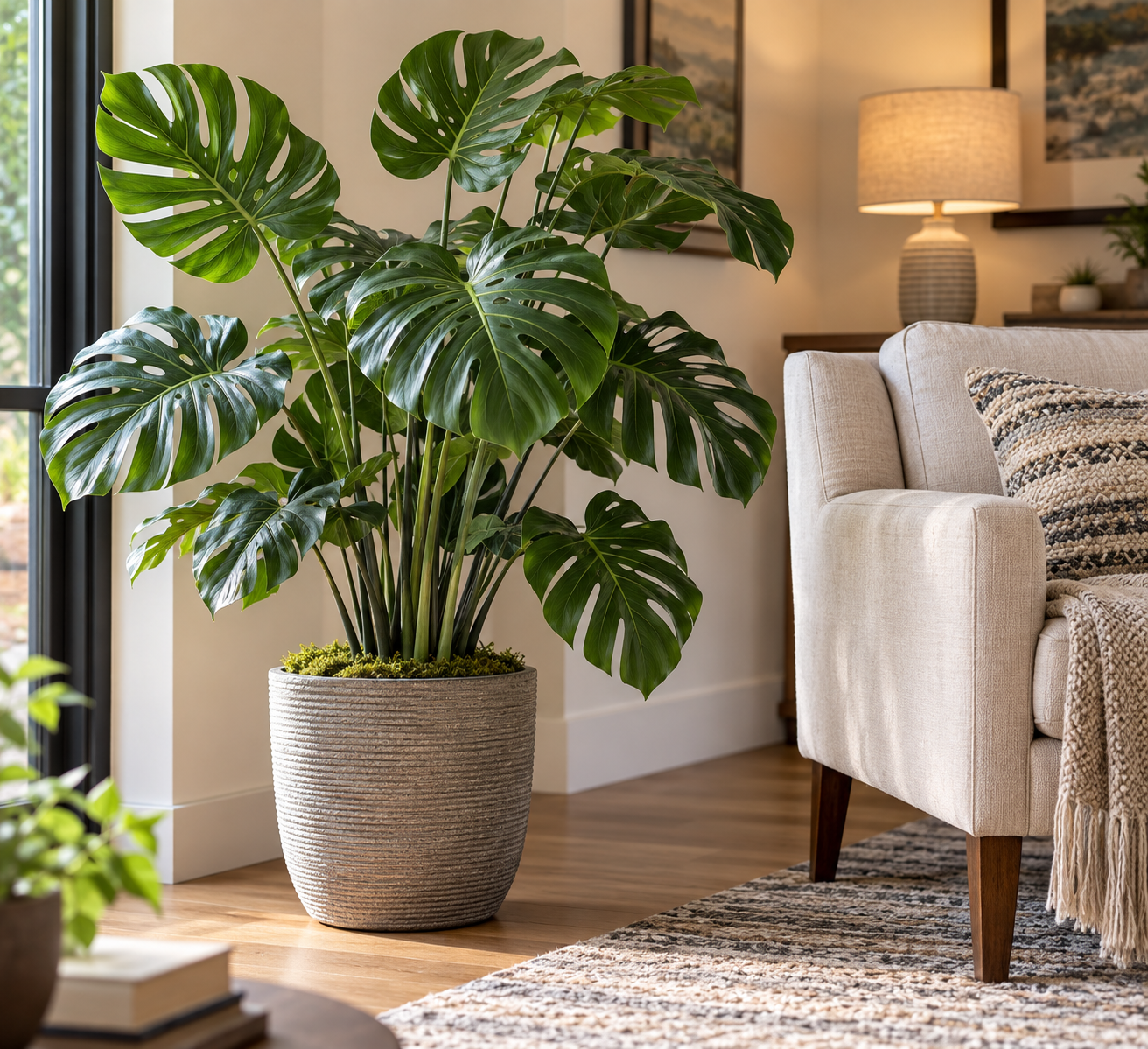
Notice the empty corners. Look at the height of the furniture, the amount of daylight and the materials already present. A tall plant can give weight to a bare corner beside a sofa. A compact plant can soften a desk, console or bathroom shelf without crowding it.
Artificial greenery is especially useful where you want the look of leaves without having to plan the room around a plant’s growing needs. Even so, placement still matters visually. A plant tucked into a believable spot usually feels more natural than one placed simply because there happened to be an empty surface.
Think of greenery as part of the room’s composition, not as a last-minute ornament.
Choose Realistic Pieces with Natural Imperfections
Real leaves are rarely identical. One may lean slightly. Another may sit lower on the stem. Colour can shift gently from one leaf to the next.
Those small variations are useful when choosing artificial plants. Look for pieces with believable leaf shapes, subtle differences in position and surfaces that do not appear overly glossy. Perfect symmetry can make a plant feel manufactured, while a little irregularity gives it more character.
It also helps to consider the plant from more than one angle. A floor plant may be seen from the doorway, from the sofa and while walking past it. Turn it slowly. Check how the stems sit and whether the foliage has enough depth to look convincing from the side.
Premium Grass Blades carries artificial plants and trees, including palms, monstera, snake plants, spiral boxwood and boxwood panels. Choose by shape first, then think about where that shape belongs in the room.
Mix Heights, Leaf Shapes and Textures
A room filled with identical plants can feel strangely formal, like every leaf has been asked to stand in line.
Variation is gentler on the eye.
Try one taller piece on the floor with a smaller plant on a nearby table. Pair broad leaves with a narrower upright form. If you are grouping several plants, leave a little breathing room between them so each silhouette can be seen.
Scale matters as much as variety. A very small plant can disappear beside a large sectional or beneath high ceilings. A large floor plant can overwhelm a narrow entry. Measure the space, but also look at the visual weight of the furniture around it.
Texture helps too. Smooth leaves catch light differently from dense boxwood or fine palm fronds. Mixing those surfaces gives the room depth without needing more colour or decoration.
Let the Planter Belong to the Room
The planter is part of the design. In some rooms, it is nearly as noticeable as the plant itself.
Start with the materials already around you. A simple ceramic pot can suit a clean, restrained room. A woven basket can add warmth where there is wood, linen or other soft texture. Dark planters can give a sharper outline against pale walls.
The important thing is that the container should feel connected to the room rather than chosen in isolation.
Proportion matters here as well. A tall plant in a tiny pot can look unsteady, even if the plant itself is convincing. A small plant in an oversized container can seem lost. Aim for a planter that gives the foliage a visual base.
You can also repeat a planter finish elsewhere in the room. Matching every pot is not necessary. A loose family resemblance is often enough.
Use Greenery to Guide the Eye
Plants are useful at transitions.
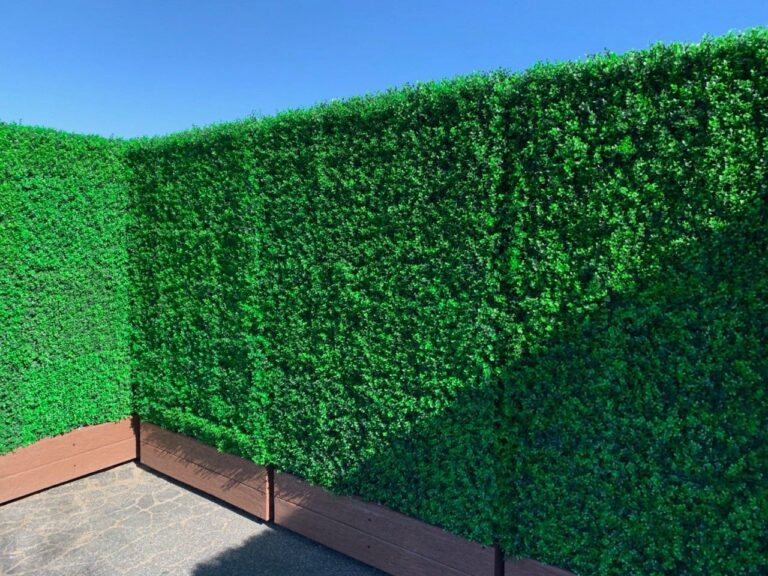
A floor plant can soften the meeting point between a window and a wall. A smaller piece can connect a low table with artwork above it. Boxwood can introduce green to a wall or privacy feature where a traditional potted plant would not create the same effect.
Try looking at the room from its entrance. Where does your eye go first? If one corner feels heavy and another feels bare, a plant can help restore balance.
Resist the urge to fill every empty place. Gardens are pleasant partly because there are pauses between plants, paths and open ground. Rooms benefit from the same restraint.
Seasonal changes can guide small adjustments. In winter, when the view outside is grey and branches are bare, a few green forms indoors may feel more noticeable. In summer, when doors are open and gardens are full, you may want the room to feel lighter. Moving one plant can be enough.
Dust Indoors and Choose UV-Resistant Pieces Outdoors
Artificial leaves do not ask for water, but they still collect the quiet evidence of a lived-in room: dust from open windows, fibres from fabrics and the occasional mark from a passing hand.
Dust the leaves regularly with a soft cloth or duster, working gently around stems and edges. For deeper cleaning, follow the care instructions supplied with the product rather than assuming every material can be washed in the same way.
Outdoor spaces need a different check. If an artificial plant, boxwood feature or decorative piece will sit on a patio, balcony or other exposed area, choose a product specifically labelled for outdoor use and UV resistance. Sun and weather can be hard on decorative materials, so follow the product’s care and placement instructions.
A quick dusting and an occasional look at the stems, leaves and planter will keep the arrangement looking considered rather than forgotten.
FAQ
How do I make artificial plants look more realistic?
Start with believable leaf shapes and slight irregularities rather than perfect symmetry. Use different heights and textures, then place the plant where its scale makes sense beside the surrounding furniture.
Should all my artificial plants use matching planters?
No. Matching everything can feel rigid. Choose planters that suit the room’s materials and colours, then repeat one or two visual cues, such as a similar finish or shape, to create a quiet connection.
Can artificial plants be used outdoors?
Some can. Choose pieces specifically labelled for outdoor use and UV resistance, and follow the manufacturer’s care instructions. Do not assume an indoor decorative plant is suited to long-term outdoor exposure.
Good rooms, like good gardens, are built by noticing rather than filling. Start with one corner, one shelf or one bare wall and choose greenery that suits its scale. If you would like to compare artificial plant options for your space, visit the Premium Grass Blades showroom in Maple Ridge.