
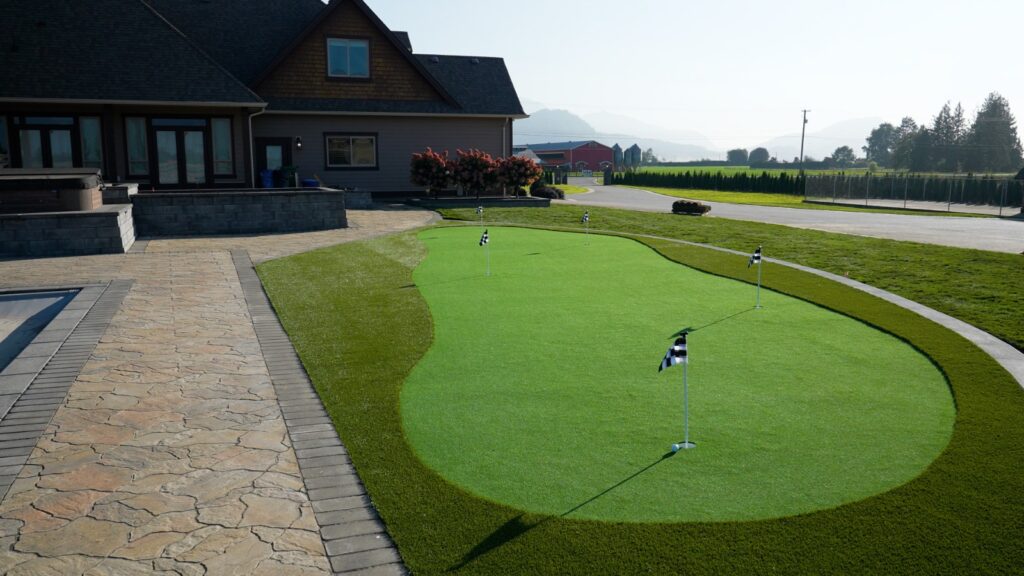
Preventing Water Pooling, Surface Softness, and Base Erosion
Artificial putting greens are designed to drain efficiently and perform consistently in all weather conditions. However, when drainage is not properly planned during installation, homeowners may experience issues such as water pooling, soft areas, or inconsistent ball roll. In nearly every case, these problems are not caused by the turf itself, but by improper base preparation or inadequate drainage design beneath the surface.
Proper drainage planning is one of the most important factors in building a putting green that performs reliably for many years.
How Artificial Putting Greens Are Designed to Drain
Artificial turf systems are built to allow water to move through the surface and into the base below.
A properly installed putting green typically includes:
- A permeable turf backing that allows water to pass through
- A compacted aggregate base layer
- Drainage pathways that direct water away from the surface
- Slight grading or slope to encourage runoff
When these components are designed correctly, rainwater moves through the turf and drains away quickly without affecting the playability of the green.
What Happens When Drainage Is Poor?
If the drainage system beneath the green is not built properly, several issues can occur over time.
Water Pooling on the Surface
Standing water is one of the most noticeable signs of poor drainage. If the base layer is not graded properly or the materials used do not allow water to move through efficiently, water can accumulate on the surface after rain.
This can lead to temporary puddling and inconsistent putting conditions.
Soft or Spongy Areas
When water cannot drain away from the base, the material beneath the turf can begin to retain moisture. Over time, this may cause certain areas of the green to feel soft or unstable underfoot.
For putting greens, this can affect ball roll and create uneven playing conditions.
Base Erosion Over Time
In more severe cases, poor drainage can slowly erode sections of the base beneath the turf. Water that becomes trapped or improperly redirected can move base materials away from certain areas.
When this happens, minor depressions or uneven spots may begin to appear on the surface of the green.
Again, this is not a failure of the turf product itself. It is a result of water movement beneath the installation.
Common Causes of Drainage Problems
Based on years of field experience, drainage issues typically come from a few common installation mistakes.
Improper Base Materials
Using the wrong type of aggregate or poorly graded base materials can prevent water from moving efficiently through the system.
Putting greens require carefully selected materials that both compact properly and allow water to drain.
Insufficient Base Depth
A shallow base layer may not provide enough space for water to disperse and move away from the green. Proper base depth helps stabilize the surface and improves drainage capacity.
Lack of Proper Grading
Even though putting greens appear flat, they are carefully graded during installation. Subtle slopes help direct water toward drainage areas.
If the base is installed perfectly flat without proper planning, water has nowhere to go.
Missing Drainage Channels
In yards with heavy soil or natural water flow, additional drainage solutions may be required. This can include:
- perimeter drains
- subsurface drainage pipes
- gravel trenches
These systems help move water away from the putting green area.
Real-World Example from Field Experience
In one installation we evaluated, a homeowner experienced water pooling in the center of their backyard putting green after every heavy rain.
The turf itself was functioning correctly and allowing water to pass through. However, the base beneath the green had been installed without sufficient slope and lacked proper drainage outlets.
The solution involved lifting a section of the turf, regrading the base layer, and adding a small drainage channel to redirect water away from the center of the green.
Once corrected, the surface drained normally and the green performed as expected.
How to Prevent Drainage Issues
Drainage problems can almost always be avoided with proper planning before installation.
Key steps include:
- Evaluating the natural slope and soil conditions of the yard
- Using proper base materials designed for turf installations
- Installing adequate base depth and compaction
- Creating subtle grading to direct water movement
- Adding drainage channels where necessary
An experienced installer will evaluate these factors before construction begins.
Why Professional Planning Matters
Every yard has different drainage conditions. Soil composition, slope, surrounding landscaping, and rainfall patterns all influence how water moves through a property.
Because of this, putting greens must be designed for the specific environment where they are installed.
Experienced contractors assess these factors to ensure that the base and drainage system will support the green long-term.
Conclusion
Artificial putting greens are built to drain efficiently when installed correctly. When water pooling or soft areas occur, the cause is almost always related to drainage design beneath the surface rather than the turf product itself.
Proper base preparation and drainage planning are essential to creating a putting green that performs consistently, drains properly, and maintains smooth ball roll for years to come.