
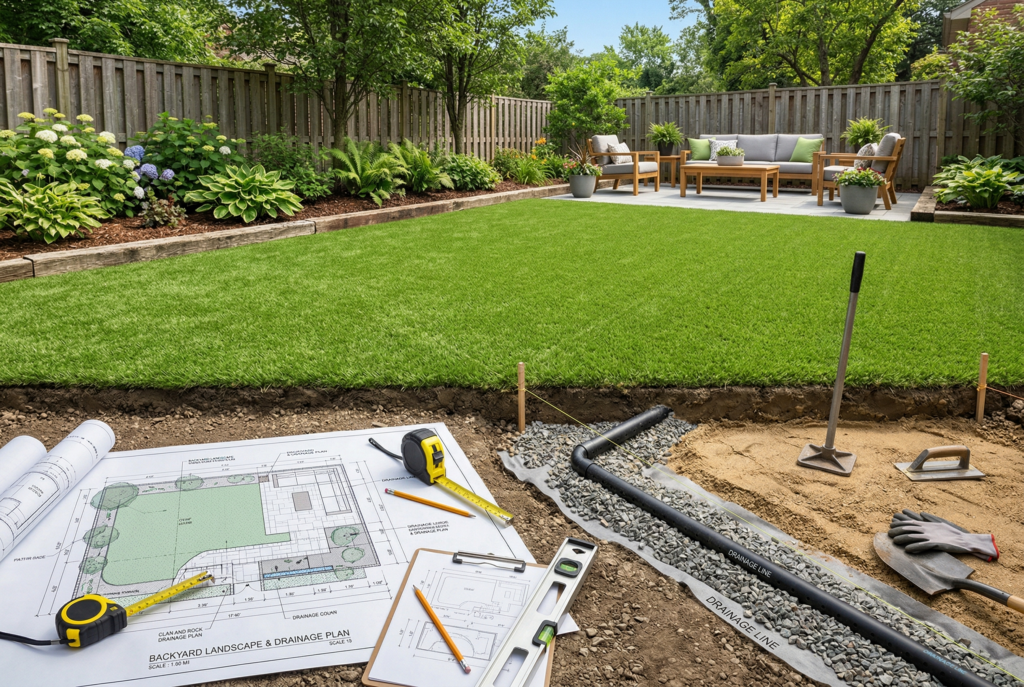
Most artificial turf problems result from inadequate preparation before installation, not from the turf itself. Proper planning is the key to long-term performance. Rushed or incomplete planning leads to issues like drainage failure, odor, premature wear, and surface instability. These are not product defects but predictable results of poor preparation.
This article outlines why planning is essential, which factors to consider, and how proper design prevents common turf issues.
Why Planning Comes First
Artificial turf is a system of multiple layers working together, not just a surface product. Before installation, it is essential to evaluate the environment, intended use, and structural conditions.
According to the Synthetic Turf Council, successful installations depend heavily on site preparation, drainage design, and intended use considerations before installation begins.
Without proper evaluation, even the best turf will underperform if installed in unsuitable conditions.
What Happens When Planning Is Skipped
When planning is neglected, the same issues consistently arise across installations:
- Water pooling or slow drainage
- Odor buildup, especially in pet areas
- Uneven or sinking surfaces
- Excessive heat retention in certain zon• Premature wear in high-traffic paths
These are not random failures but preventable outcomes directly linked to site conditions and usage patterns.
The Key Factors That Must Be Planned
1. Drainage and Water Flow
Water management is critical. While turf allows water to pass through, it does not remove water on its own. The base and subgrade must efficiently direct water away.
If the site has clay soil, low elevation, or poor grading, drainage solutions must be incorporated before installation.
2. Base Construction
The base layer supports the entire system. Without proper compaction and material selection, the surface will shift over time.
A properly built base ensures:
- Stability under foot traffic
- Consistent drainage performance
- Long-term structural integrity
3. Intended Use of the Turf
Turf applications vary. Decorative lawns, pet areas, playgrounds, and putting greens each require specific planning approaches.
For example:
- Pet areas require enhanced drainage and antimicrobial considerations
- Putting greens require precision grading and smooth sub-bases
- High-traffic areas require reinforced pathways or stepping zones
Ignoring intended use leads to wear patterns often mistaken for turf defects.
4. Heat Exposure and Environmental Conditions
Certain environments retain more heat than others. Enclosed yards, reflective surfaces (walls, glass), and dark surrounding materials can significantly increase surface temperatures.
Planning for heat may include:
- Selecting the right infill (such as cooling infills like zeolite)
- Designing shaded areas
- Incorporating irrigation or cooling strategies
5. Traffic Flow and Wear Patterns
Foot traffic is rarely evenly distributed. People and pets naturally create paths.
Without planning for this:
- Turf fibers will wear faster in concentrated areas
- The base may compact unevenly
- The surface may appear prematurely aged
Simple solutions like walkways, stepping stones, or reinforced zones can significantly extend turf life.
Real-World Insight from the Field
Over 15 years of installations, the best-performing projects are not always those with the most expensive turf, but those where time was invested in planning the environment first.
When issues arise, they almost always trace back to one of the following:
- Drainage not addressed
- Base rushed or underbuilt
- Usage not properly considered
- Environmental heat ignored
These are not rare cases but recurring scenarios when planning is skipped.
How to Protect Your Turf Investment
Proper planning is not an extra step. It is the foundation of the entire system.
To ensure long-term success:
- Evaluate drainage conditions before installation
- Build a properly compacted and graded base
- Match the turf system to its intended use
- Account for heat and environmental factors
- Design for natural traffic flow
Addressing these elements upfront ensures the turf performs as expected. Ignoring them leads to inevitable problems.
Final Takeaway
Artificial turf does not fail on its own; it reflects the conditions in which it is installed. Proper planning ensures those conditions support performance, durability, and longevity.
If there is one principle to understand, it is this:
The success of artificial turf is determined before it is ever installed.