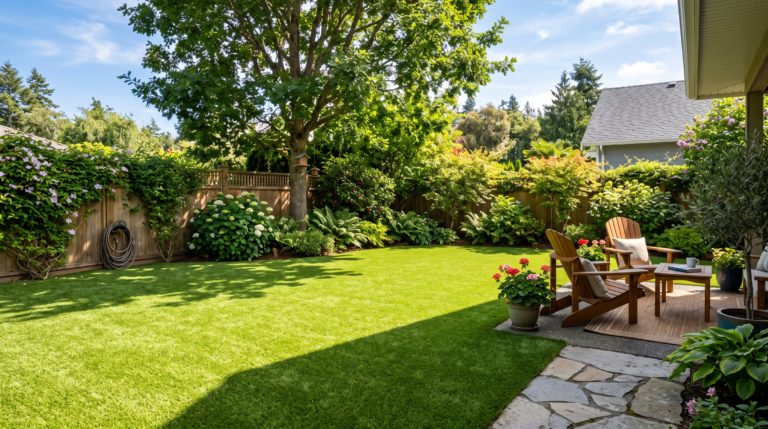
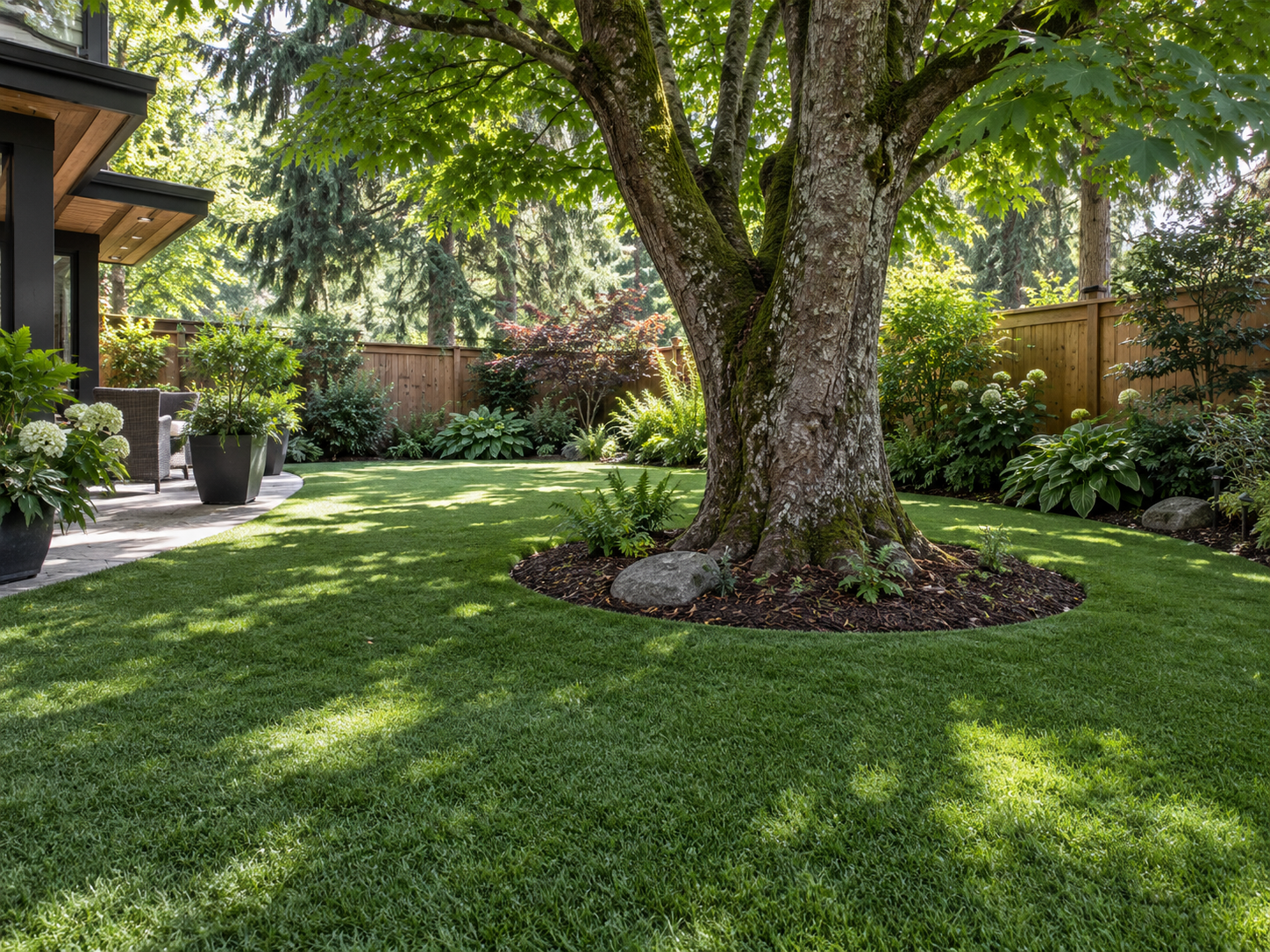
Artificial Turf Around Trees: What to Plan First
A big tree can make a backyard wonderful. It can also make the patch of grass beneath it behave as though it has resigned from lawn duty.
Shade is part of the problem. Roots, moisture and competition for growing conditions add their own complications. Natural grass under a mature tree can become thin, muddy or stubbornly bare.
That is one reason homeowners consider artificial turf around trees.
Artificial turf does not need the growing conditions that natural grass does, so shade itself is less of an issue. But the tree is very much alive underneath the project. Its roots deserve considerably more attention than the turf fibres you can see from the patio.
The goal is to plan the turf around the tree, rather than treating the tree as an inconvenient pole in the middle of a lawn.
Why Artificial Turf Around Trees Can Make Sense
Grass is a plant trying to make a living beneath another, much larger plant.
The tree usually has the advantage.
Its canopy can reduce the amount of direct sunlight reaching the lawn. Its root system occupies the soil below. Add BC’s long wet stretches, falling leaves and foot traffic around a favourite shade tree, and natural grass may struggle in places where the tree seems perfectly content.
Artificial turf changes one part of that equation. It does not need sunlight to grow because, scientifically speaking, it has no ambitions whatsoever.
That makes heavily shaded areas easier to work with from a lawn-appearance standpoint.
PGB’s artificial turf is made for outdoor use, and the turf is UV-stabilized [VERIFY product documentation]. That matters in areas receiving direct sunlight, although a yard under a large canopy may contain everything from deep shade to bright patches that move throughout the day.
The tree, meanwhile, still needs to be treated as a living part of the site.
Before Working Near a Tree, Look Down
The interesting part of a mature tree is not limited to the trunk and branches.
A great deal is happening underground.
Roots can extend well beyond the obvious area beside the trunk. Digging, excavation, grade changes and compaction within a tree’s root zone can affect the tree, which is why a mature tree should not simply be surrounded with base material because that happens to make the turf plan convenient.
If work is proposed within the tree’s drip line, consult a qualified arborist before proceeding. An arborist can assess the specific tree, its condition and the proposed work.
This is especially important because trees are not interchangeable pieces of backyard furniture. Species, age, soil conditions and existing roots can change what is appropriate for a particular site.
For DIY projects involving digging, contact BC 1 Call before breaking ground, wear appropriate protective gear, and follow PGB installation guidelines and the instructions for the products being used.
Artificial Turf Around Trees Needs a Thoughtful Base
Artificial turf performs best when the surface underneath it has been properly planned.
The base provides a stable, even foundation and plays an important role in drainage and finished appearance. Around an established tree, however, base preparation has an extra variable: roots.
A standard approach elsewhere in the yard may not be appropriate beside a mature tree if it requires disturbing important roots or significantly changing the existing grade.
This is where site-specific advice matters.
An arborist can advise on the tree. An experienced independent turf installer can assess how the turf portion of the project might be laid out. If the two plans disagree, the tree should not be expected to attend a meeting and defend itself.
For more detail on what happens below the turf, read PGB’s guide to artificial turf base preparation.
PGB supplies artificial turf and installation accessories and can refer customers to an independent installer. The installer contracts directly with the customer.
What About Weeds Under the Tree?
Weeds are persistent little opportunists.
Artificial turf can reduce the amount of exposed soil available to them, but it would be inaccurate to say weeds become impossible.
A properly prepared base and weed barrier can help reduce weed growth. PGB carries weed barrier as part of its turf installation accessories.
Seeds can also arrive from above. Birds, wind and nearby plants are all surprisingly competent delivery services. Organic debris can collect on top of turf, particularly beneath trees that drop leaves, needles, blossoms or seeds.
If enough material builds up, unwanted plants may find somewhere to get started.
Regular debris removal therefore still matters. Artificial turf is low maintenance, not no maintenance. Occasional brushing, rinsing and clearing away leaves and other organic material help keep the surface tidy.
Leave Room for the Tree to Be a Tree
Trees change.
Trunks thicken. Roots grow. Soil shifts. Leaves fall in quantities that seem specifically designed to test the patience of whoever owns the rake.
That means the detail around the trunk deserves careful planning.
Avoid assuming that turf should simply be cut tightly against the bark. The appropriate treatment around a mature tree depends on the tree and site, so ask an arborist what clearance and surface treatment are suitable before the turf layout is finalized.
A planting or mulched area around the trunk may be appropriate in some yards, subject to arborist advice. It can also create a clear visual transition between the living tree and the turf.
Planning this boundary at the beginning is much easier than discovering later that a beautiful turf layout has become awkward as the tree changes.
Shade Is Easier for Turf, but Trees Still Make Mess
Artificial turf does not become thin because a tree canopy blocks sunlight. That is one of its practical advantages in shaded yards.
The canopy does, however, continue producing material.
Leaves land on the turf. So do twigs, seeds and other debris. In damp BC weather, leaving organic material sitting on the surface can make the area messy and increase the amount of cleaning required.
Remove fallen material regularly using suitable turf-care tools. Brush fibres as needed and rinse the surface when appropriate.
Pay attention to drainage too. If water begins collecting in a spot where it did not before, investigate the cause rather than assuming the turf itself is the problem. Base conditions, grading and debris can all affect how water moves through a yard.
A tree and an artificial lawn can share the same space. They simply have different job descriptions.
Plan Around the Tree, Not Through It
Artificial turf around trees can be a practical choice for shaded yards where natural grass has difficulty growing. The key is recognizing that the turf project starts below the visible green surface.
Check the tree first. Talk to an arborist before work within the drip line. Plan the base carefully. Use a weed barrier where appropriate. Allow for ongoing debris removal and future tree growth.
Most of all, do not treat mature roots as something to cut, bury or compact around simply to make the turf fit.
For help choosing turf and planning the material side of the project, call PGB at 604-757-2899 to talk through your project. PGB can also refer you to an independent installer in your area.
FAQ
Can artificial turf be used under a large shade tree?
Yes, artificial turf can be considered for shaded areas because it does not depend on sunlight for growth like natural grass. The tree’s roots, existing grade and drainage still need to be considered before work begins.
Should turf go right up against the tree trunk?
Do not assume that it should. Mature trees change over time, and work near the trunk and root zone should be planned with the tree in mind. Ask a qualified arborist what clearance and surface treatment are appropriate for the specific tree.
Does weed barrier stop every weed?
No. A properly prepared base and weed barrier can help reduce weeds, but seeds and organic material can collect on top of the turf. Routine debris removal is still part of turf care.
Who should handle a turf project around a mature tree?
Consult a qualified arborist before work within the tree’s drip line. For the turf portion, PGB can supply the turf and accessories and refer you to an independent installer.