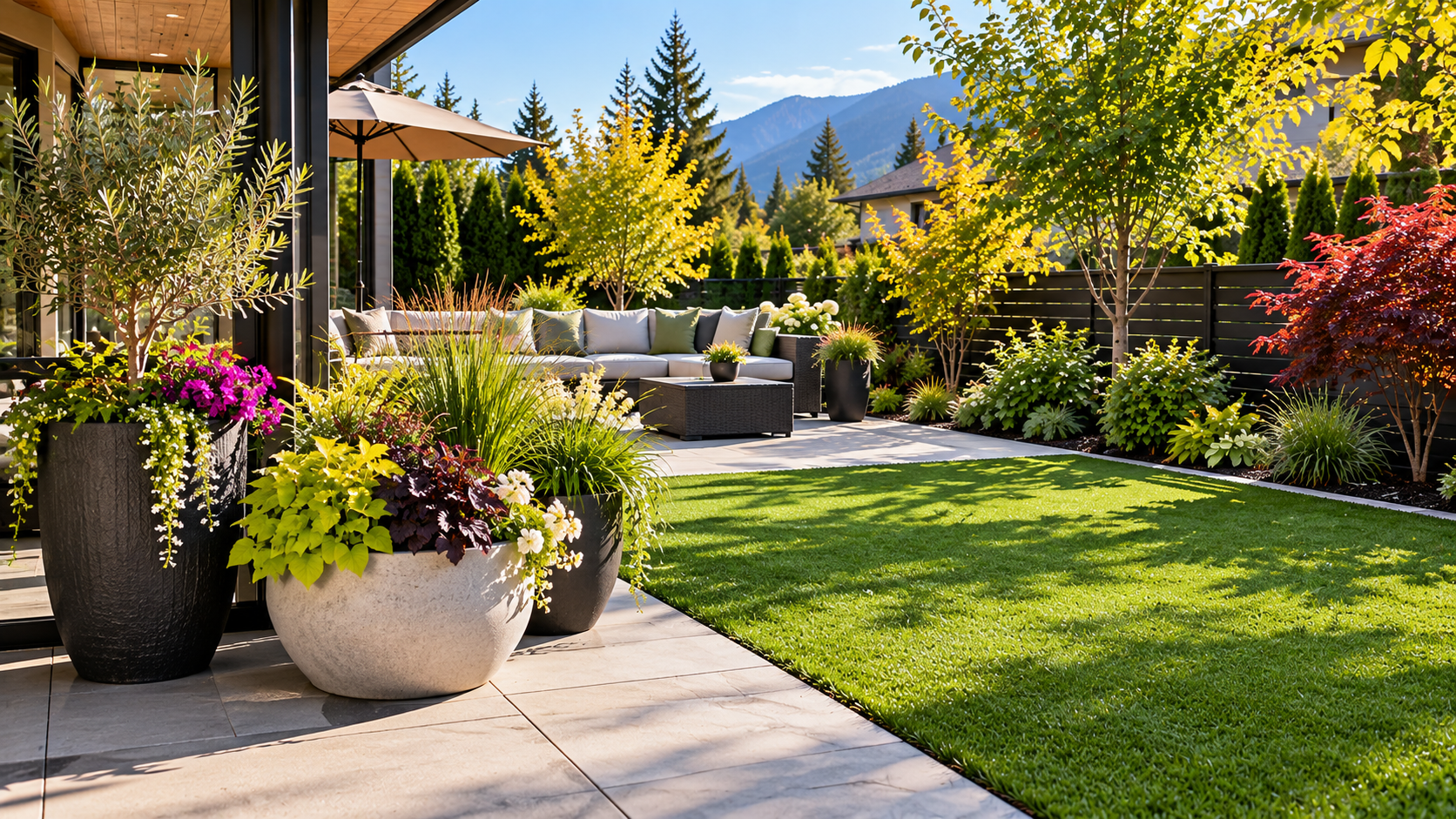
Can You Put Living Plants on an Artificial Lawn?
An artificial lawn need not mean a garden without living things.
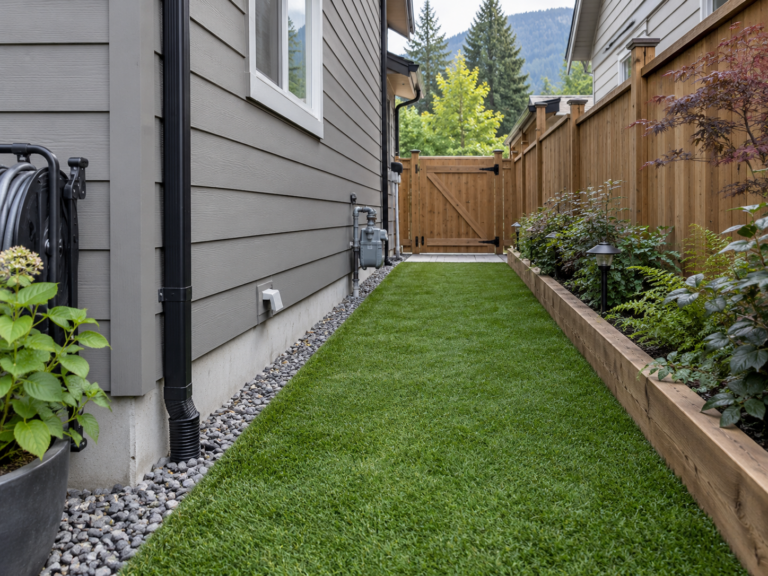
In fact, plants on artificial lawn can make a garden feel softer and more settled. A sweep of turf gives you a consistent green surface, while planting beds bring height, scent, flowers, autumn colour and the small seasonal changes that make a garden interesting.
The trick is to think of the turf and the plants as different parts of the same garden. Each needs its own space, its own drainage and a little forethought.
Done well, the result can feel pleasantly natural: turf underfoot, shrubs along the boundary, a tree casting afternoon shade and perhaps a few pots near the door where herbs and flowers are easy to enjoy.
Plan Plants on Artificial Lawn Before the Turf Goes Down
Good gardens tend to begin on paper.
Before turf is laid, decide where the living parts of the garden belong. Mark out existing trees, future planting beds, paths, patios and places where you might want larger containers.
This matters because a planting bed is not simply an empty patch left in the turf. Plants need suitable soil, room for roots, water and ongoing access for pruning, feeding and other ordinary garden work. Turf has its own base and drainage requirements.
Keeping those areas distinct from the beginning makes the finished garden easier to manage.
Think about the garden through the seasons as well. A bed that looks modest in April may be full and spilling over its edge by August. Shrubs grow outward. Perennials wander. Leaves fall. Give plants enough room to mature without constantly pushing into the turf.
If you are planning a new project, PGB’s guide to planning before turf is installed is a useful place to start.
Give Garden Beds a Clear Edge
There is something satisfying about a well-defined boundary between planting and lawn.
With artificial turf, that boundary has a practical purpose too.
A suitable edging detail helps create a tidy transition between the turf and the planting bed. It can also help keep loose soil, mulch and other garden material from spreading onto the turf.
The shape need not be severe. Straight edges suit contemporary gardens, while broad curves can sit comfortably around shrubs and perennial planting. What matters is that the design is deliberate and that your installer can finish the turf securely and neatly at the boundary.
Try to avoid creating a collection of tiny, awkward planting pockets. They can make both gardening and turf care unnecessarily fiddly. One generous bed is often more useful than several little islands.
Once planted, allow enough room along the edge to weed, prune and work without repeatedly disturbing the turf.
Pots Bring the Garden Onto the Lawn
Containers are one of the simplest ways to bring living plants close to artificial turf.
A large pot can provide a strong focal point beside a seating area. Several pots near a patio can carry herbs, bulbs or seasonal flowers. Containers can also be moved or replanted as the garden changes.
There is a quiet pleasure in this flexibility. Spring bulbs can appear as the days lengthen. Summer pots can fill out around a chair or bench. Later, foliage and seed heads can take over as the light softens.
But remember that a filled container can be heavy, and plants in pots need regular watering. Choose containers with appropriate drainage and think carefully about where that drainage water will go.
Avoid arranging irrigation so that water continually runs from planted areas onto or into the prepared turf base. Plant watering should serve the plants rather than becoming an unintended source of water beneath the lawn.
Saucers, container placement and irrigation arrangements should be chosen for the particular site.
Make Trees Part of the Original Design
A mature tree gives a garden something that cannot be bought in a roll or a pot: age.
If you already have a tree worth keeping, design around it rather than treating it as an obstacle. Its trunk and root area need appropriate space, and its future growth should be considered before the surrounding turf is planned.
Do not simply cut through an existing artificial lawn later and plant a tree through it. If a tree is part of the garden plan, create a properly designed planting area for it from the beginning.
The same principle applies to shrubs that are expected to become substantial over time.
An independent installer and, where appropriate, a qualified tree or landscape professional can help determine a sensible layout around existing trees and their root areas.
There will also be ordinary seasonal work. Trees drop leaves, blossom, needles, cones and twigs. Remove this material from artificial turf periodically rather than allowing it to build up among the fibres.
That small task is simply part of having both trees and turf in the same garden.
Keep Plant Watering and Turf Drainage Separate
Living plants need water. Artificial turf does not need watering to stay green.
That difference should influence the design.
Where possible, direct irrigation toward planting beds and containers rather than routinely soaking the artificial lawn. Pay particular attention to runoff from raised beds, pots and slopes.
The concern is not that ordinary water touching turf is a problem. Artificial turf can be rinsed as part of normal care. The issue is repeated plant irrigation being directed into areas where it may affect the prepared base or create drainage problems.
Good site preparation considers how water moves across and through the entire garden, not simply what happens on the surface.
In a wet BC autumn, this becomes especially apparent. Rain finds every low spot and poorly considered transition. Keeping planting areas, edging and turf drainage in mind at the planning stage is far easier than trying to correct the layout afterwards.
Let Plants Soften the Structure
Artificial turf can provide a calm visual foundation for planting.
Against that steady green, the textures of living plants become more noticeable. Fine grasses move in a breeze. Broad leaves catch rain. Flowers arrive and disappear. A deciduous shrub changes character almost week by week as autumn approaches.
You do not need a great quantity of planting to create this effect.
A generous border along one side of the lawn may be enough. Pots can soften a patio transition. Existing trees can provide height and shade. Even a narrow bed can contribute greatly if the plants have enough room to grow properly.
Choose plants for the actual conditions in your garden: light, exposure, soil and the amount of attention you want to give them. A shaded corner in Maple Ridge will ask something quite different of a plant than a sunny, exposed patio.
Artificial turf removes mowing from that portion of the garden, but the living garden remains living. Leaves still fall. Flowers fade. Plants need pruning and watering. That is not a flaw in the arrangement. It is where much of the character comes from.
Caring for a Garden With Turf and Plants
Routine care is fairly simple.
Remove fallen leaves and plant debris before they accumulate heavily on the turf. Brush fibres when needed. Keep loose soil and mulch within planting beds as much as practical, and clean up material that spills across an edge.
When watering plants, watch where excess water travels. If a particular pot or bed repeatedly sends water toward the turf base, adjust the watering method or address the drainage rather than accepting a permanently wet area.
Pruning is worth doing with the lawn in mind too. Place a sheet or container beneath messy work where practical, then collect clippings rather than leaving small pieces among the turf fibres.
With a little attention, the two parts of the garden can sit comfortably together.
FAQ
Can you have living plants beside artificial turf?
Yes. Planting beds, containers and existing trees can all be incorporated into a garden with artificial turf. Plan their locations and watering needs before the turf is laid.
Can I plant directly through artificial turf after it has been installed?
It is better to plan a dedicated planting area before installation rather than cutting through finished turf later. This allows the planting area, turf edge and base to be considered properly.
Can I put plant pots on artificial turf?
Pots can be incorporated into a turf garden. Consider their filled weight, drainage and the possibility of water or soil collecting around them.
Do I water artificial turf when I water the plants?
Artificial turf does not need watering to remain green. Direct plant irrigation toward beds and containers and avoid routinely sending irrigation water into the prepared turf base.
A garden does not have to choose between a practical lawn and living plants. With beds planned early, tidy edges, thoughtful watering and enough room for trees and shrubs, both can have their place.
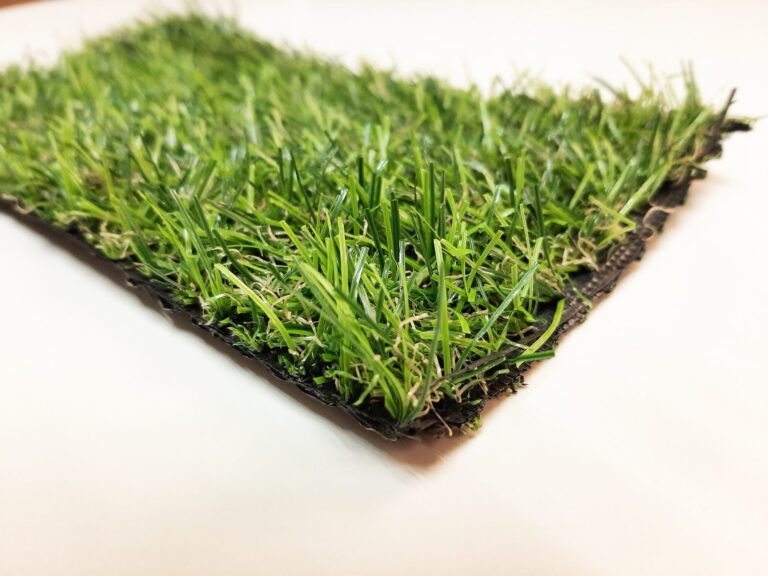
To compare turf textures and discuss how different options could fit into your garden plan, see and feel turf samples at the PGB Maple Ridge showroom. PGB supplies artificial turf and related products and can refer customers to independent installers.