Artificial Turf Fire Safety: What You Need to Know
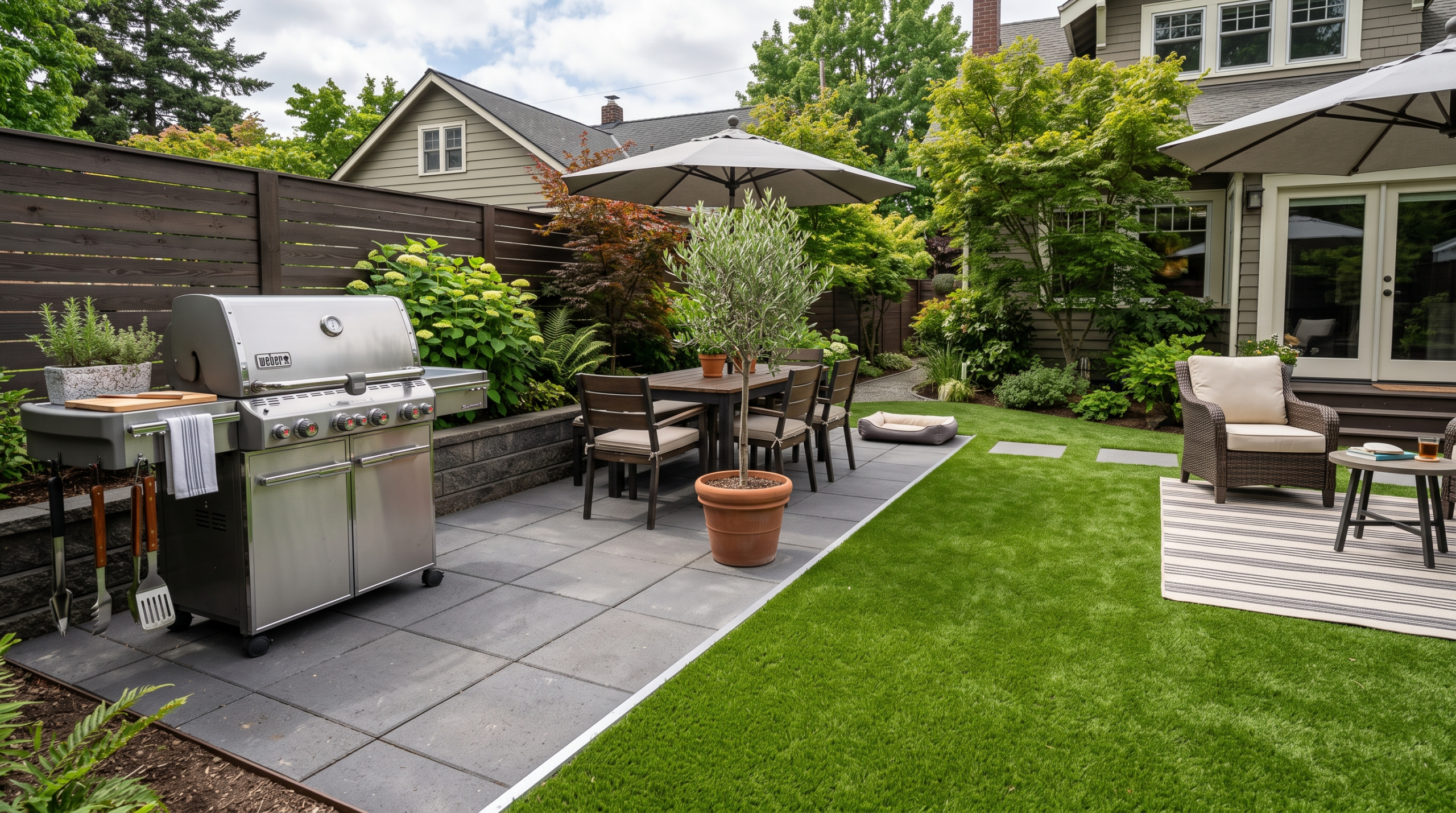
A backyard can hold a surprising collection of hot things. There is the barbecue by the patio, a fire pit for cool evenings and, sometimes, a window that throws a bright patch of reflected sunlight exactly where nobody expected it.
That makes artificial turf fire safety less about complicated procedures and more about sensible placement and routine care.
Artificial turf does not dry out the way natural grass does. It is still a synthetic material, however, and high heat can melt or burn it. The practical approach is simple: keep heat sources away from the turf and pay attention to what collects on the surface.
Artificial Turf Fire Safety Starts With Heat Sources
Artificial turf is made for outdoor use, but it should not be used as a surface for equipment that produces strong heat.
Keep barbecues, portable fire pits and similar heat sources off artificial turf. The same goes for hot cooking equipment, burning materials and objects that can transfer concentrated heat to the fibres.
A patio, concrete pad or another surface suited to the equipment is generally a more sensible location. Follow the manufacturer’s placement and clearance instructions for the barbecue, fire pit or appliance you are using.
This is worth planning before the turf goes down. If the family barbecue has occupied the same corner of the patio for six summers, design around that fact instead of creating a lovely new turf area and then discovering the barbecue has nowhere sensible to live.
Hot ash and embers deserve the same caution. Do not empty them onto the turf or set hot containers on the surface.
Understand What Heat Can Do to Turf
Artificial turf does not become dry grass during hot weather. That is an important distinction, but it should not be turned into a claim that the material cannot be damaged by heat.
Turf fibres are synthetic. With enough heat, they can soften, distort, melt or burn.
Damage may appear as blades that look curled, flattened or fused together. A concentrated area may change shape even though the surrounding lawn looks completely normal.
If you find an unusual patch like this, look at nearby heat sources before assuming the problem came from ordinary summer sunshine.
The location can offer useful clues. Damage beside a cooking area, near a fire feature or in a concentrated patch facing a window deserves a closer look.
PGB turf is tested to EN 13501-1. That wording describes the testing. It should not be taken as a promise that the turf cannot burn or suffer heat damage.
Watch for Reflected Heat From Windows
One of the less obvious heat sources is attached to the house.
Sunlight reflected from some windows can become concentrated on a particular section of artificial turf. Under the right conditions, that reflected energy can create enough heat to damage synthetic fibres.
It can be easy to miss because the window may be several metres away from the damaged area. The mysterious patch of distorted turf appears on the lawn, while the source is sitting quietly on the wall looking entirely innocent.
Pay attention to bright reflected light across the yard, particularly during sunny periods when the sun’s angle changes through the day.
If you suspect a window is concentrating sunlight, the solution needs to address the reflected light rather than simply replacing the affected turf. Suitable options may include exterior shade, screens, awnings, planting or an appropriate window treatment. Check compatibility with your window manufacturer before applying films or other products directly to glass.
Direct or reflected heat over 65°C is excluded from the PGB Limited 15-Year Product Warranty.
Keep Leaves and Other Debris Under Control
Routine turf care matters here for a very ordinary reason: yards collect things.
Dry leaves settle along fences. Small twigs arrive after windy weather. Needles and plant material can gather beside planters and in corners where the broom rarely ventures.
Remove this debris regularly rather than allowing it to build up.
A leaf blower, suitable rake or turf broom can help with ordinary cleanup, depending on the area and the type of debris. Pay extra attention along edges and around outdoor furniture where material tends to hide.
This is useful turf maintenance even when fire is not the subject. Organic material left sitting on a lawn can become damp, break down and work its way into the fibres.
After a storm or a long dry spell, give the yard a quick walk-through. It takes far less effort to remove a few handfuls of leaves than to deal with a season’s worth packed into a corner.
Think About the Whole Backyard Layout
A good turf plan should consider what happens around the lawn, not just the lawn itself.
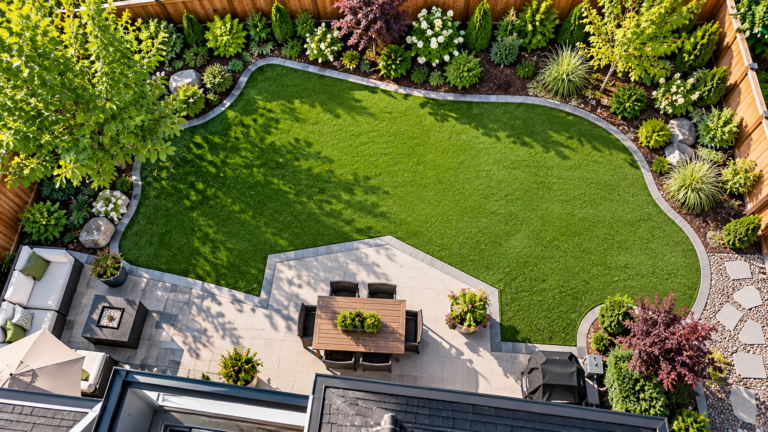
Before ordering material, note the locations of barbecues, fire features, large windows and outdoor cooking areas. Think about where people set down hot tools or equipment and how the patio connects to the turf.
Furniture placement can change over time too. A barbecue that begins its life neatly positioned on concrete has a habit of migrating when somebody decides the dining table would look better six feet to the left.
Keep heat-producing equipment on an appropriate surface even as the backyard arrangement changes.
For properties with strata rules or local requirements affecting outdoor fire features or barbecues, check with your strata council or municipality. Rules can vary by property and location, so they should be confirmed directly rather than assumed.
What to Do if There Is a Fire
If a fire starts on or near your artificial turf, the priority is people, not the lawn.
Move away from the affected area and call 911.
Do not put yourself at risk trying to save the turf or other outdoor materials. Follow instructions from emergency services and keep children, pets and other people away from the area.
Once the emergency has been handled and the area is suitable to approach again, damaged turf can be assessed for repair or replacement.
A patch of turf can be replaced. Personal safety comes first.
FAQ About Artificial Turf and Heat
Can a barbecue sit on artificial turf?
Keep barbecues off artificial turf. Place them on a surface suited to the equipment and follow the barbecue manufacturer’s requirements for placement and clearances.
Can window reflections melt artificial turf?
Concentrated reflected sunlight from windows can damage synthetic turf. If you notice a small area of distorted or melted fibres, check how sunlight reflects across the yard during different parts of the day.
Does artificial turf dry out like natural grass?
No. Artificial turf is a synthetic surface rather than living grass, so it does not dry out in the same way. Dry leaves and other organic debris can still collect on top, which is one reason regular cleanup matters.
What does EN 13501-1 mean for PGB turf?
PGB turf is tested to EN 13501-1. PGB does not describe that testing as making the turf fireproof or guaranteeing that it will not burn or melt when exposed to high heat.
Artificial turf fire safety does not require turning your backyard into a hazard-analysis exercise. Give barbecues and fire features an appropriate home, watch for concentrated window reflections and keep the lawn clear of accumulated debris.
For help planning turf around the way your backyard is actually used, call Premium Grass Blades at 604-757-2899.