
How White Grubs Quietly Drive Millions in Turfgrass Economic Loss Each Year
European chafer (Rhizotrogus majalis) and other white grub species are among the most destructive lawn pests in North America. While most homeowners focus on the visible brown patches in late summer, the real story goes much deeper into soil structure, irrigation costs, sod replacement, and long term turfgrass economic loss.
Field observations and university research consistently show that grub damage is rarely just a pest issue. It is usually the result of underlying turf stress and environmental imbalance that contributes to significant annual lawn pest damage across the United States and Canada.
Understanding the true European chafer damage cost requires looking beyond surface discoloration and examining the broader economic impact.

Understanding White Grub Lawn Damage Statistics
White grubs, including European chafer, Japanese beetle larvae, and masked chafers, feed on grassroots from July through September. According to:
- Michigan State University Extension, European Chafer
- Penn State Extension – White Grubs: Underground Marauders in Turf
- Iowa State University Yard and Garden – Managing Skunk and Raccoon Damage to Lawns
- Daniel A. Potter, ESA Fellow (Entomological Society of America)
Millions of acres of managed turfgrass exist across North America, including:
- Residential lawns
- Golf courses
- Athletic fields
- Sod farms
- Municipal properties
Research within the turfgrass industry has identified turf as one of the largest irrigated crops in the United States. When grub populations exceed threshold levels, commonly 8 to 10 grubs per square foot for European chafer, turf roots are severely compromised and widespread failure can occur.
Although precise national totals fluctuate annually, turfgrass insect damage contributes to hundreds of millions of dollars in combined direct and indirect costs when factoring:
- Lawn repair and reseeding
- Sod replacement
- Professional pest control services
- Irrigation increases
- Wildlife related destruction
This represents a substantial portion of annual lawn pest damage in the US.
Breaking Down the European Chafer Damage Cost
1. Sod Replacement and Reseeding Costs
When turf can be lifted easily from the soil, the root system has been destroyed. At this stage:
- Overseeding may fail due to unstable soil
- Full sod replacement may be required
- Soil grading and leveling often become necessary
Typical grub damage repair cost ranges from:
- 300 to 800 dollars for localized repair
- 1,500 to 4,000 dollars or more for partial lawn renovation
- 5,000 dollars or more for complete property replacement
Sod producers also experience turfgrass economic loss from grub infestations, increasing production costs and ultimately retail sod pricing.
2. Increased Irrigation and Water Consumption
European chafer larvae reduce root mass and water absorption efficiency. As a result:
- Turf dries out faster
- Wilting appears more quickly
- Homeowners increase irrigation frequency
According to EPA WaterSense and USDA irrigation data, outdoor residential irrigation already accounts for billions of gallons of water use annually. Grub damaged lawns intensify this demand.
This creates indirect financial impact through:
- Higher municipal water bills
- Increased well pump usage
- Soil compaction from chronic overwatering
Water waste is a hidden component of overall turfgrass economic loss.
3. Wildlife Foraging Damage
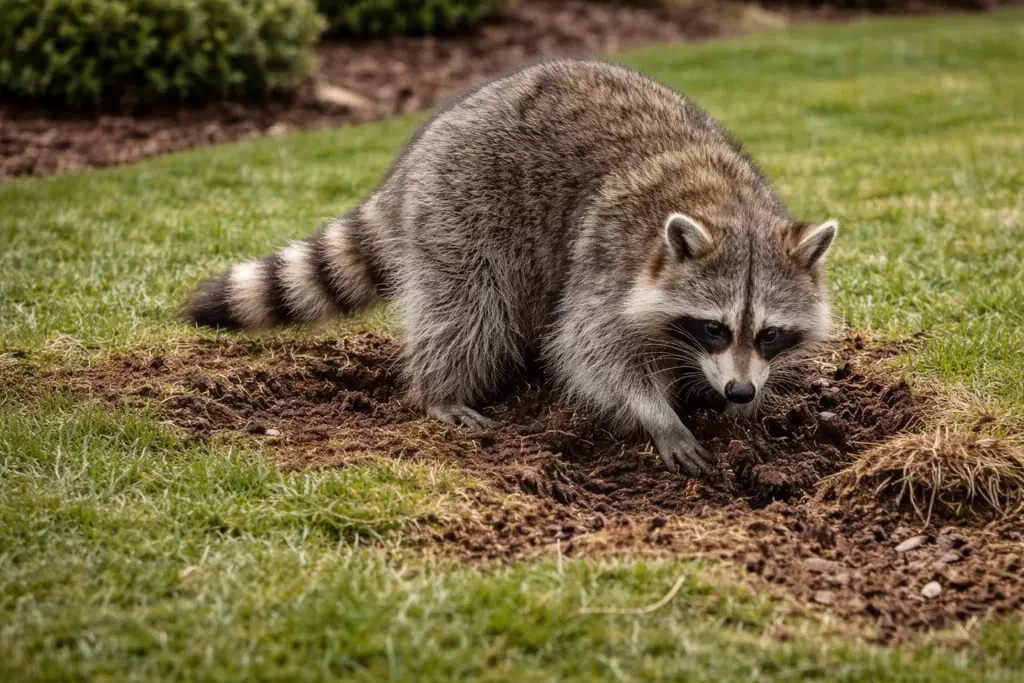
Raccoons, skunks, birds, and other animals frequently tear apart lawns in search of grubs. The visible destruction many homeowners attribute to wildlife is often secondary damage triggered by European chafer infestations.
Wildlife activity can result in:
- Torn sod and exposed irrigation lines
- Uneven soil surfaces
- Compaction and long term soil disturbance
Repairing wildlife damage often doubles the original grub damage repair cost.
4. Recurring Treatment Programs
Preventive and curative insecticide applications add ongoing expense. University research from Dr. Daniel A. Potter at the University of Kentucky and Dr. Patricia Vittum at the University of Massachusetts emphasizes the importance of timing treatments properly.
Improper application timing may lead to:
- Reduced product effectiveness
- Repeat service calls
- Unnecessary annual preventive programs
Over time, repeated treatments significantly increase total European chafer damage cost for homeowners.
Why European Chafer Is Especially Impactful in Northern Regions
European chafer has become well established in parts of:
- Michigan
- Ohio
- Pennsylvania
- New York
- Ontario and surrounding Canadian provinces
According to Michigan State University Extension, the pest has expanded steadily in northern climates. Its uniform feeding pattern and ability to reach high populations quickly make it particularly damaging compared to some other white grub species.
Milder winters may improve larval survival rates, potentially increasing future annual lawn pest damage in affected regions.
The Broader Turfgrass Economic Loss Across North America
When residential losses are combined with commercial and municipal systems, the financial impact expands considerably.
Affected sectors include:
- Sod production farms
- Golf course fairways
- Athletic complexes
- Landscape contractors
- Municipal park systems
The turfgrass industry represents billions of dollars in economic activity annually. Even a small percentage of loss due to white grub lawn damage statistics translates into substantial financial consequences.
Most of that impact begins in residential turf.
Environmental and Management Factors That Increase Risk
University extension programs consistently identify contributing factors that make lawns more vulnerable:
- Excessive nitrogen fertilization
- Frequent shallow irrigation
- Soil compaction
- Thin or stressed turf stands
- Improper mowing height
European chafer adults prefer open, stressed turf areas for egg laying. Lawns under environmental stress are more susceptible to infestation.
This reinforces that grub outbreaks are often symptoms of broader turf management imbalance rather than isolated pest events.
Reducing Long Term European Chafer Damage Cost
Strengthen Root Systems
Healthy turf with deeper roots tolerates moderate grub feeding with less visible injury.
- Maintain proper mowing height
- Avoid excessive nitrogen applications
- Core aerate compacted soils
Improve Irrigation Practices
Deep, infrequent watering promotes deeper root growth and may reduce attractive egg laying conditions.
Monitor Before Treating
Cornell Cooperative Extension, Michigan State University Extension, and University of Kentucky recommend threshold based treatment rather than automatic annual applications.
Inspect soil in late summer to determine grub density before applying curative insecticides.
Use Integrated Pest Management
Combining cultural practices, biological controls when appropriate, and carefully timed chemical intervention reduces unnecessary cost and environmental impact.
Final Thoughts
The visible brown patches seen in late summer represent only a fraction of the true European chafer damage cost.
When accounting for:
- Repair labor
- Irrigation increases
- Wildlife destruction
- Soil degradation
- Recurring chemical programs
- Sod price inflation
White grub lawn damage statistics reveal a major contributor to annual lawn pest damage in the US and Canada.
Prevention through balanced turf management is typically far less expensive than large scale repair.
Understanding the environmental conditions that invite infestation is the first step toward reducing long term turfgrass economic loss and protecting the health of natural lawns.