Artificial Turf for Allergies: What Changes Outside
A lawn can look remarkably innocent while producing something your nose may have strong opinions about.
Grass pollen comes from flowering grass. Then there is mowing, which cuts plants, tosses clippings around and can stir settled pollen and other particles back into the air. For homeowners researching artificial turf for allergies, those two details matter.
Artificial turf does not flower. It does not need mowing.
That changes one source of pollen around the yard. It does not, however, place an invisible dome over your property. The cedar tree next door remains free to conduct its botanical business.
Why a Natural Lawn Can Add to Pollen Exposure
Grass is a flowering plant, although its flowers are considerably less dramatic than a rose’s. No florist has ever made a fortune arranging timothy grass seed heads for Valentine’s Day.
When grasses flower, they produce pollen. Grass pollen is one of the outdoor pollens associated with seasonal allergic rhinitis in sensitive people.
Mowing adds another wrinkle.
The mower does more than shorten the lawn. Research reviewed by allergy specialists has found that mowing can send settled grass pollen and grass-derived particles back into the air. Clippings and other material are disturbed at the same time.
That does not mean every person with seasonal allergies will react the same way. Allergies are individual, and outdoor pollen also comes from trees, weeds and other grasses well beyond the property line.
It does mean the lawn itself can be part of the equation.
What Artificial Turf for Allergies Actually Changes
Artificial turf has one wonderfully uneventful biological characteristic: it is not alive.
It does not flower. It does not produce grass pollen. There is no weekly mowing session because there is nothing to mow.
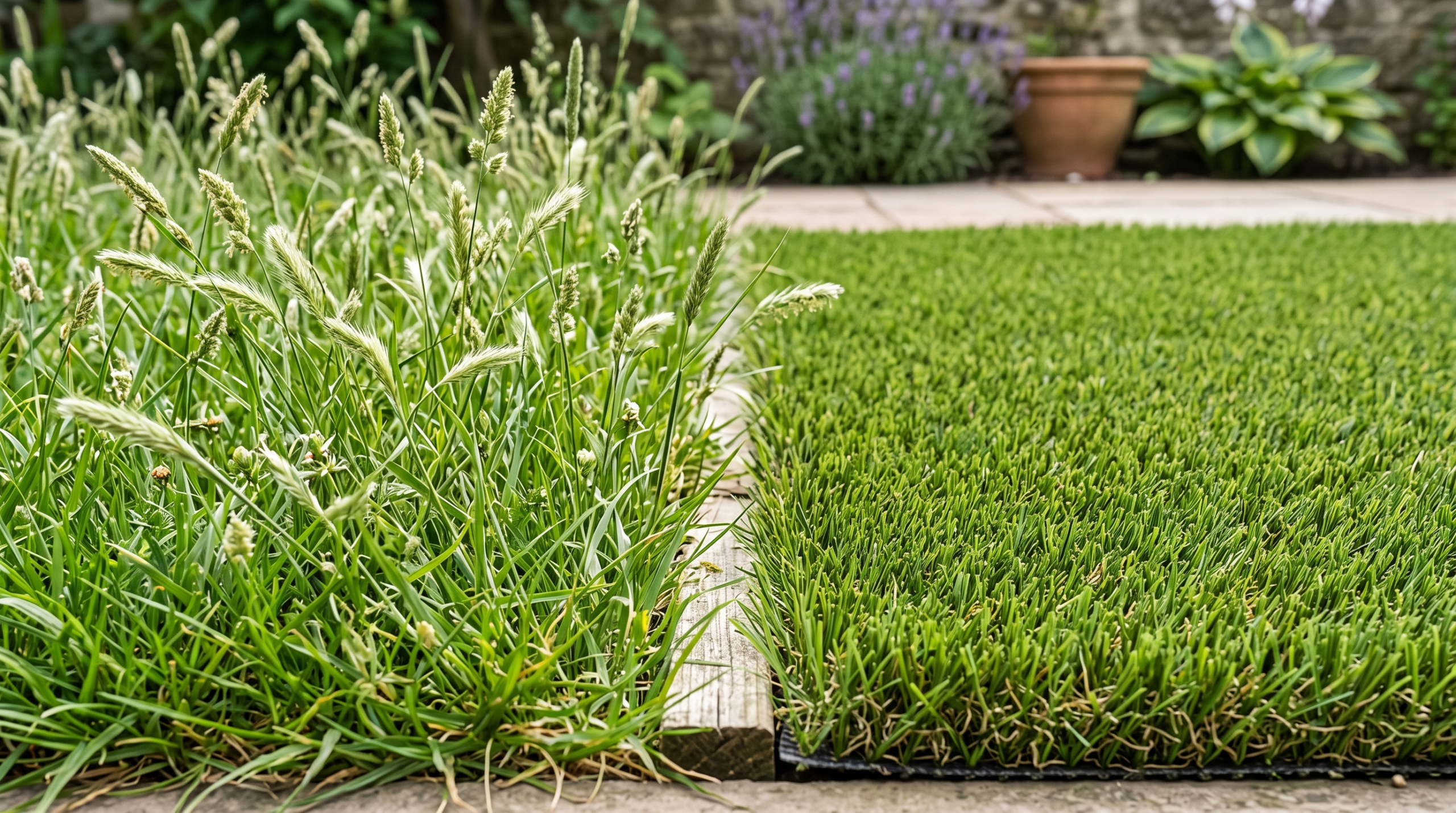
So, compared with a flowering natural lawn, artificial turf removes the lawn’s own grass-pollen production and the regular disturbance caused by mowing.
That is the useful distinction.
Artificial turf should not be described as a treatment for allergies, and it cannot control everything floating through the neighbourhood. Wind-borne pollen from nearby trees, weeds and natural grass can still arrive on the surface. The same is true for ordinary outdoor dust.
Think of turf as changing what happens on the lawn, rather than changing the atmosphere around the house.
The atmosphere, sadly, has not accepted household management.
Pollen Can Still Settle on Artificial Turf
A gusty spring day does not check what kind of lawn you own before dropping pollen on it.
Airborne pollen and dust can settle between artificial turf fibres just as they can settle on a deck, patio table or car. Leaves and bits of organic debris can collect there too.
The practical response is fairly simple.
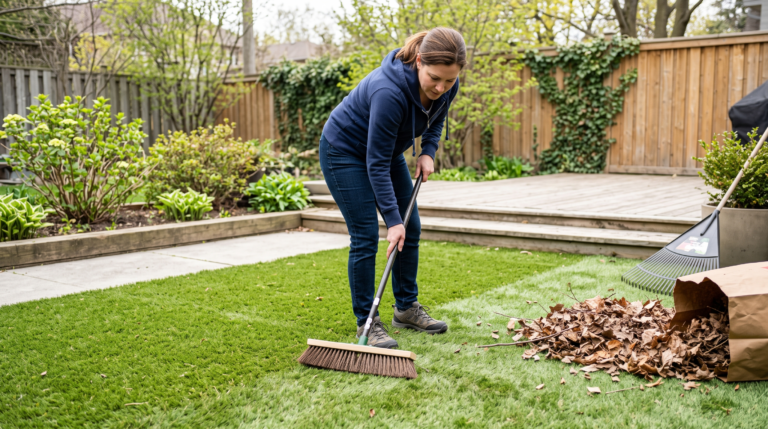
Occasional rinsing can wash settled pollen and dust through and off the turf surface. Brushing and debris removal are also part of regular turf care.
During periods when a lot of pollen is visible, a rinse can be particularly useful. The goal is not to sterilize the yard. It is ordinary physical cleaning: water moves loose material away.
Rain may handle some of that work in wet BC weather. During dry stretches, homeowners can rinse as needed while following any current watering rules in their municipality.
Artificial turf still needs care. It simply needs a different kind of care than a living lawn.
The Infill Deserves a Closer Look Too
Under and between artificial turf fibres sits infill, depending on the turf system and application.
This is one of those components that receives very little attention until someone starts asking good questions. Then suddenly everyone is discussing tiny grains of material with surprising seriousness.
For homeowners who want to understand exactly what is going into their yard, ask about the specific infill being recommended.
PGB’s artificial turf infill information includes mineral-based options such as silica sand and zeolite pet deodorizing infill.
Different projects may call for different products. A pet area, family lawn and putting surface do not necessarily have identical requirements.
Rather than choosing an infill based on a broad health claim, look at what the material actually is, what its intended use is and what product information is available.
Tiny grains. Sensible questions.
Ask for the Safety Data Sheets
There is an unusually useful document with an unusually dull name: the Safety Data Sheet, commonly shortened to SDS.
Ask your turf supplier for current product information and available Safety Data Sheets for the artificial turf and infill you are considering.
An SDS can provide information about a material’s composition, identified hazards, handling and other product-specific details. It should be read for what it actually says rather than treated as a blanket health guarantee.
This is especially helpful if someone in the household has known sensitivities or specific material concerns.
If allergies are a significant medical issue, product information is only one part of the picture. A healthcare professional can help identify the person’s actual triggers, which may include grass pollen, tree pollen, weeds, dust or other substances.
Knowing the trigger is rather useful. Otherwise, the investigation starts to resemble a detective story in which every plant is suspicious.
A Simple Cleaning Routine During Pollen Season
Artificial turf does not require mowing, but ignoring it indefinitely is not much of a maintenance strategy.
During pollen-heavy or dusty periods:
- Remove leaves and loose debris with a suitable turf broom or rake.
- Rinse the turf when visible pollen or dust has accumulated.
- Brush areas where fibres have been pressed down by regular traffic.
- If using a PGB turf cleaning product, follow the product label.
- Pay attention to nearby plants and natural grass, since they can continue contributing pollen to the area.
There is no need to attack the surface with harsh household chemicals.
Regular, straightforward cleaning is the point.
Artificial Turf and Allergies: Frequently Asked Questions
Does artificial turf stop outdoor pollen?
No. Artificial turf does not produce grass pollen itself, but pollen from trees, weeds, neighbouring lawns and other plants can still blow onto the property.
Why does mowing matter for people sensitive to grass pollen?
Mowing disturbs the lawn. Research has found that it can re-suspend settled grass pollen and grass-derived particles into the air. Artificial turf does not need mowing.
Should artificial turf be rinsed during pollen season?
Rinsing helps wash loose pollen and dust that have settled on the turf. How often this is useful depends on local conditions, weather and how much material is collecting on the surface.
What should I ask about turf and infill before buying?
Ask what products are being proposed, what infill is appropriate for the project, and what current product documentation and Safety Data Sheets are available. PGB carries mineral infill options including silica sand and zeolite.
Artificial turf changes a very specific part of the allergy equation. There is no flowering lawn producing grass pollen, and there is no mower regularly disturbing that lawn. Pollen from the rest of the neighbourhood can still arrive, which is why rinsing and basic maintenance remain useful.
To compare turf samples and talk through infill options in person, visit the Premium Grass Blades showroom in Maple Ridge.