Artificial Turf for Balconies and Decks: What to Check First
Artificial turf for balconies and decks can turn a plain outdoor surface into a more comfortable, finished-looking space. It adds the look and feel of grass without bringing a mower anywhere near the elevator, which is generally good news for everyone in the building.
But putting turf over a deck or balcony is different from putting it over a prepared yard.
There may be a waterproof membrane below the surface. Water needs somewhere to go. The building may have rules about what can be placed outside. Even the way the turf is secured deserves some thought.
Before ordering a roll, work through the practical details first.
Start With the Balcony or Deck, Not the Turf
The first question is not which shade of green you prefer.
Start with the structure.
If you live in a condo or strata property, check with your strata council before making changes to the balcony or rooftop area. Renters should get approval from their landlord or property manager. Rules can differ from one property to another, so do not assume that because a neighbour has turf, your project automatically has approval.
You should also confirm that the structure is suitable for the planned materials and added load. Turf is only one part of the equation. Depending on the project, there may also be drainage material, furniture, planters and other items sharing the space.
For questions about structural load, waterproofing or the condition of a membrane, speak with an appropriate building professional.
It is much easier to sort those details out before the turf arrives.
Drainage Matters With Artificial Turf for Balconies and Decks
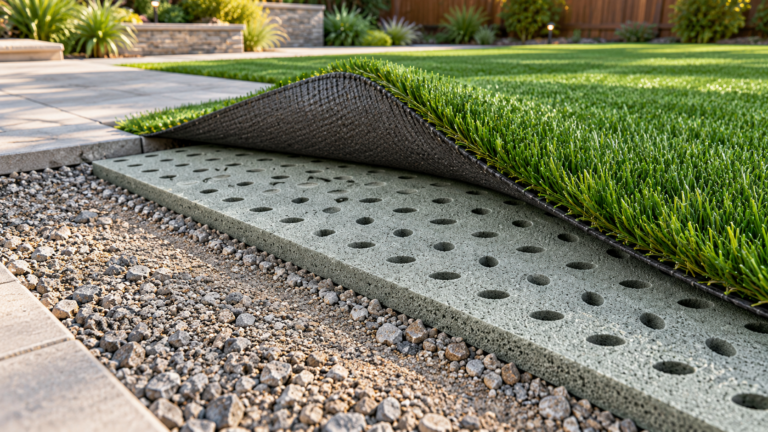
A ground-level turf project usually has a prepared aggregate base beneath it. A balcony or deck is a different assembly.
Rainwater still needs a clear route to the existing drains or drainage points. Covering the surface without considering that route can create problems that have very little to do with the turf itself.
A drainage underlay may be appropriate between the turf and the deck or balcony surface. Its job is to help maintain space beneath the turf so water can move toward the drainage system rather than being trapped against the surface.
Before covering anything, identify where the water currently goes.
Look for drains, scuppers, slopes and low spots. Make sure the proposed turf layout does not interfere with them. Your installer should plan the turf and underlay around the existing drainage design rather than treating the balcony like a small backyard.
If water already collects on the surface, covering it with turf does not correct the underlying drainage issue. Have the existing condition assessed first.
For more detail on this type of project, PGB has additional information about artificial turf for rooftops and balconies.
Protect the Surface Underneath
Decks and balconies often have surfaces that should not be punctured casually.
This is especially important where a waterproof membrane is involved. Driving nails or other fasteners through a membrane can damage the assembly below.
The securing method should suit the particular surface, drainage requirements, exposure to wind and building requirements. An independent installer can assess the area and recommend an appropriate approach.
That assessment also matters around doors.
Check door clearance before adding turf or an underlay. You do not want the finished surface interfering with a swinging door, threshold or drainage path. Measure first, including the thickness of every layer being considered.
A few minutes with a tape measure can prevent a surprisingly annoying problem later.
Why Turf Works Well in Small Outdoor Spaces
Many balconies and decks are useful but visually plain. Concrete, membranes and older decking tend to make the space feel more functional than inviting.
Turf changes the character of the floor without requiring a natural lawn.
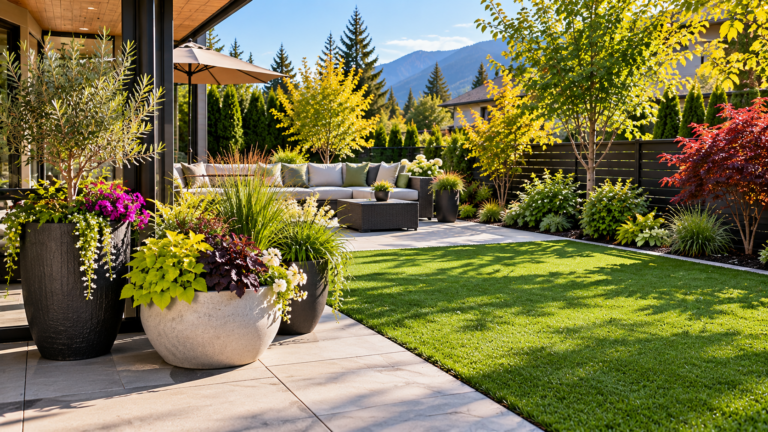
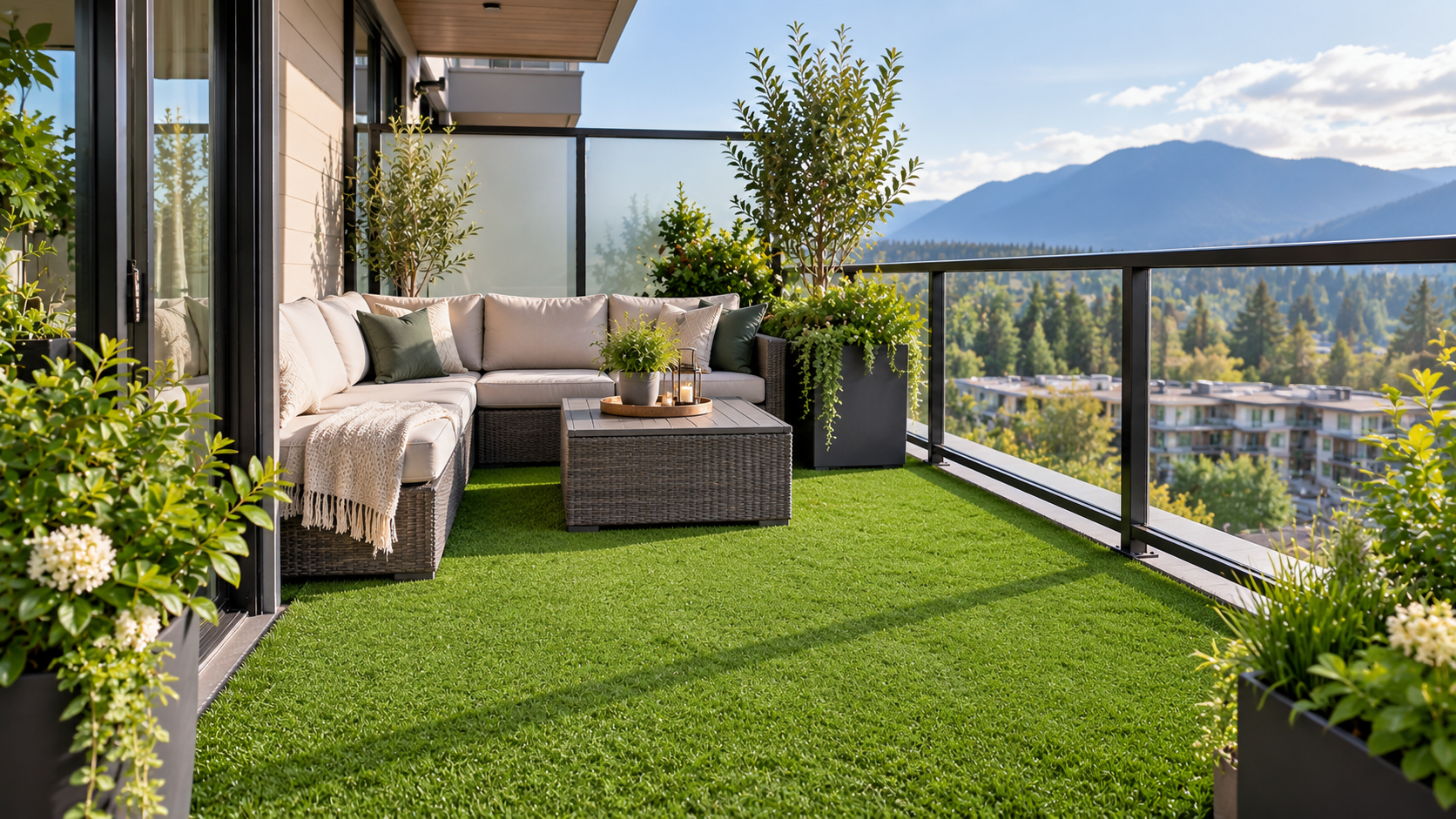
That can make a small balcony feel more like an outdoor room. Add a chair, a compact table and a few planters, and the area can feel much more deliberate.
Artificial turf also does not need mowing, fertilizer or regular watering. Upkeep is relatively simple, but it is not maintenance-free.
Leaves and loose debris should be removed. Fibres may need occasional brushing, particularly in frequently walked areas. Spills should be dealt with rather than left to sit, and pet areas need regular cleaning and rinsing.
If you use a turf cleaning product, follow the product label.
Think About Sun and Reflected Heat
Balconies can get plenty of direct sun, especially on upper floors without shade.
Artificial turf warms up in direct sunlight. On hot days, check the surface temperature before children or pets use it, provide shade where practical and supervise children and pets.
There is another heat source that is easier to overlook: reflected sunlight from windows.
Certain window conditions can concentrate reflected sunlight onto a relatively small area. That concentrated heat can damage synthetic turf.
Before placing turf beside large windows or neighbouring glass, watch how sunlight moves across the space during the day. Reflections can change with the season and the angle of the sun.
Direct or reflected heat over 65°C is excluded from the PGB Limited 15-Year Product Warranty.
Plan for Real-Life Use
A balcony used for morning coffee has different demands from one used by a dog several times a day.
Think about what will actually happen on the turf.
For a pet area, drainage and regular cleaning deserve extra attention. Solid waste should be removed promptly, and the area should be rinsed as needed. PGB also carries turf cleaning products for ongoing care.
For a seating area, consider where furniture legs will sit and where people will repeatedly walk. Fibres in those spots may need occasional brushing.
Planters deserve some thought too. Make sure they do not block drainage paths, and use appropriate trays or supports where needed for the underlying surface.
The goal is not simply to cover the floor. It is to build a setup that works with the way you use the space.
Buying Turf and Planning the Work
Once the structural, drainage and approval questions are settled, you can start comparing turf.
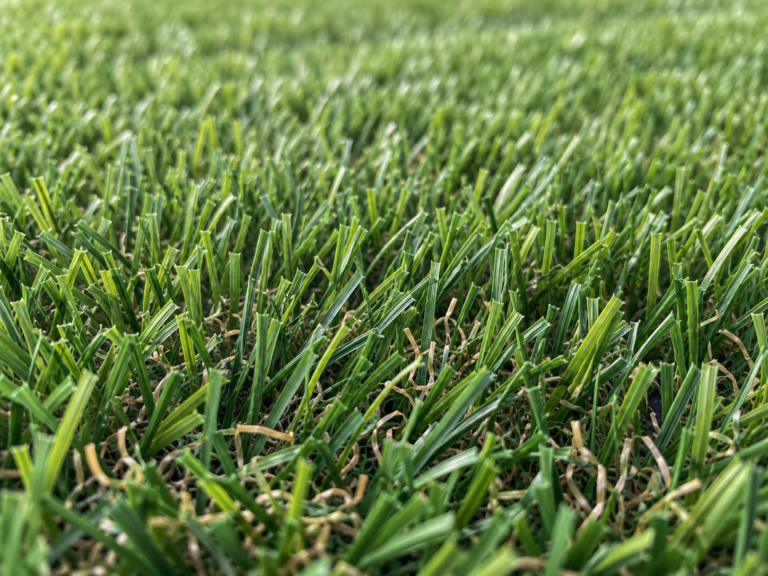
Look at samples in person if possible. Blade height, density and feel can be easier to judge with your hands than from a photograph. For a compact balcony, you may also want to consider how the turf will be cut and positioned to reduce unnecessary seams and waste.
PGB supplies artificial turf and related products from its Maple Ridge showroom. PGB does not perform turf installation, but can refer customers to an independent installer who contracts directly with the customer.
If you are planning the work yourself, follow PGB installation guidelines and the instructions for the products you use. Contact BC 1 Call before digging where a project involves ground disturbance, and use suitable protective gear while cutting or handling materials.
Understand the Warranty Before You Start
Eligible PGB turf is backed by the PGB Limited 15-Year Product Warranty, which is pro-rated. Putting green turf has an 8-year warranty.
Warranty coverage depends on the product and the conditions in which it is used. Among the exclusions are installations that do not follow PGB guidelines, lack of maintenance, turf that is not infilled to the advised amount, and direct or reflected heat over 65°C. As-is, remnant and roll-end products are also excluded.
That is another reason to discuss a balcony or deck application before buying. The surface beneath the turf, securing method, drainage and intended use all matter.
Artificial turf can be a practical finishing material for balconies and decks, but the best projects begin below the blades. Get the building questions answered, protect the existing surface and give water a clear route out.
See and feel turf samples at our Maple Ridge showroom before choosing turf for your balcony or deck.
FAQ
Can artificial turf go directly over a balcony or deck?
It depends on the existing surface, drainage, waterproofing and how the turf will be secured. A drainage underlay may be appropriate. If there is a waterproof membrane, avoid assuming it can be penetrated with fasteners.
Does artificial turf need drainage on a balcony?
Yes, water needs a clear path to the balcony or deck’s existing drainage system. The turf layout should not obstruct drains or create areas where water becomes trapped.
Do I need strata approval for balcony turf?
Check with your strata council before starting. Building requirements differ, and PGB does not make claims about individual strata rules or approvals. Renters should check with their landlord or property manager as well.
Does PGB install balcony turf?
No. PGB supplies artificial turf and related products and can refer customers to an independent installer. The installer contracts directly with the customer.