Artificial Turf Price: What Actually Affects the Cost?
An artificial turf price makes more sense when you stop thinking of turf as one product with one price.
Two backyards can have roughly the same square footage and end up as very different projects. One might be a simple rectangle with a solid existing base. The other might have curves, garden beds, poor drainage and soil that needs considerably more preparation.
The turf itself matters. But so does everything required to put it on a properly prepared surface.
That is why a useful turf budget starts with the project, not a single price per square foot.
Here are four factors that usually matter.
1. Turf Type and Quality Affect Artificial Turf Price
Start with the material you can see.
Artificial turf comes in different pile heights, densities, blade structures and backing systems. Those differences affect how a product looks, feels and performs in different applications.
A homeowner creating a quiet front lawn may have different priorities from someone building a dog run or a backyard where children regularly play. A putting green is another category again.
Price matters, but price without context is not especially useful.
Think about buying shoes. Asking, “How much are shoes?” gets you nowhere. Hiking boots, running shoes and dress shoes solve different problems. The better question is what you need them to do.
Turf works much the same way.
Compare specifications and intended uses rather than choosing from appearance alone. PGB carries different artificial turf options so homeowners and contractors can compare products for the actual conditions of a project.
The goal is not automatically to buy the most expensive turf. It is to choose a product that makes sense for how the space will be used.
2. Area Size Matters, but Shape Matters Too
Square footage is an obvious part of a turf quote.
Shape is less obvious.
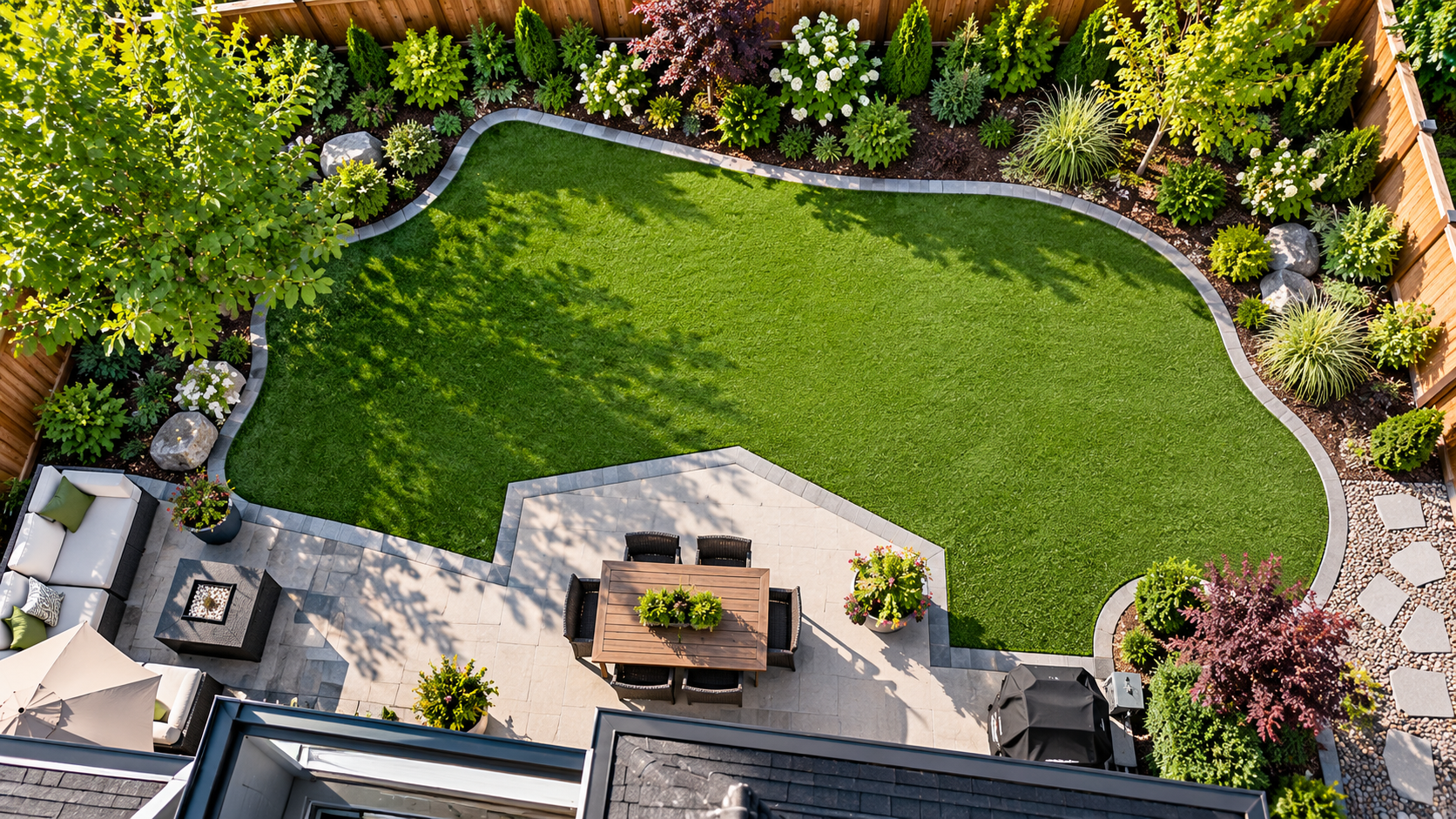
Picture two yards with the same surface area. Yard A is a clean rectangle. Yard B wraps around a patio, curves past a garden bed and narrows beside the house.
On paper, they are the same size.
On the ground, they are different jobs.
Artificial turf is supplied in rolls. Planning how those rolls fit into a space affects cuts, seams and material requirements. An irregular area may require more planning and potentially more material than its finished square footage suggests.
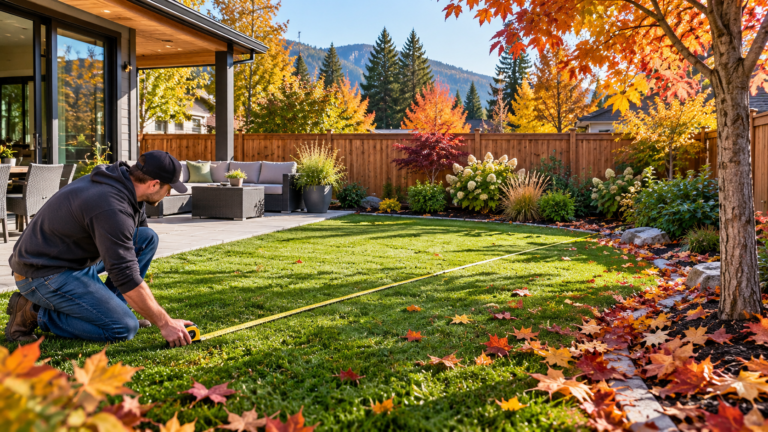
That is why measuring only the lawn’s total area does not always tell you how much turf needs to be ordered.
Good planning before material is cut can reduce avoidable waste. For a homeowner working on a DIY project, a detailed drawing with accurate measurements can help PGB discuss turf requirements and roll layout.
For projects using an independent installer, the installer can assess the site and determine the material and labour requirements for the finished design.
A small yard is not automatically a cheap project. A large, straightforward yard is not automatically complicated.
Geometry gets a vote.
3. Site Preparation and the Base Can Change the Budget
This is the part people do not see after the project is finished, which makes it easy to underestimate.
Artificial turf needs an appropriately prepared base.
Existing site conditions determine how much work that takes. Removing an existing lawn, dealing with unsuitable material, planning drainage, grading the area and preparing and compacting the base can all affect the scope of a project.
Consider two neighbours.
One has a relatively straightforward site that is ready for normal preparation. The other has drainage trouble and an uneven area requiring more work before turf can go down.
They might choose exactly the same turf.
Their total project costs can still be different.
This is one reason comparing turf projects using only the material price can be misleading. The surface is only one part of what you are paying for.
The less glamorous work underneath matters because the base supports what happens above it.
For DIY projects, follow PGB installation guidelines and product instructions, wear appropriate protective gear, and contact BC 1 Call before digging. Work that does not follow PGB guidelines, including turf that is not infilled to the advised amount, may not be covered by the PGB Limited 15-Year Product Warranty.
4. Independent Installer Labour Is Part of the Equation
Some homeowners install turf themselves. Others hire an independent installer.
Labour costs can vary because projects vary.
Access is one example. Moving materials into an open backyard is different from carrying them through a narrow side yard or working in an area with limited access.
The number of cuts and seams can matter. So can site preparation, edges, curves, drainage considerations and other details of the project.
This is why a labour estimate makes more sense after someone understands the site.
PGB does not perform turf installation. PGB supplies artificial turf and related products and can refer customers to independent installers who contract directly with the customer.
When comparing quotes, look beyond the final number. Make sure you understand what work is included, what site preparation is planned and what materials are being used.
A cheaper number and a smaller scope are not necessarily the same deal.
Think About Cost Over Time, Not Just Purchase Day
There are two ways to look at the cost of a yard.
The first is what you spend today.
The second is what the yard asks from you over time.
Natural grass has ongoing needs. Artificial turf does not need mowing, watering or fertilizer. It still requires care, including debris removal, occasional brushing and rinsing when needed.
That difference matters when comparing the two.
It does not mean every homeowner will save a specific amount of money. Yard sizes differ. Water use differs. Lawn-care habits differ. Some people do everything themselves, while others pay for regular lawn care.
There is no honest universal savings number.
But there is a useful question:
What will this space require from me after the project is finished?
That includes money, but also equipment, routine chores and time.
A purchase price is one moment. Ownership is everything that comes after it.
Get a Price Based on Your Actual Project
Artificial turf pricing becomes easier to understand once you separate it into parts.
There is the turf.
There is the amount of material the shape requires.
There is the preparation underneath.
And, if you hire someone, there is independent installer labour.
Those four pieces explain far more than a generic square-foot figure ever could.
Current product pricing can also change, so an old number from a previous article or project may not tell you much about what your yard will cost today.
For current turf pricing and help working through the material needs for your project, call Premium Grass Blades at 604-757-2899.
FAQ
How much does artificial turf cost?
There is no single artificial turf price that accurately represents every project. Turf selection, material requirements, site preparation and independent installer labour can all affect the total. Contact PGB for current product pricing.
Does a larger yard always cost more?
A larger area generally requires more turf, but total area is only part of the calculation. The shape of the space, cuts, seams, site conditions and base preparation can also affect material and labour requirements.
Can I reduce the cost by installing artificial turf myself?
DIY removes independent installer labour from the project, but the base and turf still need to be prepared according to PGB guidelines. Contact BC 1 Call before digging, use appropriate protective gear, and follow PGB installation guidelines and product instructions.
Does artificial turf require ongoing maintenance?
Yes. Artificial turf is low maintenance, not maintenance-free. It does not need mowing, watering or fertilizer, but occasional brushing, rinsing and debris removal help care for the surface.