Artificial Turf Water Conservation in Vancouver
Vancouver is a city shaped by water. For much of the year, it falls from the sky with such regularity that keeping a lawn watered seems like the least interesting problem a gardener could have.
Then summer arrives.
Rain becomes less dependable, lawns begin asking for attention, and outdoor water use becomes something homeowners have to think about more carefully. Artificial turf water conservation in Vancouver is fairly simple in this respect. Artificial turf does not need regular lawn irrigation.
That changes one small but surprisingly persistent part of the summer garden routine.
Water feels different in a Vancouver summer
A green lawn has traditionally come with a familiar bargain. Grass grows, so we mow it. Dry weather arrives, so we water it. Then we repeat the process.
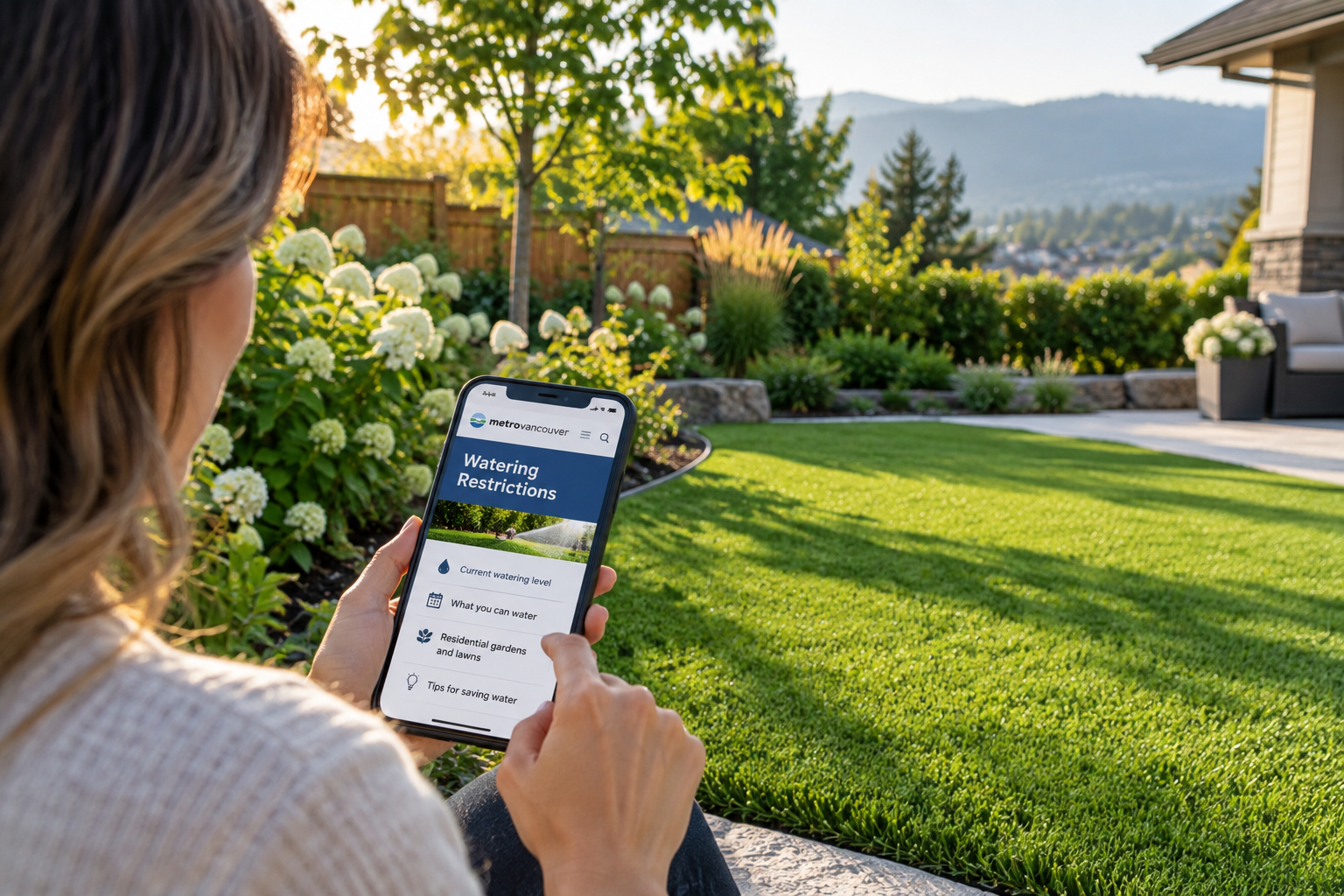
But summer water use in Metro Vancouver operates within regional restrictions. Those restrictions can change depending on conditions, which is why copying a watering schedule into an article like this is not particularly useful. The schedule may be outdated by the time someone reads it.
Instead, homeowners should check Metro Vancouver’s current lawn watering restrictions and their municipality before watering.
For Vancouver properties, the City of Vancouver’s current water restriction information provides the local rules.
As of September 2026, Stage 1 restrictions are in effect in Metro Vancouver, but the important point for planning a yard is that restrictions can change. Check the current rules rather than relying on last summer’s routine.
Artificial turf water conservation in Vancouver starts with the lawn
There are plenty of complicated conversations to have about gardens. This is not one of them.
Natural grass needs water as part of its growth. Artificial turf does not grow, so it does not require regular irrigation to remain green.
That does not mean a turf yard never encounters a hose.
Pet areas may need rinsing as part of regular cleaning. Dust, pollen or a messy backyard afternoon may occasionally call for water. Turf also warms in direct sun, and some homeowners choose to rinse the surface before use on a hot day. Always check the surface temperature before children or pets use it.
Those are occasional uses. They are different from regularly irrigating a living lawn through a dry stretch of summer.
For a homeowner reconsidering how much lawn is useful in the first place, that distinction matters.
Rain still needs somewhere to go
Removing lawn irrigation does not remove water from the yard.
Quite the opposite. Anyone who has lived through a Lower Mainland autumn knows that the question eventually changes from “How do we get water onto this lawn?” to “Where is all this water going?”
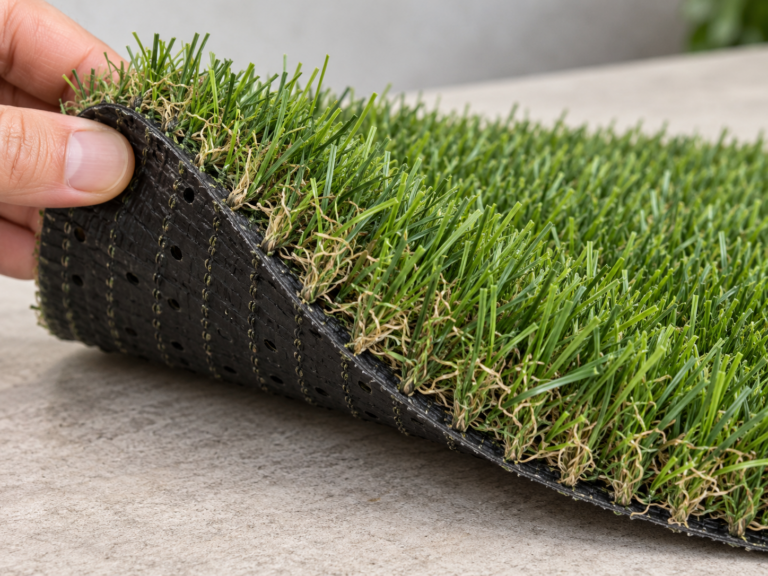
Artificial turf is designed so rain can drain through the backing. From there, the rest of the system matters. The prepared base and drainage design need to move water appropriately for the site.
This is why drainage should be considered before turf is laid, rather than after the first serious rainfall.
A low spot, unsuitable base or poorly planned outlet does not become less important because the surface above it is artificial. Vancouver’s wet months still have a vote.
PGB supplies artificial turf and installation products. For projects requiring professional help, PGB can refer customers to an independent installer who contracts with the homeowner directly.
A yard can still have plants
Choosing artificial turf does not require turning a garden into one uninterrupted sheet of green.
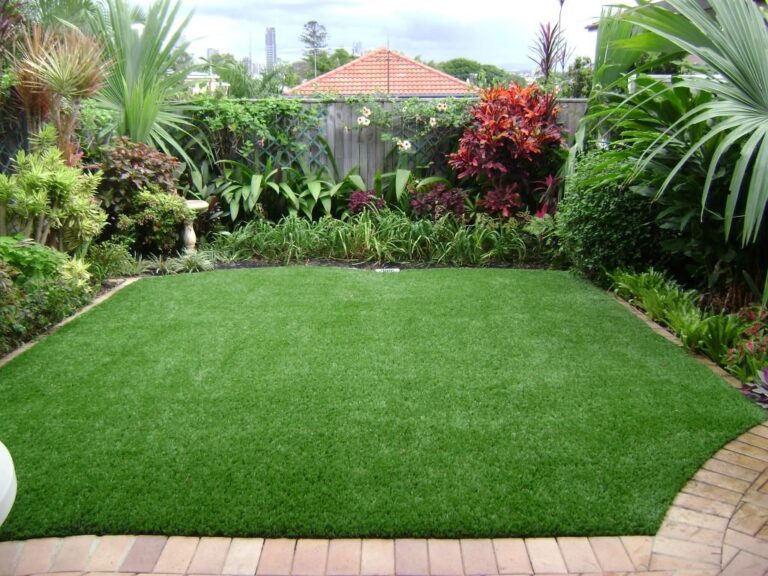
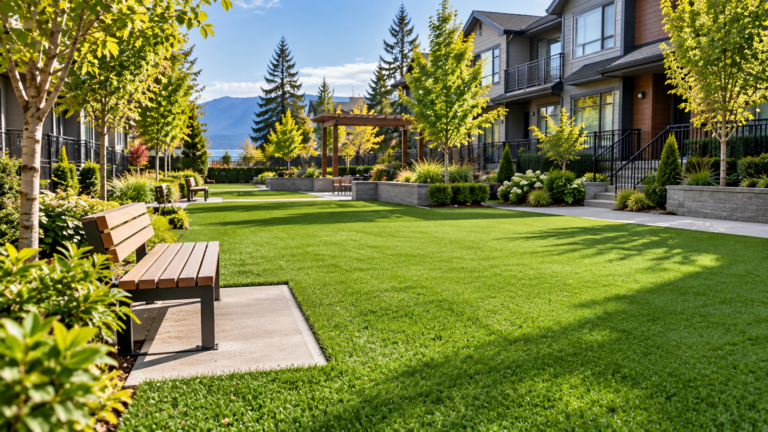
A yard can have turf where people walk, children play or a dog makes its daily rounds, with planting beds, shrubs, trees or edible plants elsewhere.
Those living parts of the garden still need care appropriate to the plants, site and current watering rules.
This creates a useful distinction. Instead of routinely irrigating an entire lawn, water can be considered separately for the living plants that actually need it.
There is something sensible about that arrangement. A garden does not have to pretend that every square metre serves the same purpose.
Maintenance changes rather than disappearing
Artificial turf is low maintenance, not maintenance-free.
Leaves and other debris still land on it. Fibres may need occasional brushing. Pet areas need regular cleaning and rinsing. Homeowners should follow the label when using a PGB turf cleaner.
The difference is that mowing, fertilizing and regular lawn watering are no longer part of maintaining the turf itself.
That can be particularly noticeable during dry weather, when a natural lawn and an artificial one ask very different things of the homeowner.
There is no need to attach a dramatic water-saving percentage to that difference. Every property is different, and household water use depends on far more than the lawn.
The useful fact is simpler: artificial turf does not need watering to grow because it does not grow.
Water conservation is only one part of choosing turf
It would be a mistake to choose any yard surface based on one feature alone.
Think about drainage. Think about pets, foot traffic, shade and how the space is actually used. Consider where trees and planting beds belong. If you are planning the project yourself, contact BC 1 Call before digging, wear appropriate protective gear, and follow PGB installation guidelines and product instructions.
The same care applies to choosing the turf itself.
Different turf products suit different uses. A dog run, family backyard and decorative front lawn do not necessarily ask the same things of a surface.
PGB supplies a range of artificial turf for these different applications and can help homeowners compare options at the Maple Ridge showroom.
What about the turf warranty?
Water use is one part of owning artificial turf. Proper preparation, care and use are another.
Eligible PGB landscape turf is backed by the PGB Limited 15-Year Product Warranty, which is pro-rated. Putting green turf has an 8-year warranty.
Coverage has conditions. Installs that do not follow PGB guidelines, lack of maintenance and turf that is not infilled to the advised amount may not be covered. Direct or reflected heat over 65°C is also excluded.
That last point deserves attention around windows. Concentrated reflected sunlight can damage synthetic turf, so window reflection should be considered when planning the site.
Lifespan depends on use, installation and care. Turf is built for long-term outdoor use, but it still needs the right foundation and reasonable maintenance.
A different relationship with the summer lawn
For much of Vancouver’s gardening history, a green summer lawn has meant paying attention to rain, sprinklers and watering rules.
Artificial turf changes that relationship. It does not remove water from the garden, nor does it remove the need to think carefully about drainage, plants or seasonal conditions.
It simply takes regular lawn irrigation out of the routine.
During Vancouver’s dry summers, that can be a practical reason to reconsider what portion of a yard really needs to be living grass and what portion simply needs to be a usable surface.
If you are weighing those options, see and feel turf samples at the PGB Maple Ridge showroom and compare surfaces for your particular yard.