European Chafer Beetle: What It Means for Your Lawn
One of the frustrating things about a lawn problem is that the first symptom does not always reveal the cause.
Brown or weak grass can have many explanations. Drainage, drought, soil conditions and general lawn care can all affect how grass looks.
With chafer activity, however, there are a few clues worth noticing.
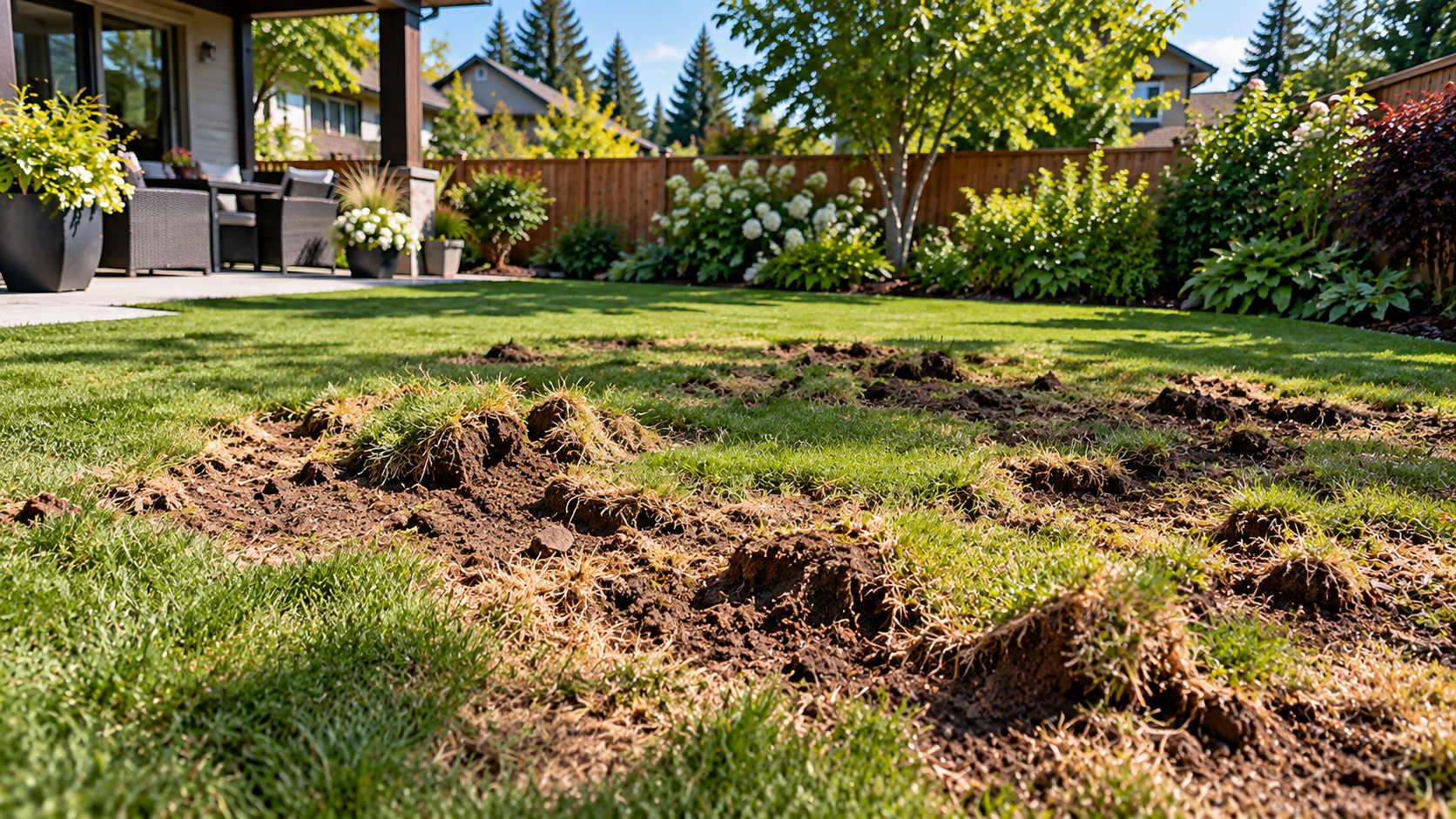
Grass may become weak where roots have been damaged. Sections of turf can lose their grip on the soil. Then birds or other animals may begin pulling and digging at those areas while searching for grubs.
A lawn that seems to be attracting an unusual amount of attention from crows deserves a closer look.
The Province of British Columbia provides guidance for identifying lawn pests, including European chafer. Homeowners who suspect an infestation should use current provincial information rather than assuming that every damaged patch of grass has the same cause.
There is something useful in that approach. Before deciding how to fix a yard, first understand what the yard is telling you.
Why Metro Vancouver Lawns Can Become a Food Source
We tend to think of a lawn as something created for us.
The chafer grub has other ideas.
To a grub, those grass roots are food. To a crow or another foraging animal, the grub is food. The carefully maintained lawn has unintentionally become part of a food chain.
This is why repairing only the visible surface may not resolve the underlying issue. Replacing disturbed sod with more grass restores the same type of root system that attracted the grubs in the first place.
That does not mean every lawn affected by chafer beetles needs to disappear. A homeowner may choose to keep natural grass and manage it according to current guidance.
But repeated damage can prompt a different question: does this particular area of the property need to be lawn at all?
A garden does not have to be organized around one material.
Some spaces can remain planted. Trees and garden beds can continue to provide the living structure of the yard. Patios can handle gathering areas. Other sections can use different ground surfaces according to how the family actually uses them.
Artificial turf is one of those options.
How Artificial Turf Changes the Chafer Problem
Artificial turf changes one basic part of the relationship between a lawn and the European chafer beetle.
There are no living grass roots in the artificial turf for chafer grubs to feed on.
That is the important point. It is not a promise that artificial turf somehow eliminates an insect from a neighbourhood, nor should it be presented as a treatment for an infestation elsewhere on a property.
It simply removes the natural grass root food source from the area converted to artificial turf.
For homeowners who have repeatedly repaired chafer-damaged lawn, that difference can be worth considering.
It also changes the routine of caring for that area. Artificial turf does not need mowing, fertilizer or watering to keep grass alive. It is still a maintained outdoor surface. Leaves and debris need to be removed, fibres may need occasional brushing, and pet areas need appropriate cleaning and rinsing.
The choice, then, is less about finding a yard that requires no care and more about deciding what kind of care makes sense.
PGB supplies a range of artificial turf for residential projects and can refer customers to an independent installer. Homeowners can also read more about European chafer beetle damage and why some homeowners reconsider natural lawns in the PGB Education Centre.
Think Beyond Replacing Grass With Grass
Chafer damage can be an opportunity to reconsider the design of a yard rather than simply restoring yesterday’s lawn.
A sunny area used for children, pets or outdoor furniture may have different needs from a shaded garden bed. A narrow side yard may serve mostly as a route between the front and back. A front lawn may exist largely because grass was planted there years ago.
Once a lawn has been torn up, those habits become easier to see.
Perhaps some grass should return.
Perhaps part of the area would work better as planting.
Perhaps a heavily used section would suit artificial turf.
The useful question is not simply, “How do we make this lawn exactly as it was?”
It is, “How do we want to use this ground?”
That leads to better planning, especially in a climate where wet winters, dry summer periods, shade and drainage can all influence what succeeds in a yard.
Check the Rules Before Treating a Lawn
If you decide to keep your natural lawn and address a suspected chafer problem, start with current official guidance.
Pesticide use is regulated, and municipal requirements can also apply. BC guidance specifically advises checking with your municipality about local pesticide-use bylaws in addition to provincial and federal regulations.
That means an old blog post, neighbourhood tip or product sitting at the back of a shed should not be your rulebook.
Check current information from the Province of British Columbia and your municipality before treating a lawn. Follow applicable requirements and the directions for any permitted product or treatment.
Rules and available approaches can change. Your municipality is the right place to confirm what applies where you live.
A Lawn Is a Choice, Not an Obligation
The European chafer beetle makes visible something that is usually hidden: a lawn is alive below the surface.
Roots feed insects. Insects feed birds and other animals. Weather affects the soil. Our decisions about watering, mowing and yard design become part of that system too.
There is no single response that suits every property.
Some homeowners will keep their grass. Others will reduce the amount of lawn and add planting or hard surfaces. Some will choose artificial turf for areas where they want a consistent, usable surface without maintaining living grass.
What matters is understanding why the damage is occurring before rebuilding the same conditions again.
If chafer damage has you reconsidering part of your yard, visit the PGB Maple Ridge showroom to see and feel artificial turf samples in person.
FAQ
Do crows digging up my lawn mean I have European chafer beetles?
Not necessarily. Birds and other animals can dig in lawns for different reasons. However, BC guidance identifies crows and other animals digging for larvae as a sign associated with chafer activity. Confirm the cause before deciding what to do.
Do European chafer grubs eat artificial turf?
Artificial turf does not contain living grass roots for the grubs to feed on. Converting an area to artificial turf removes that particular food source from the converted area.
Will artificial turf permanently remove European chafer beetles from my property?
That is not a claim PGB makes. Artificial turf changes the conditions in the converted area by replacing living grass and its roots. Other planted or grass areas remain separate ecosystems.
Can I treat European chafer beetles myself?
Before treating a lawn, check current federal and BC requirements as well as your municipality’s pesticide rules. Regulations and permitted uses can change, so rely on current official information rather than older lawn-care advice.